Bags Packed: Vnukovo Airport Replaces Software for Its Baggage Handling System
Vnukovo Airport has completed a two-year transition to Russian-developed software for managing its baggage handling system.

The project's completion was officially announced by Aleksandr Semyonov, Advisor to the CEO of Reksoft, and confirmed by Stanislav Ryazanov, First Deputy General Director of JSC Vnukovo International Airport. Legacy systems supplied by the Netherlands' Vanderlande and Germany's Beumer have been replaced with a domestically developed software suite created by Reksoft. The airport's baggage infrastructure includes 90 check-in counters, two transfer injection points, 10 baggage claim carousels and a multi-level baggage screening system.
Baggage Handling at 5,400 Bags Per Hour
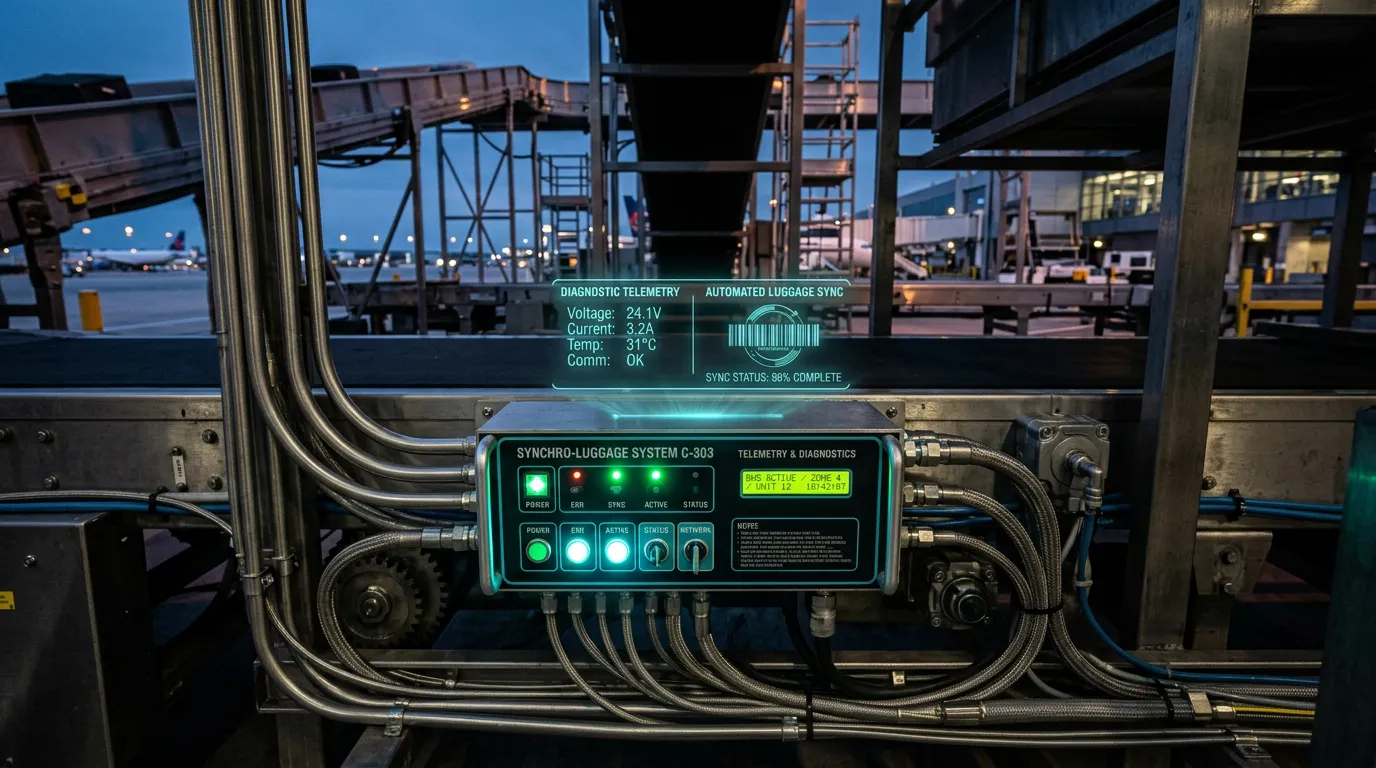
The baggage handling complex is capable of processing 5,400 bags per hour. The new software suite includes a SCADA system for supervisory control and data acquisition, an automation system, and software for managing industrial controllers. The platform provides complete visibility into the status of every bag at each stage of processing and distributes that information to airport departments and operational systems through integration modules.
Anton Averyanov, CEO of ST IT Group, estimated the cost of the software replacement project at Vnukovo at between RUB 100 million and RUB 250 million (approximately USD 1.3-3.2 million). Had the airport replaced the entire baggage handling system, including the hardware, the investment would have been substantially higher. The project's key achievement was preserving the costly conveyor and sorting equipment while replacing only the software layer.

A New Direction for Baggage Systems
The successful replacement of foreign software at Vnukovo, one of Russia's largest airports, demonstrates both the feasibility and the necessity of deploying domestically developed solutions. That is particularly significant at an airport handling such high passenger and baggage volumes. The project provides a practical reference implementation for Russian developers of SCADA platforms, industrial automation and process control systems. Equally important, the new Russian software was integrated with existing foreign-built equipment, one of the most technically demanding import-substitution scenarios.
In June 2026, Sheremetyevo Airport also announced that it had migrated the control system for its automated transfer baggage handling operation to Russian software. Together, these projects point to the emergence of a distinct market segment focused on digital platforms for managing baggage infrastructure at major airports.

A National Airport Management Ecosystem
The first technologies intended to serve as the foundation of a national digital airport management ecosystem were introduced at Sheremetyevo in 2022. At the time, Russia's Ministry of Transport emphasized the need to accelerate software import substitution across aviation infrastructure.
After access to foreign software became restricted, Airports of Regions developed the BAGS Poisk (BAGS Search) system. The platform is designed to register, locate and forward baggage while enabling information exchange between airports and airlines. It has since been deployed by dozens of airports and carriers and has been used to locate more than 400,000 pieces of baggage.
Beginning in 2024, Russian airports started replacing foreign systems used for passenger check-in, baggage handling and ground operations management. The transition became particularly important after several international vendors withdrew support for the Russian market. Airports of Regions introduced the BAGS ID system, enabling passengers to check in, weigh and tag their own baggage. At the same time, a Russian common-use platform for check-in counters and boarding gates continued to evolve.
The Ministry of Transport has also reported the implementation of dozens of projects under Russia's Industrial Competence Centers initiative. These include baggage search systems, passenger processing infrastructure management platforms and secure aviation data exchange solutions. Sheremetyevo Airport has now completed a key phase of migrating the control system for its automated transfer baggage handling operation to Russian software.
On the Path to Takeoff
The BAGS Poisk service already connects airports and airlines, while growth in Russia's industrial automation market further supports future expansion. The domestic market for industrial automation and process control systems increased from RUB 57.9 billion in 2022 to RUB 124.1 billion in 2024 (approximately USD 1.6 billion), and is projected to approach RUB 218.3 billion by 2027 (approximately USD 2.8 billion). The primary drivers include the withdrawal of foreign suppliers, regulatory requirements and the need to modernize existing equipment. Additional momentum comes from requirements aimed at ensuring the technological independence of critical information infrastructure.
Russian airport IT products are now positioned to move beyond import substitution toward high-value technology exports. For example, services developed by Airports of Regions have already been deployed not only within Russia but also internationally. If successfully scaled, Russian developers could offer the global market not merely an alternative to foreign SCADA platforms, but a comprehensive baggage infrastructure management system.