Robots Expand Their Role Across TMH Manufacturing Plants
Bryansk Machine-Building Plant (BMZ), part of Transmashholding (TMH), has completed a six-month evaluation of its robotic hybrid laser-arc welding system. The new equipment has delivered the expected performance gains while substantially outperforming conventional welding technologies in both productivity and quality.
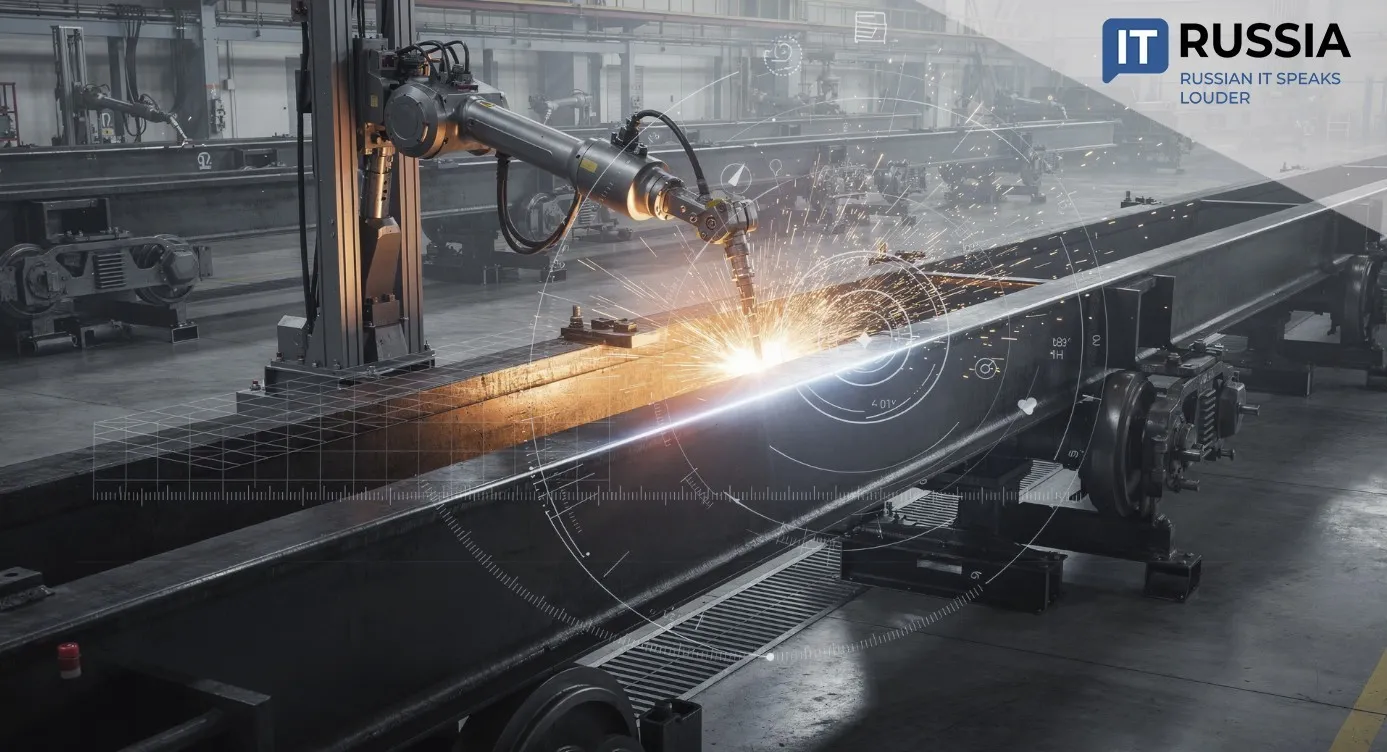
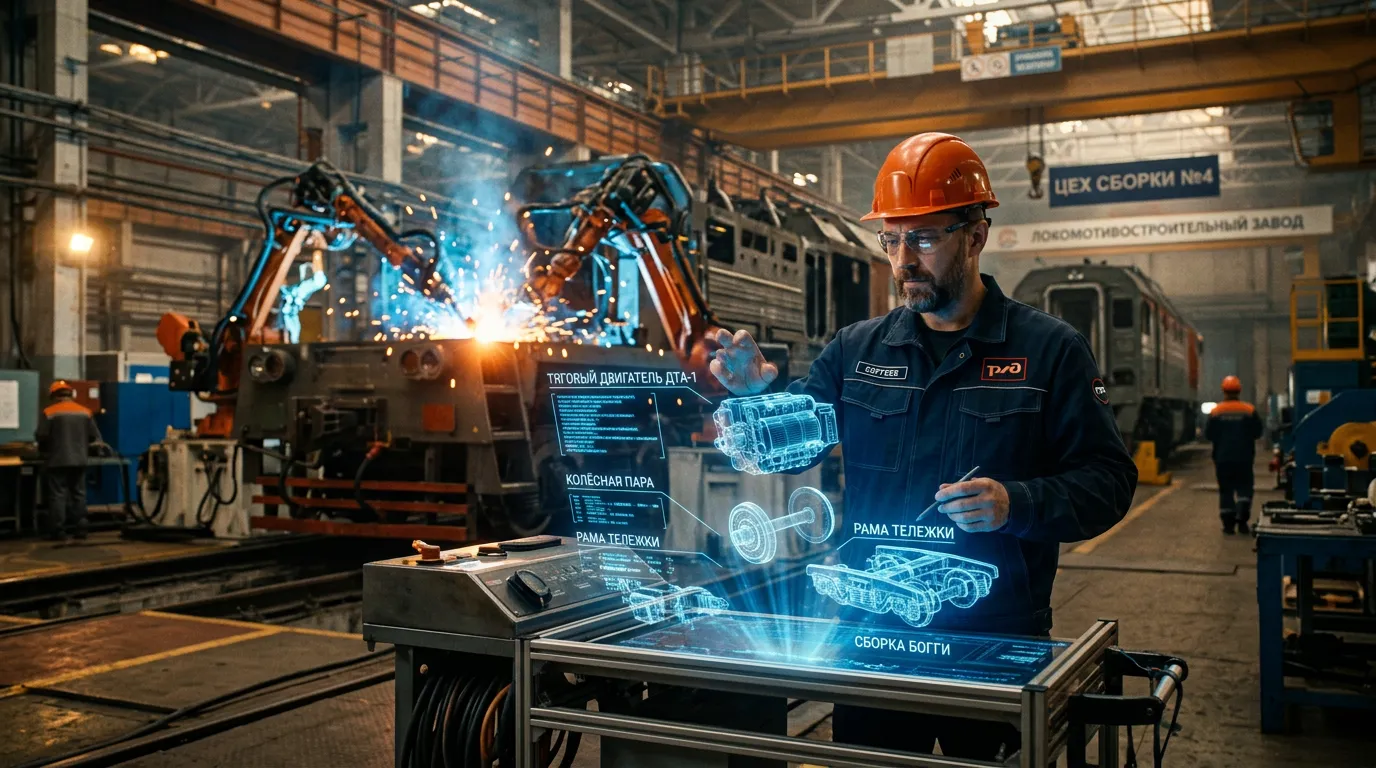
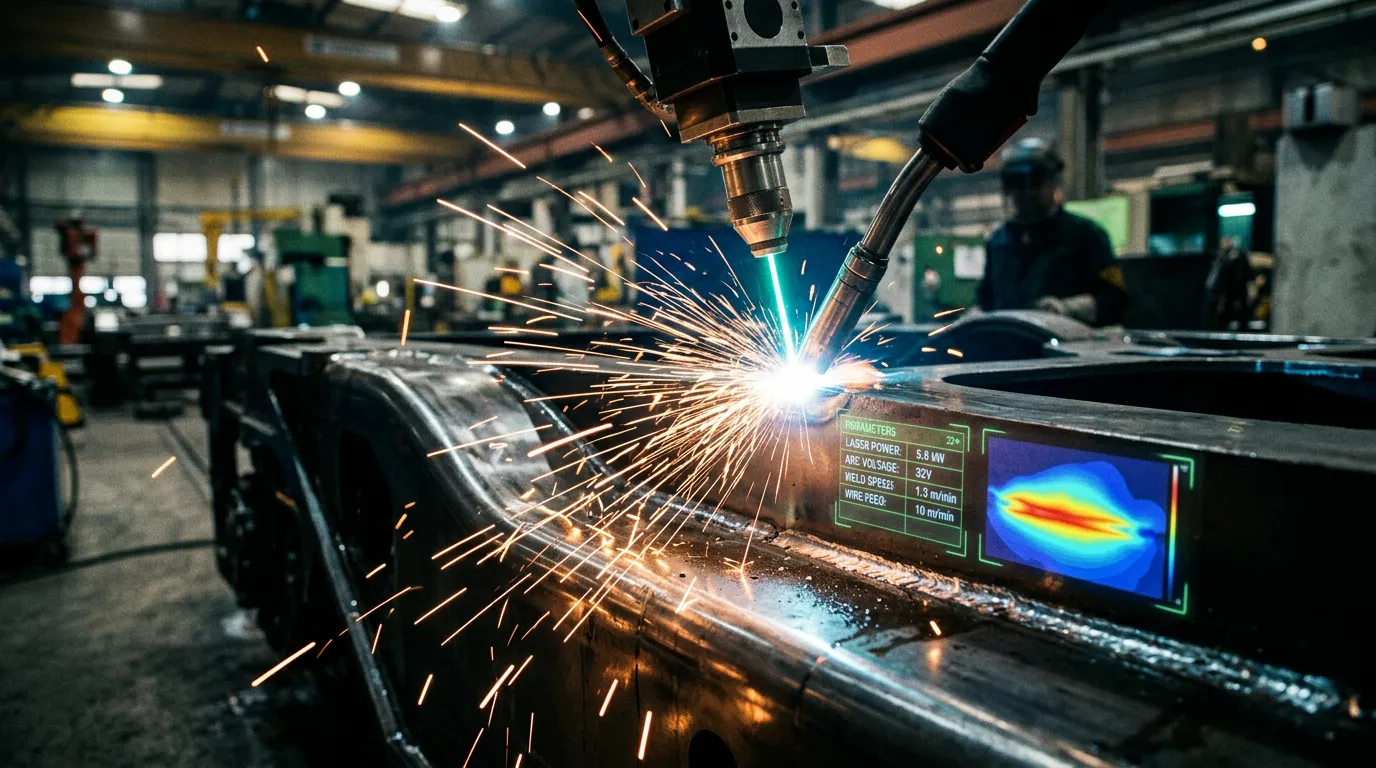
Developed and deployed by VPG LaserONE, part of Softline Group's SF Tech cluster, the robotic system is designed to automate welding of side beams, bolster beams, and end beams used in locomotive bogie frames. Its kinematics are built around a six-axis robot mounted on a vertical linear gantry, allowing the cell to be reconfigured for other large welded structures. The core advantage lies in combining conventional arc welding with a high-energy laser beam, bringing together the strengths of both processes while accelerating production and improving weld quality. A complete bogie frame beam set is now manufactured in 4.5 hours instead of 17, while welding one side frame takes about 40 minutes compared with six to seven hours using manual welding. The first production beams passed ultrasonic inspection without a single defect, confirming consistently high weld quality.
From Locomotives to Nuclear Manufacturing
The new technology has enabled BMZ to begin manufacturing bogie frames for electric locomotives produced by the Novocherkassk Electric Locomotive Plant (NEVZ), another TMH company. The robotic cell currently processes between 22 and 24 bogie frames each month.
The project has also delivered substantial operational savings. Heat input has been reduced by a factor of 2.3, wire consumption by fivefold, and shielding gas consumption by 3.8 times. Spending on consumable materials has fallen by 81%. Because deformation has been reduced by three to five times, the plant has eliminated large-scale heat treatment, one of the most expensive manufacturing operations. Since every workpiece has slightly different geometry, the robot generates an individual welding path using a Russian-made triangulation sensor. Joint tracking continues throughout the welding process, while operators intervene only in exceptional situations. The success of the pilot project has already shaped BMZ's next step: the company is preparing documentation to install a second identical robotic cell in the same bogie production shop to expand output for NEVZ. According to the developers, the technology is broadly applicable beyond railway manufacturing and could also be deployed in shipbuilding, heavy machinery manufacturing, the nuclear industry, and the production of specialized vehicles.
Robotics Backed by Industrial Policy
BMZ's large-scale modernization has been made possible through government support. By 2030, Russia aims to rank among the world's top 25 countries in industrial robot density, targeting 145 industrial robots per 10,000 manufacturing employees nationwide and up to 230 robots per 10,000 employees at state-owned enterprises. Approximately $1.7 billion will be invested over the next six years to support that effort. Government measures include demand incentives, funding for robotics research and development, and investment in manufacturing technology infrastructure.
BMZ acquired the robotic welding systems under a major investment program titled "Serial Production of Mainline Diesel Locomotives for Trains Weighing up to 7,100 Tons and Shunting Diesel Locomotives With Asynchronous Drives." The initiative calls for purchasing more than 120 pieces of equipment to modernize BMZ's production facilities and sustain manufacturing capacity. The total project budget amounts to 5.4 billion rubles (about $69 million). More than 100 machines have already been commissioned across multiple production operations. The project is being implemented through the Cluster Investment Platform mechanism with support from Mimpromtorg (Ministry of Industry and Trade of the Russian Federation) and the Industrial Development Fund.
TMH Scales Advanced Manufacturing Technologies
TMH continues automating additional production operations at BMZ. In April 2025, the company commissioned a robotic welding cell for locomotive wheel-motor assembly housings. The system's technical parameters were optimized specifically for those components, increasing productivity while reducing the workload for welders responsible for downstream finishing operations.
The company's advanced manufacturing technologies are also spreading across related industrial businesses. In 2023, Korenevsky Low-Voltage Equipment Plant in Russia's Kursk Region deployed a robotic welding system used to manufacture frames for indoor and outdoor high-voltage disconnect switches as well as other metal structures. During 2024, TMH-Elektrotekh commissioned 24 new production machines, including advanced machining centers, CNC equipment for electric machine components, hydraulic presses, and robotic welding systems.
At Metrovagonmash plant in Mytishchi, an industrial robot now welds bolster beams and center sill beams for railcars. Equipped with cantilever rotary cranes and welding power sources featuring remote monitoring, the robotic cell delivers consistent weld geometry while eliminating residual deformation. Welding speeds have increased by at least 50%, production has reached up to three assemblies per shift, and a single operator manages the entire process. The plant also operates robotic systems for bending, welding railcar sidewalls and roofs, as well as two laser welding complexes.
Tver Carriage Works (TVZ) is carrying out a broad digital transformation program under its Tsifrovoy zavod TVZ (TVZ Digital Factory) initiative. One of its core elements is a robotic measurement cell introduced in 2020. Working alongside a computer vision system and a laser scanner, it performs fully automated dimensional inspection of manufactured components and generates point clouds for comparison with engineering design data. The result is objective statistics on manufacturing deviations and digital product passports that accompany every railcar throughout its operational life cycle.
Taken together, these projects show that TMH is building far more than isolated automated workstations. The company is systematically creating an interconnected network of robotic production cells while embedding robotics across its critical manufacturing value chains.