Beeline’s “AI Engineer” Processes 15,000 Network Incident Reports in Pilot Rollout
The system is being tested across several regions in Russia and is already delivering measurable operational gains for network support teams.

Even the most reliable and modern telecom equipment can fail. The priority is not only to fix issues quickly but also to create conditions that help prevent failures before they occur.
Instant Response
Russian telecom operator Beeline (PJSC VimpelCom) has deployed artificial intelligence to support its network infrastructure. In several regions, an “AI engineer” system is now running in pilot mode. The company estimates the rollout could cut incident response initiation time by half and reduce average resolution time by 5%.
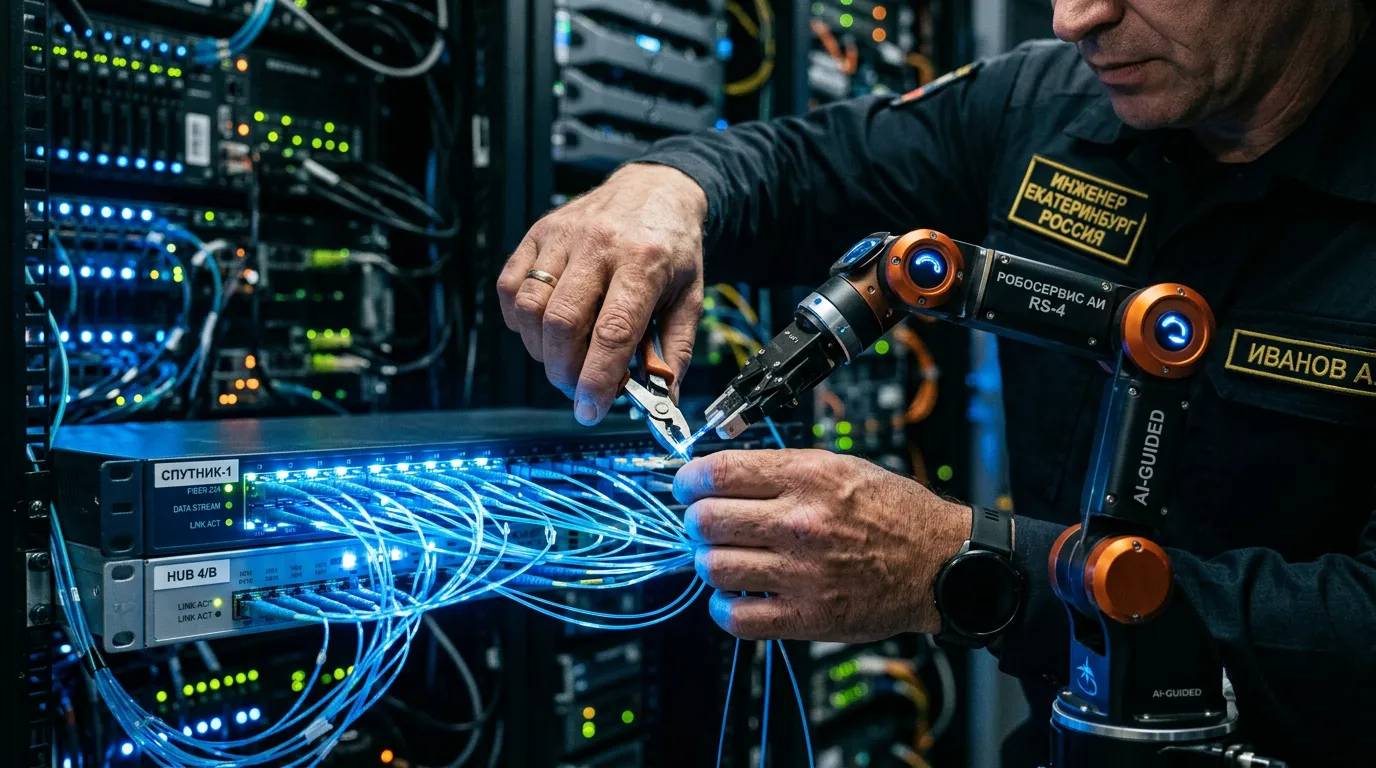
The model is trained on the full knowledge base built by Beeline engineers. This includes customer instructions, equipment signals, and historical incident data. When a failure signal is received, the AI system processes natural language input and converts it into a sequence of commands. It then runs diagnostics and, where possible, executes corrective actions directly on the equipment. If the issue cannot be resolved automatically, it is escalated to a human engineer.

Human Oversight Remains
The primary goal of the project is to reduce workload on technical staff and minimize the need for on-site interventions. Early pilot results indicate the system can handle a significant portion of incidents autonomously.
According to the company’s press service, the AI engineer remains under specialist supervision during the initial phase. However, for certain types of incidents where accuracy exceeds 80%, the system is already executing actions with minimal manual verification. As accuracy improves, the level of human review continues to decrease.

Decisions in Minutes
“We launched the AI engineer using the latest neural network models. In just two months of pilot operation, it has processed around 15,000 incident reports with high reliability and stability. Decision-making speed has improved significantly – analysis and action recommendations now take just two to three minutes. This allows us to restore services faster and maintain the high level of quality and reliability that Beeline delivers to its customers,” said Sergey Anokhin, CEO of Beeline.
The system also continuously learns. It captures detailed data from every incident and identifies the most effective resolution paths for future cases. This expands Beeline’s knowledge base faster, as human engineers typically document only 5%–10% of the most critical incidents.
Future updates will extend the system’s capabilities beyond fault resolution to predictive maintenance and failure prevention.
Aligned With Global Trends
Artificial intelligence in telecom has moved beyond experimentation and is now widely used as an operational tool. This trend is evident globally. In 2024, Ericsson and Digital Nasional Berhad received international recognition for AI Intent-Based Operations in a 5G network, aimed at automating network management. That same year, Nokia integrated AIOps into its broadband automation platform, focusing on anomaly detection, proactive service assurance, and incident response support.
Russian telecom operators are moving in the same direction. Industry leadership recognizes that AI can take on a growing share of routine operational tasks, accelerating workflows and reducing costs.
The likely trajectory is a gradual shift from AI-assisted operations to systems that handle a substantial share of diagnostics, prioritization, and corrective action planning. Over time, these systems will also take on execution of standard, low-risk scenarios. The deployment of the AI engineer highlights the maturity of domestic technology and its alignment with global developments.