

Innopolis Patents AI System for Core Analysis
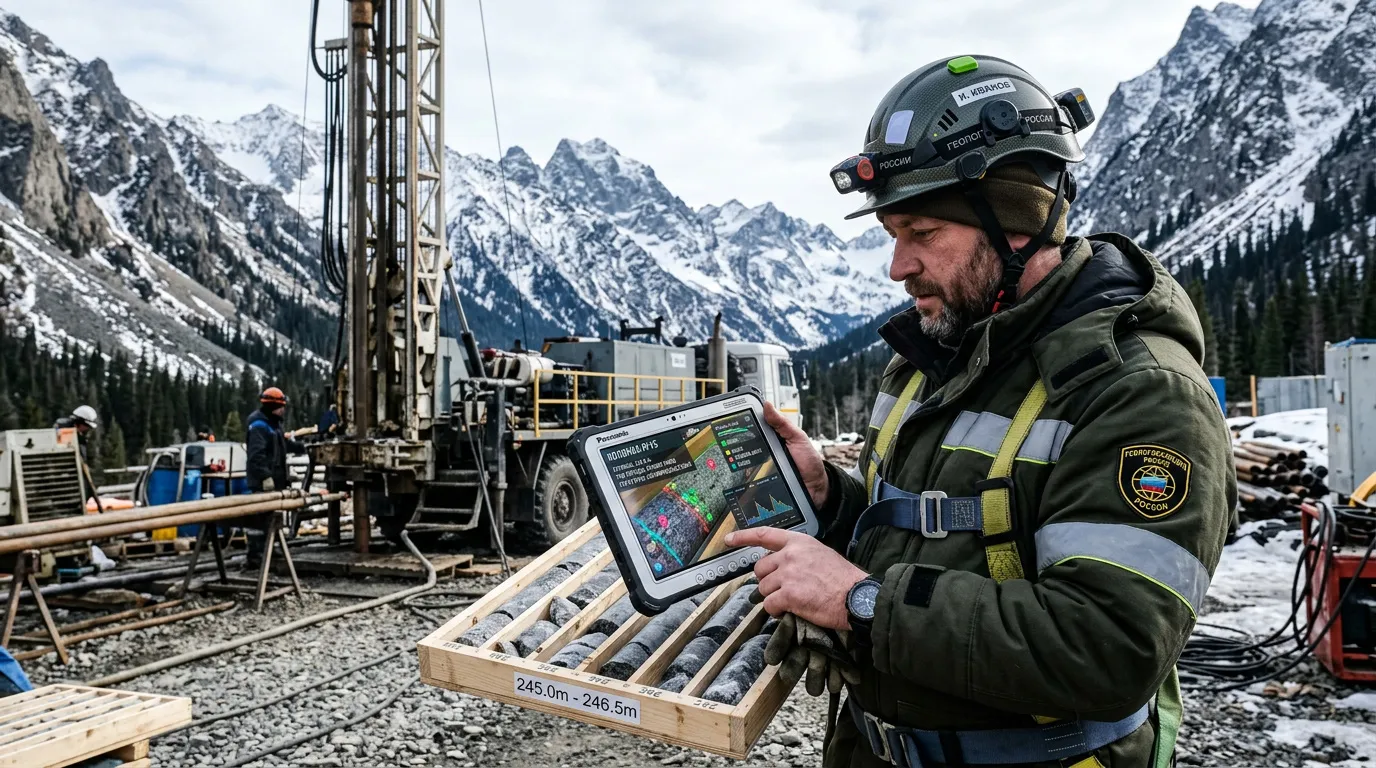
Innopolis University has received a patent for an AI-powered solution designed to analyze photographs of rock samples extracted during drilling operations. Technologically, the solution is built as a two-stage image-processing system based on deep neural networks.
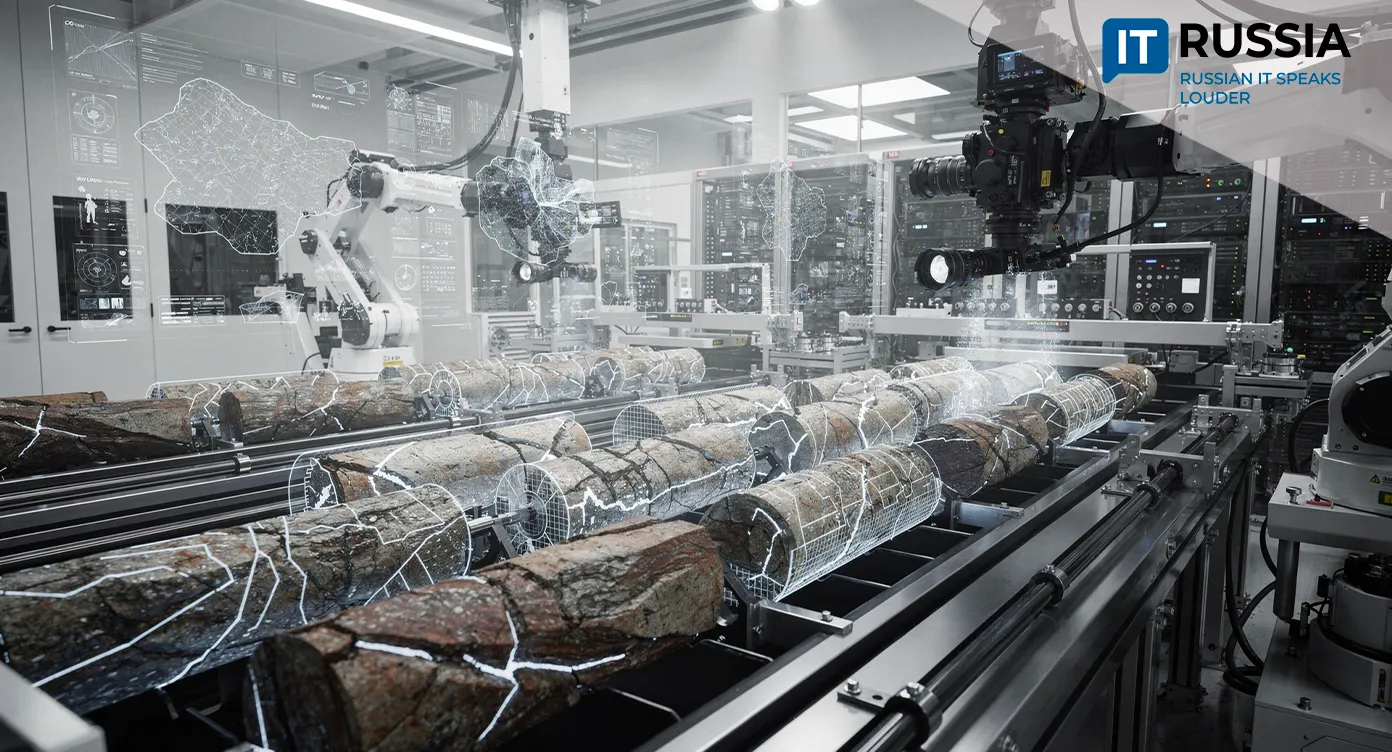
The system automatically identifies fractures, faults, veins, breccias, and other geological structures. That speeds up and improves the accuracy of core analysis by orders of magnitude during geological exploration and the creation of geological reservoir models.
The analysis process is carried out in two stages. First, the software isolates meter-long core sections and links them to specific depths. It then performs semantic segmentation of each section. The AI model, trained on a large image dataset, also applies augmentation, morphological post-processing, noise filtering, and binarization.
Importantly, the researchers are presenting a genuine invention rather than a routine software upgrade. The scientists proposed a new approach to analyzing what remains the most informative and reliable tool for subsurface assessment. Beyond mineral extraction, the technology could also be used in construction by providing fast and reliable information about the structural characteristics of terrain.
Precise, Objective, Unbiased
Many industry experts point to the subjectivity involved in interpreting core data. Traditional manual core logging is also extremely labor-intensive and time-consuming. Until now, industry software used for core interpretation has not been universal and required constant specialist involvement. With the new system, the entire process is handled by AI.
The technology is designed to operate with a high degree of reliability. Each image is analyzed using 2,780 numerical parameters. That digital fingerprint provides an exceptionally detailed and comprehensive representation of the rock sample. The system also eliminates false positives caused by technogenic fractures resulting from mechanical damage during core extraction. The algorithm clusters multidimensional feature vectors. Already, in seven out of ten cases, the system classifies core photographs at the level of an experienced geologist. For industrial deployment, however, the technology will likely first function as a support tool for geologists rather than fully replacing human specialists.
Goals and Challenges
The development fits squarely into the broader push toward digitalization in mineral extraction and geological exploration. Under the national Geologiya: vozrozhdeniye legendy (“Geology: The Rebirth of a Legend”) project, Russia plans by 2030 to dramatically expand the preparation of prospective exploration areas and digitize accumulated geological data.
Digitalization has already delivered measurable gains for the mining sector: labor productivity has increased, operational reliability has improved, and operating costs have declined. According to Rosstat, investment in digital solutions rose from 4.2 billion rubles ($53 million) to 7.4 billion rubles ($93 million) between 2019 and 2024. Market research also found that 25% of surveyed industry representatives believe the sector could become a global leader in digitalization, while the share of skeptics fell to 44%.
Among the most effective solutions are AI-powered ore classification video analytics, digital advisors built on big data, idle-run optimization models, and robotic rock breakers equipped with machine vision. The deployment of integrated remote operations centers boosts productivity by 3%–5% while reducing costs by a similar margin. Digital twins lower expenses by 3%–7% and improve process reliability by 1%–3%. At the same time, the growing complexity of digital solutions and a shortage of qualified personnel remain industry-wide challenges.
From Manual Core Logging to Industrial AI
In 2021, Digital Petroleum introduced DeepCore for automated core description. The company positioned the full-cycle automatic interpretation system as a way to improve efficiency when handling core materials in the oil and gas sector.
In 2022, Russian researchers published studies on automated core interpretation in industrial workflows. Alongside Digital Petroleum, specialists from MiMGO and Skolkovo also worked on the problem. Later, Rosneft joined the effort by automating laboratory studies and training computers to interpret core samples. Its RN-Lab system identified objects in photographs of sedimentary rocks, while the results were stored to further train automated core-description models.
In 2024, AI assumed a broader range of industrial tasks in mining, which has become one of the leading sectors driving digitalization. A year ago, Tyumen Industrial University unveiled a module for automatically linking core photographs to depth measurements. That development is conceptually close to the Innopolis solution through its automated processing of core photographs and depth correlation.
Russia’s geology and mining industries are now shifting from manual data interpretation toward digital models, machine vision, and industrial AI. The Innopolis system targets a practical niche where the benefits of automation can be measured directly: faster core logging, lower subjectivity, quicker reservoir-model creation, and higher-quality data for engineering decisions.
In the near term, the technology is expected to evolve as a support tool for geologists. The system will pre-label structures, calculate parameters, and generate digital features, while specialists will review and refine the conclusions.