

Moscow State University Trains AI to Find Stable Complexes of Rare-Earth Elements
The algorithm could help make nuclear fuel reprocessing more efficient.
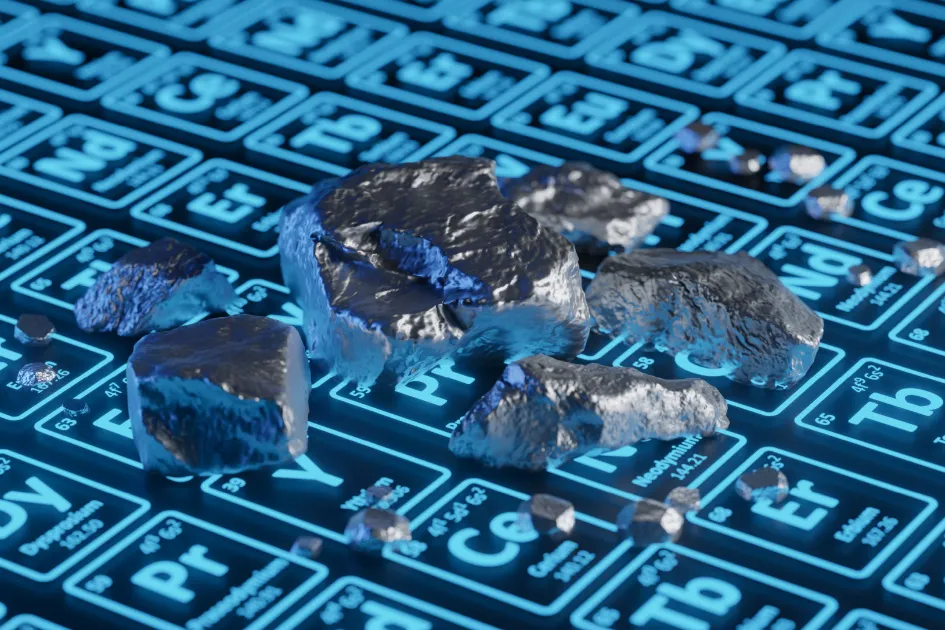
Researchers at Moscow State University have developed a neural network model that can predict the stability of complexes formed by rare-earth elements and trivalent actinides. The new approach could help separate these elements more efficiently during spent nuclear fuel reprocessing.
One advanced approach to separating both rare-earth elements and actinides uses specially designed organic ligands. However, experimentally testing how well these ligands work can often be too difficult.
“Machine learning can significantly simplify the process of selecting ligands for synthesis and further study. An algorithm suitable for this task is conceptually very similar to machine vision, but instead of images, it uses a graph representing molecular properties as input,” said Artem Mitrofanov, head of the Laboratory of Intelligent Chemical Design at Moscow State University’s Faculty of Chemistry.
In the longer term, the technology could become an important step toward a high-tech closed nuclear fuel cycle while reducing the amount of radioactive waste generated.