

Next-Generation Sensor Aims to Detect and Neutralize Hydroxylamine
Industrial wastewater from chemical plants carries a wide range of environmental risks. One of the most hazardous is hydroxylamine. Widely used in organic synthesis and pharmaceutical manufacturing, the toxic compound poses a threat even at low concentrations, yet detecting it typically requires lengthy laboratory analysis. Now, researchers at Tula State University (TulSU), supported by the Russian Science Foundation, have begun developing a sensor designed not only to identify the toxin within seconds, but also to destroy it directly in contaminated water.

The technology is built around an unconventional raw material – needle petroleum coke. Researchers plan to convert this industrial feedstock into carbon dots, unique nanoparticles whose semiconductor properties and highly active surfaces make them ideal "hunters" for pollutant molecules. Another "trap molecule" will be indigocarmine, a well-known dye.
Neutralizing the Threat on the Spot
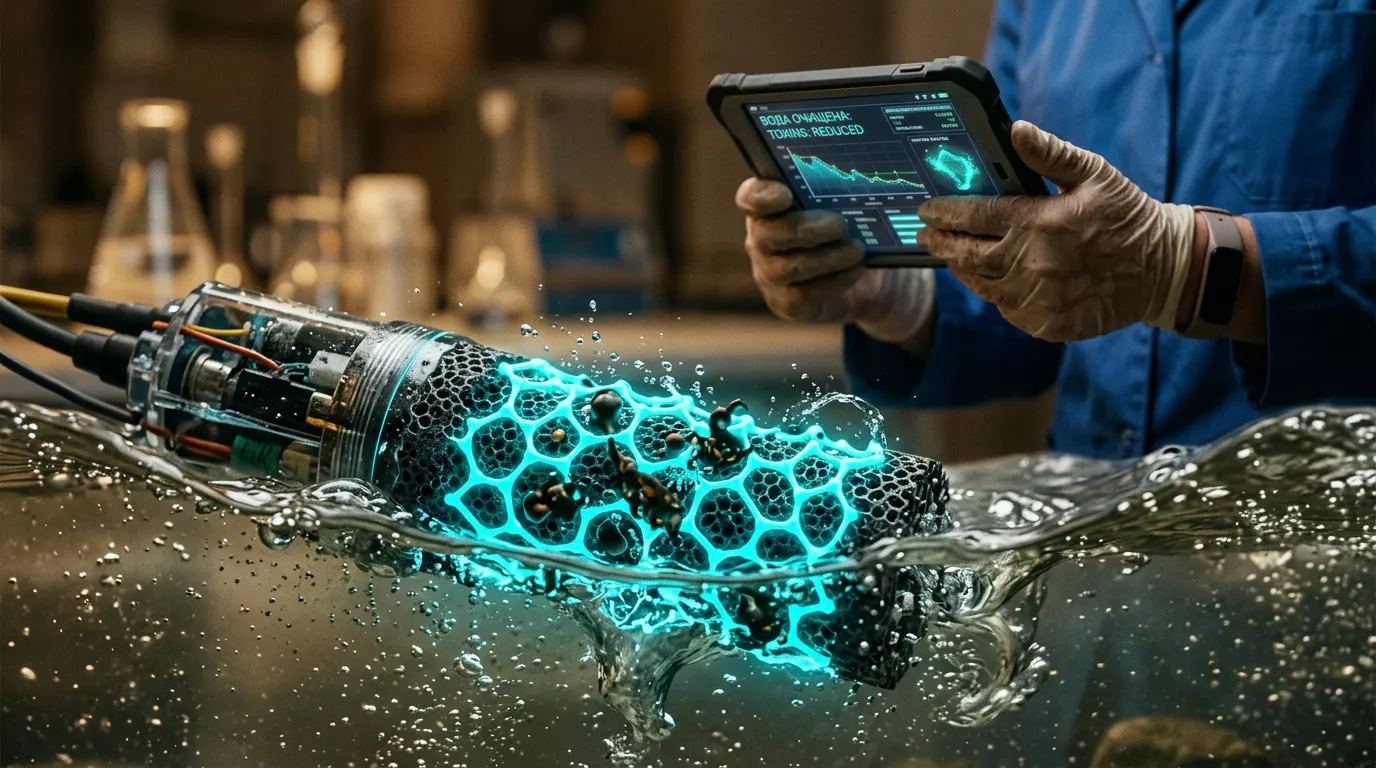
The device is designed as a two-in-one system: once immersed in water, the sensor immediately responds to the presence of hydroxylamine by generating either an optical or electrical signal, then initiates chemical processes that break down the toxic compound. In effect, the device functions as a nanoscale water treatment system, detecting contamination and neutralizing it at the source.
TulSU researchers are also making extensive use of quantum chemical modeling while developing dedicated software to support the work. The resulting digital synthesis assistant will simulate interactions between hydroxylamine molecules and nanoparticle surfaces before a physical sample ever reaches the test tube. This approach makes it possible to virtually optimize the material's structure, predicting both its sensitivity and selectivity. Rather than synthesizing hundreds of sensor variants experimentally, researchers can eliminate less promising designs computationally, reducing laboratory iteration times severalfold while improving the reproducibility of future sensor performance.
A Sensor for Environmental Safety
Interest in carbon dots as sensing materials has been growing steadily in Russia. In 2022, researchers at ITMO University refined methods for synthesizing these nanoparticles, highlighting their low toxicity and tunable properties. In 2023, the same institution began applying them to heavy metal detection. Then, in 2026, researchers at Lomonosov Moscow State University developed a multicomponent nanosensor capable of simultaneously analyzing seven different ions, including toxic heavy metal ions. The TulSU project raises the bar further by combining detection with active destruction of the toxin.
For chemical and petrochemical manufacturers, particularly those operating in densely populated industrial regions, such an instrument could serve as an environmental emergency trigger, enabling hazardous releases to be identified almost instantly. Today, environmental monitoring teams often spend considerable time collecting samples and transporting them to laboratories. The TulSU sensor is intended to reduce that process to just a few seconds, creating an opportunity to prevent environmental incidents before they escalate.
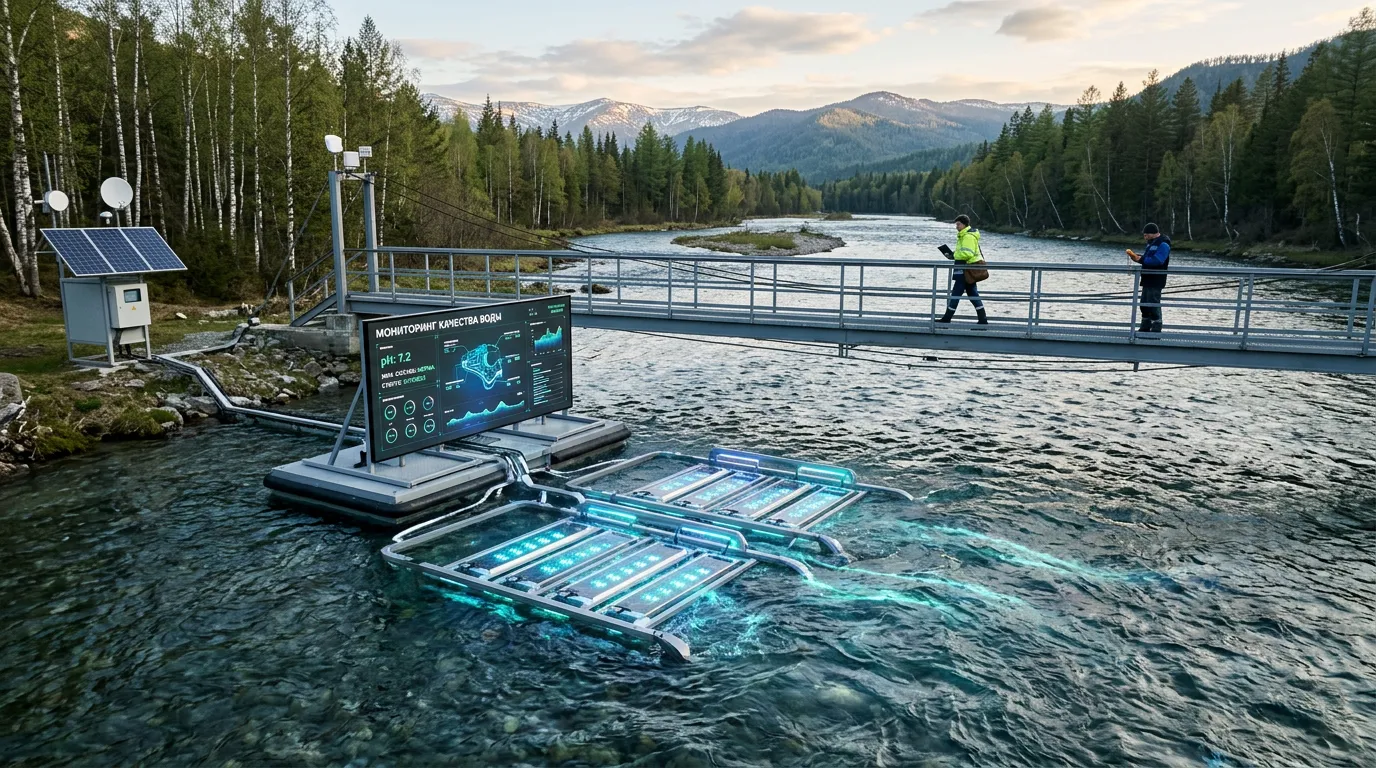
The project also aligns naturally with Russia's broader initiatives to expand digital environmental monitoring. Data generated by these devices could eventually be integrated into Ekomonitoring (Environmental Monitoring), the federal environmental monitoring system, creating a unified digital framework for tracking the condition of water bodies. That would represent a shift from isolated measurements toward continuous, integrated online monitoring.
Smarter Water Analysis
The TulSU sensor has the potential to become the foundation of a broader technology platform. At the same time, the project's digital synthesis assistant could evolve into a standalone product, enabling manufacturers to rapidly reconfigure sensor production for detecting other hazardous substances. Over time, bulky laboratory workflows could increasingly give way to compact, cloud-connected sensors continuously safeguarding the environment.