

Rosneft Leads Russia’s Scientific and Technical Development
PJSC NK Rosneft continues to reinforce its leadership in scientific and technological advancement among Russia’s largest corporations, highlighting major progress in building a proprietary software portfolio that covers the core stages of oil and gas production.
From Research to Field Operations
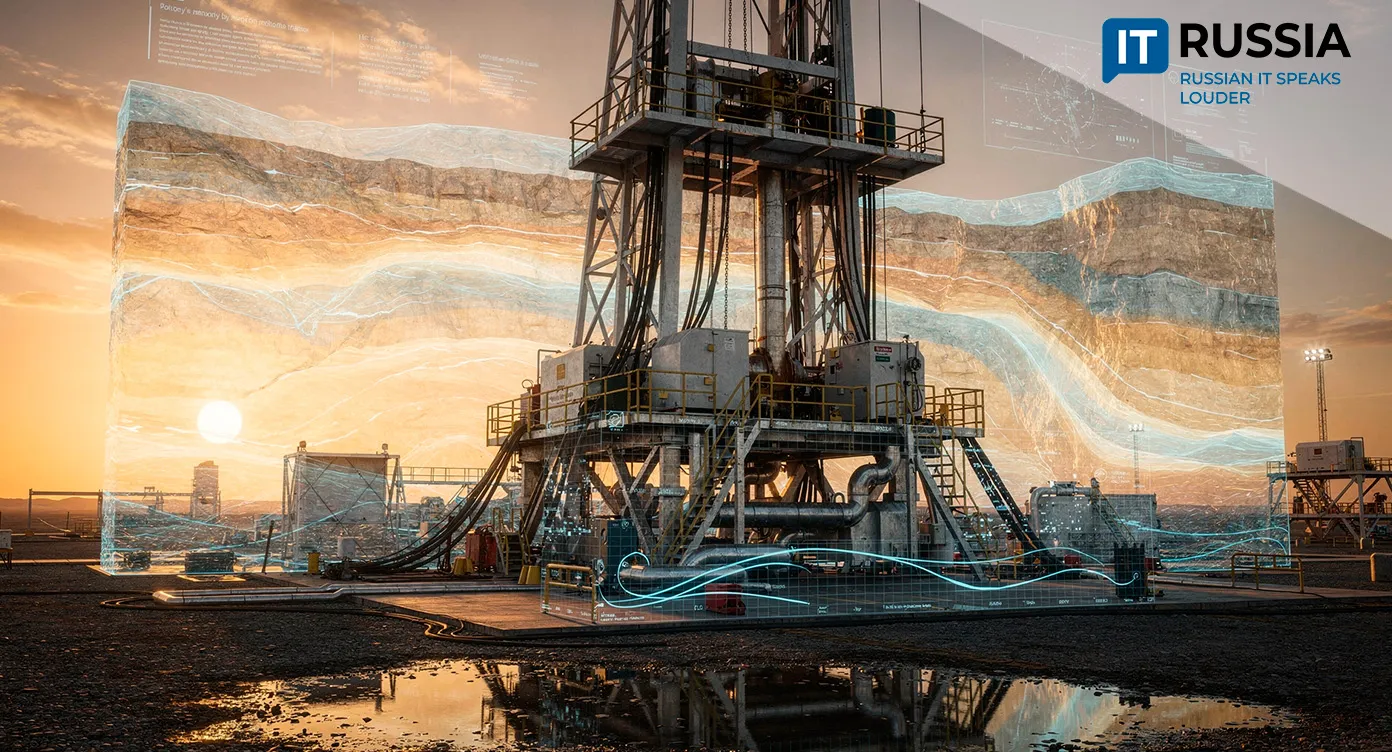
Rosneft has become the first oil company in Russia to develop a comprehensive suite of industrial software covering all key processes across the oil and gas value chain. According to the company, its corporate software products outperform foreign analogues in processing speed, functional scope, use of advanced algorithms, and user experience.
The primary focus is on digitalization, automation, and AI deployment. Large language models are used to analyze geological data sets. AI-driven tools optimize well performance and support complex engineering decision-making.
In effect, the company’s digital strategy strengthens technological sovereignty in the sector, increases import substitution, and establishes the foundation for full-scale digital transformation in upstream operations.
Ranked Among Innovation Leaders
The national information agency AK&M, which specializes in economic intelligence and non-credit ratings including sustainability assessments, recognized Rosneft as one of the country’s most innovation-oriented companies. The rating, compiled for the first time, evaluated 300 of Russia’s largest corporations.

It is therefore unsurprising that Rosneft, which has positioned technological leadership as a core pillar of its strategy through 2030, ranked among the top five. Both quantitative and qualitative indicators were assessed. Quantitative metrics included R&D spending volume and growth dynamics, as well as patent activity. Qualitative criteria covered the presence of in-house research divisions, partnerships with scientific institutions, and formal governance structures for R&D. The largest weighting, 70%, was assigned to research expenditures. In this category, Rosneft ranks among the strongest performers.

The company’s innovation development program structures its portfolio around targeted technology projects. Each new technology is formalized as a dedicated innovation initiative. Over the past year alone, Rosneft secured 151 patents for new inventions. Its focus extends beyond production processes to environmental protection. Among the breakthrough technologies cited is a process chain for producing synthetic oil with zero sulfur content. In total, the company holds more than 1,000 state-registered intellectual property assets.
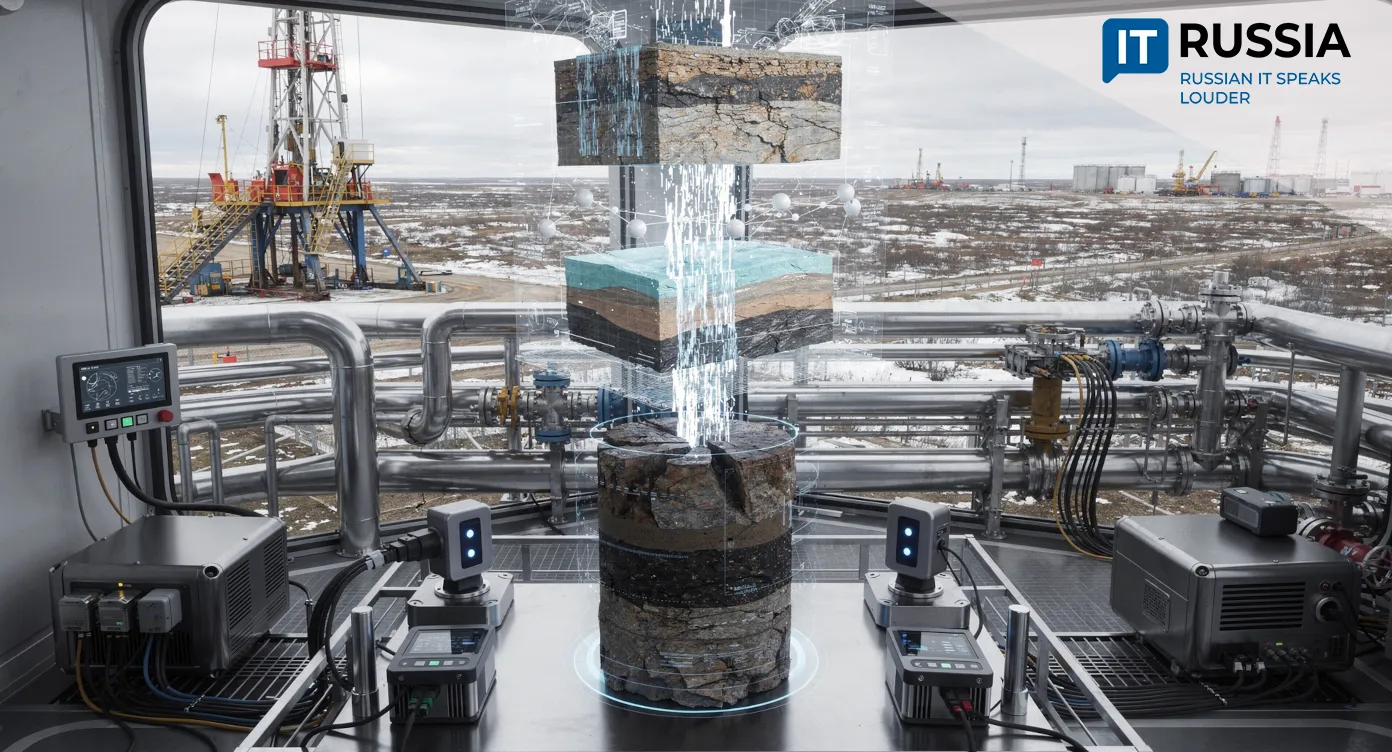
Rosneft has gained a leading position in developing software products that systematically support all stages of oil and gas production and, critically, outperform imported alternatives across performance benchmarks. One example is Echo Tools, which applies AI to calculate bottomhole pressure and determine optimal well operating modes. It is the first Russian product of its kind. The introduction of large language models has also elevated geological data workflows. Core description across 16 parameters accelerates data analysis by a factor of five to seven.
Leading the Industry Forward
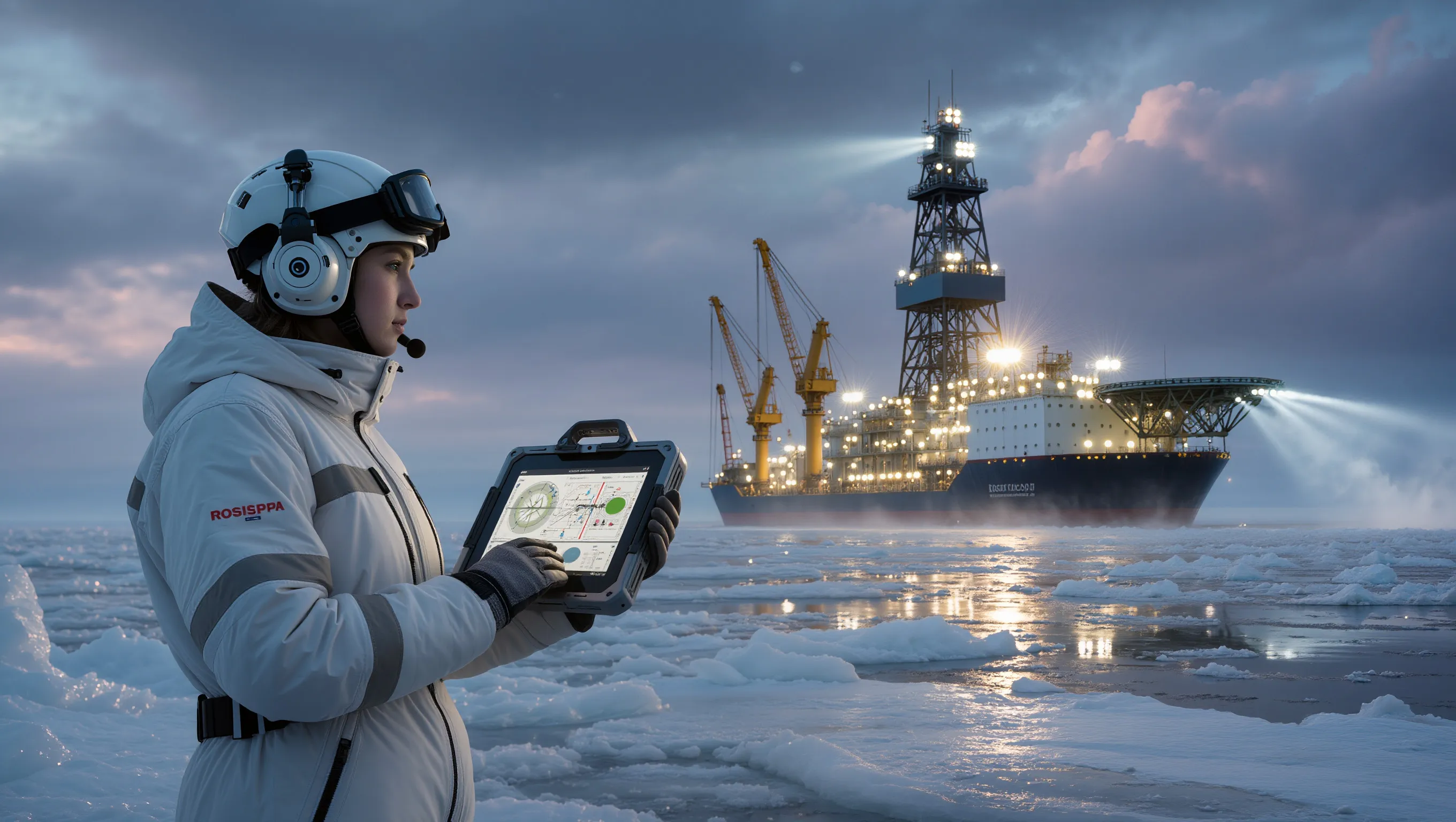
In 2023, Rosneft presented its proprietary software to major oil and gas companies. More than 100 representatives from leading operators responded to the invitation. At that time, 10 of the company’s 23 science-intensive software products had already been commercialized.
Industry experts note that developing proprietary sector-specific software is less about immediate revenue generation and more about building long-term capability. Without robust domestic digital tools, the industry would struggle to operate effectively under current conditions. Rosneft’s internal development model and team-based R&D structure are now being studied by other market participants. Both the scale and quality of its solutions have drawn positive assessments, including from competitors. Another important factor is the company’s ability to customize software for specific clients, a flexibility rarely achievable with Western solutions.
Today, Rosneft’s software complexes are included in the Unified Register of Russian Software for Electronic Computers and Databases. This means the products meet standards set by the Ministry of Digital Development and are eligible for procurement by state bodies and companies with government participation.

Rosneft has progressed from early simulation tools and geological applications to integrated IT ecosystems incorporating AI components. Comparisons with foreign systems suggest the company is moving toward fully functional domestic platforms that were previously largely imported.