

Russian Researchers Develop AI Technology to Improve Fraud Detection
Specialists from Sber, the AIRI Institute, the Ivannikov Institute for System Programming of the Russian Academy of Sciences, and the Steklov Mathematical Institute of the Russian Academy of Sciences have developed an AI-based method for analyzing user behavior. The algorithm evaluates a network of digital relationships, including interactions with other users, products, services, and categories.
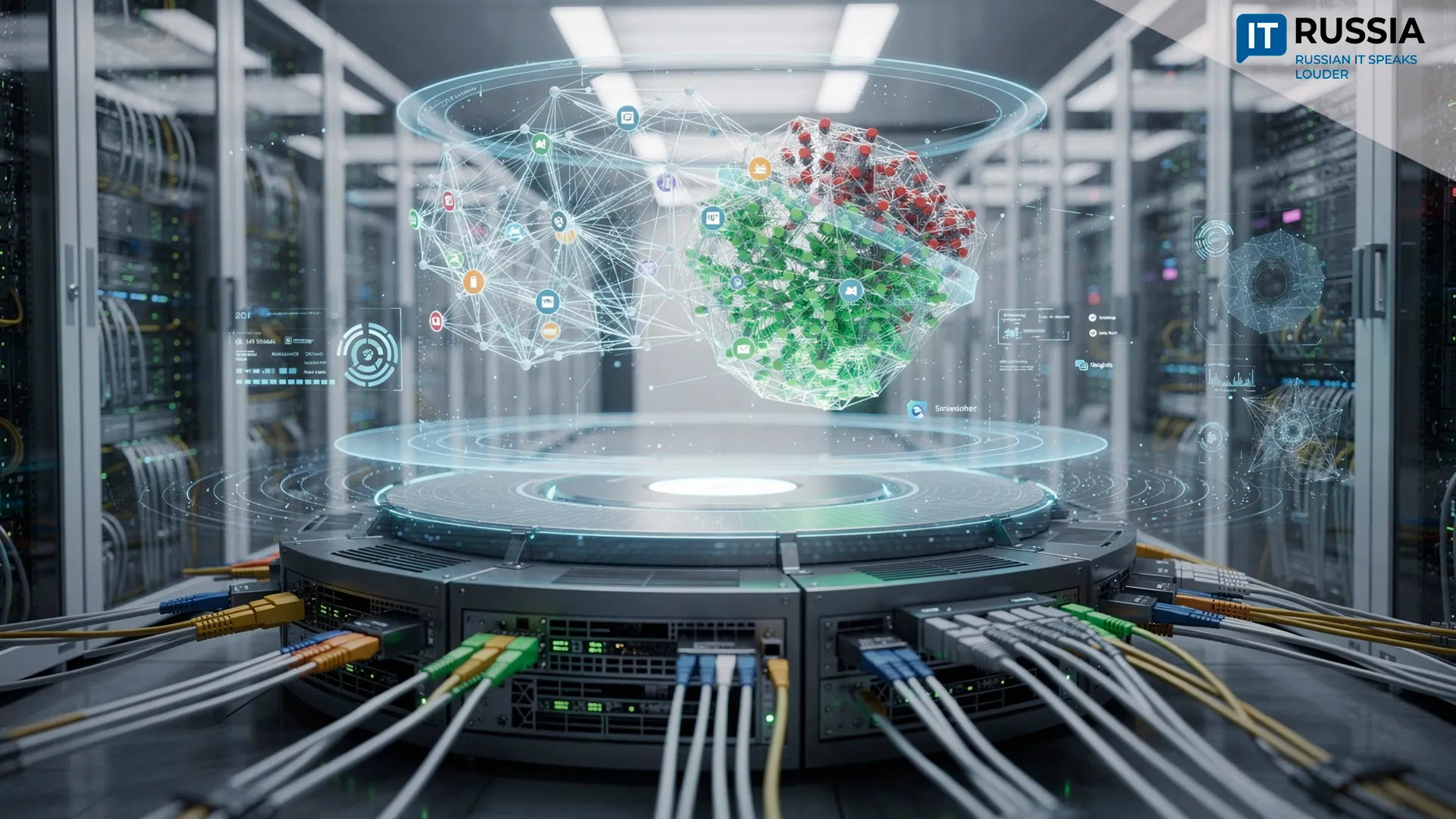
The technology was tested on four large datasets from the financial services and e-commerce sectors. It delivered up to a 2.3% improvement in predictive performance as measured by the AUC metric. Rather than evaluating isolated events, the algorithm analyzes relationships among users, accounts, devices, transactions, and products, improving analytical accuracy. In practice, the approach could be used for fraud detection, customer segmentation, churn prediction, and personalized recommendations.
Fraud Prevention With Measurable Economic Impact
The technology is primarily intended for deployment in banking fraud detection systems. By analyzing relationships among accounts, devices, payment recipients, and chains of money transfers, it can identify linked accounts and coordinated fraud networks that are difficult to detect when transactions are evaluated individually.
According to the Bank of Russia, banks doubled the number of blocked fraudulent transactions in 2024 to 72.17 million, preventing theft totaling RUB 13.5 trillion (approximately $170 billion), even as the overall amount of stolen funds continued to rise. In 2025, banking fraud detection systems blocked 134.2 million fraudulent transactions worth roughly RUB 13.9 trillion (approximately $175 billion). During the first quarter of 2026 alone, banks prevented 16.8 million theft attempts involving RUB 1.8 trillion (approximately $23 billion). Even modest improvements in algorithmic accuracy can therefore produce substantial economic benefits at this scale.
Beyond banking, the technology could also support credit scoring, anomaly detection, and service personalization. It is expected to be valuable for insurance companies, e-commerce platforms, and telecommunications providers. Following testing within Sber's ecosystem, the developers plan to scale the technology further, including potential expansion into international markets.

Advancing AI-Based Fraud Detection
In 2023, researchers at Peter the Great St. Petersburg Polytechnic University introduced an experimental graph neural network for detecting fraudulent transactions. The model incorporated payment card information, sender and recipient data, device parameters, and transaction characteristics. That same year, Sber and the Russian Academy of Sciences expanded their partnership in artificial intelligence and cybersecurity, focusing on data analysis algorithms and attack detection.
The 2026 development can be viewed as the next step in that research trajectory, further strengthening Russia's position in applied artificial intelligence for cybersecurity and fraud prevention.
A Science and Industry Partnership
The new AI system reflects a shift from analyzing individual user actions to modeling the broader network of a user's digital relationships. That makes it more effective at uncovering distributed fraud schemes involving interconnected accounts and devices. Even a 2.3% increase in predictive accuracy can generate meaningful financial savings in high-volume environments while reducing both false-positive account blocks and successful theft.
According to the project's roadmap, the technology will be tested in Sber's services before being released to the broader market.
The project stands out for combining fundamental research with practical applications. It brings together leading Russian research institutes and industry, and the team will present its results at The ACM Web Conference 2026. The achievement also highlights the strength of Russia's domestic research community in graph neural networks and large-scale data analytics.