Smart System to Warn Russians of Approaching Hurricanes
Researchers have developed a neural network that detects powerful atmospheric vortices capable of bringing heavy rain, hail, and hurricanes.
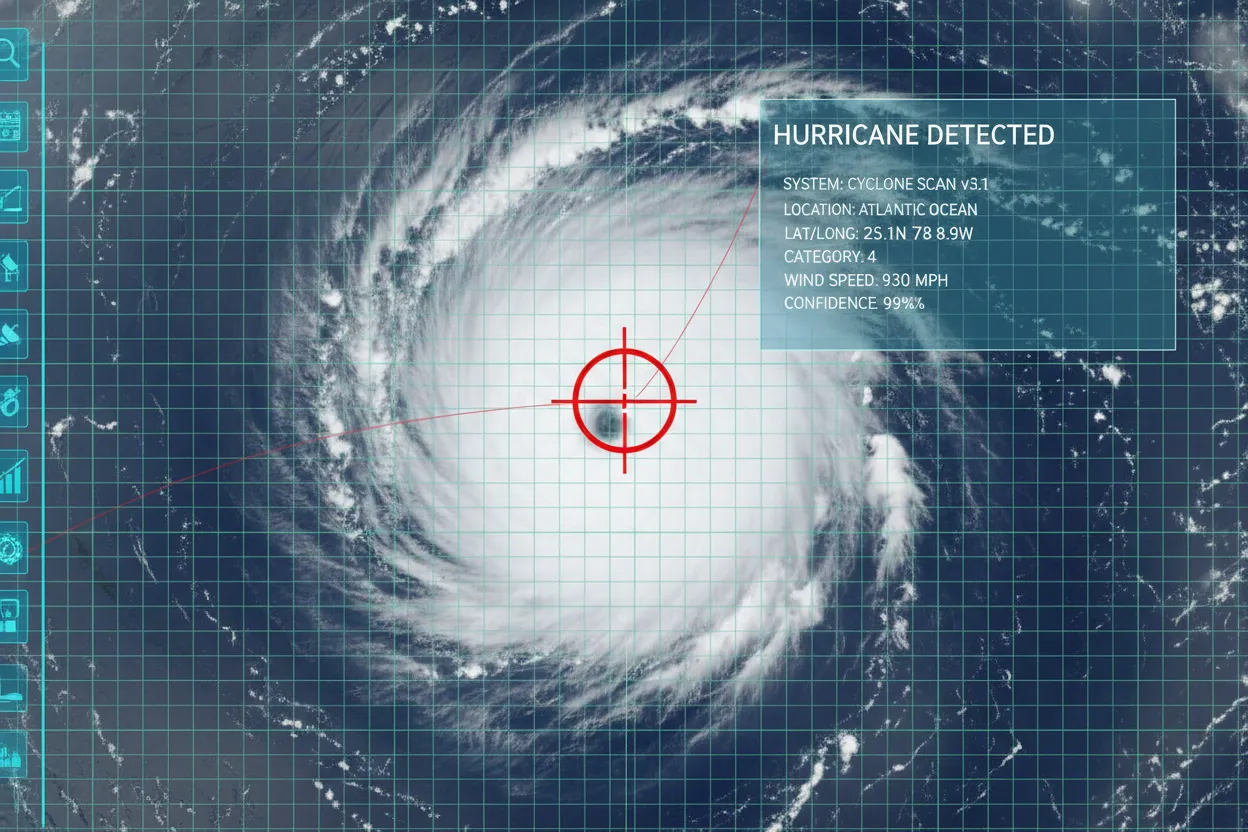
Scientists from the Moscow Institute of Physics and Technology (MIPT) and the Obukhov Institute of Atmospheric Physics of the Russian Academy of Sciences have created a system that automatically detects dangerous weather events in satellite imagery. The neural network identifies special atmospheric vortices associated with intense rain, hail, and hurricanes, often within just 15 to 30 minutes after they appear. The technology is expected to allow storm warnings to be issued significantly faster and with greater accuracy. The development was reported by Radio 1.
Scanning a 20-Year Archive
Project leader and head of the MIPT Laboratory of Machine Learning in Earth Sciences Mikhail Krinitskiy explained how the system works. According to him, the program searches for extremely strong vortices that can reach several dozen kilometers in diameter.
The main advantage of the new technology is speed and full automation. Previously, specialists had to monitor satellite images manually. This required significant time and effort because new images arrive every 15 minutes. Now the task is handled by an automated system that quickly processes a massive archive of satellite data collected over the past 20 years.
The study found that residents of central Russia are not at risk from these events, which tend to strike other regions instead.
The United States Still Relies on Traditional Monitoring
In other countries, such weather phenomena are still tracked by large teams of specialists.
The Russian system fundamentally changes that approach.
Earlier reports noted that the Buzuluksky Bor National Park in Russia’s Orenburg region will deploy a lightning monitoring and tracking system this year. Using “storm sensors,” park staff will be able to track approaching thunderstorm cells, alert firefighting services, and quickly locate fires caused by lightning strikes.