

New Life for Ancient Architecture: Researchers Build a 3D Model of the Lost Cathedral of Saints Boris and Gleb
A highly detailed 3D reconstruction of the monument will allow researchers to see what the lost cathedral, built in Veliky Novgorod in the 12th century, once looked like and preserve its appearance for future generations.
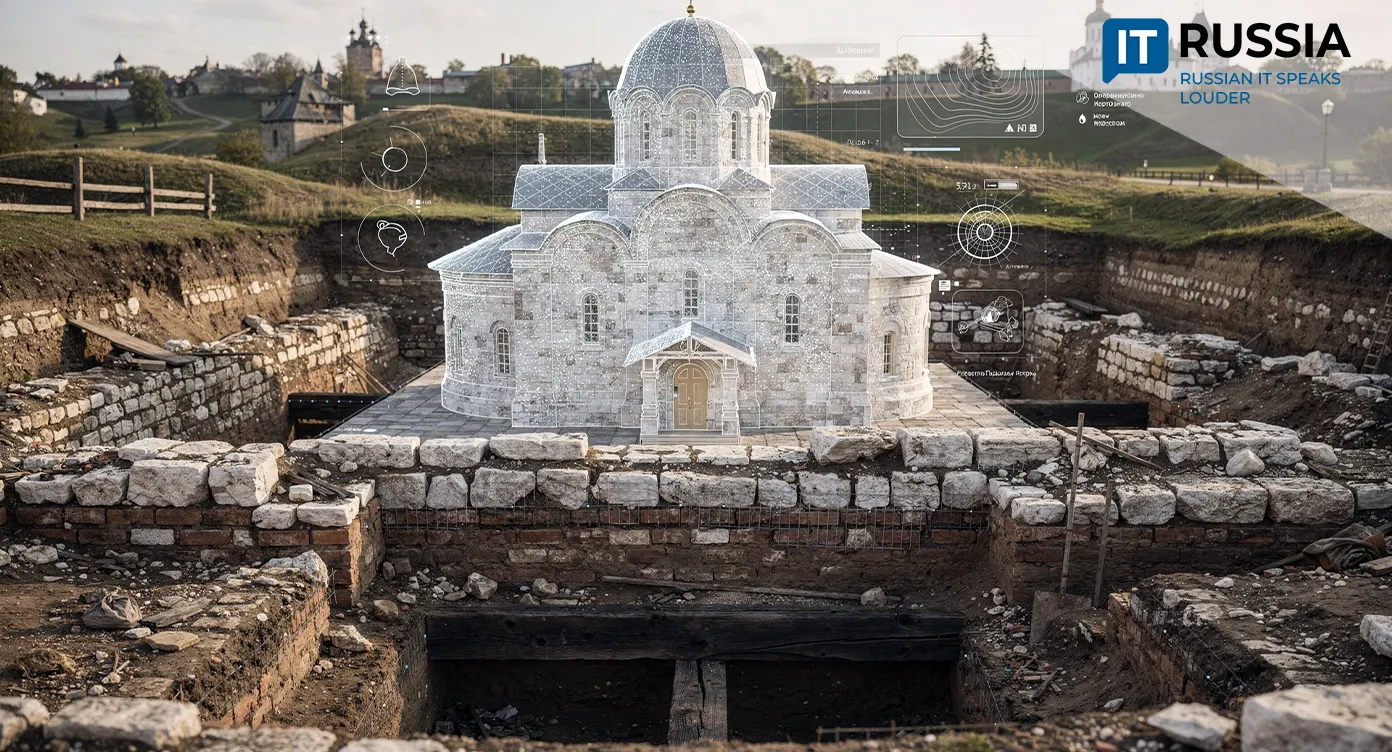
The foundation stone of the Cathedral of Boris and Gleb in Okolotok was laid in 1167 at the behest of the wealthy Novgorod merchant Sotko Sytinich. The cathedral was consecrated in 1173. Historical records show that the cathedral stood in the southern part of the Novgorod Detinets, the city's medieval fortress. Today, only the small Church of St. Andrew Stratilates, once one of the cathedral's side chapels, has survived.
The holy princes Boris and Gleb were especially revered in medieval Novgorod. Because of that, art historians and archaeologists believe the cathedral ranked second in importance only to St. Sophia Cathedral in Novgorod.
The first excavations at the cathedral site began in 1940. World War II interrupted the research, and archaeologists did not return to the site until 2008.
The History of Research
Excavations at the Borisoglebsky dig site in the southern part of the Novgorod Detinets are being carried out by the Novgorod Architectural and Archaeological Expedition of the Russian Academy of Sciences' Institute of Archaeology together with Yaroslav-the-Wise Novgorod State University, with support from the Novgorod State Museum-Reserve.
The research project, Ancient Rus Church in Its Archaeological Context: Historical Topography, Materials Science, and Three-Dimensional Modeling, is led by Vladimir Sedov, Corresponding Member of the Russian Academy of Sciences, Chief Research Fellow at the Institute of Archaeology, and Doctor of Art History.
Over the past several years, archaeologists have refined the layout of the cathedral's western section and uncovered fragments of its walls and foundation. In 2021, they revealed part of the western wall, the bases of pilaster strips, vertical stone elements that divided the façades, and boulder foundations. Excavations also uncovered ancient bricks that varied in size and shape. Among the most significant finds were pre-Mongol Byzantine-style plinfa bricks – thin, flat, nearly square bricks. Combined with large white-stone blocks, they formed opus mixtum, a mixed masonry technique that represents one of the oldest forms of stone construction and dates back to Ancient Rome.
Excavations conducted in 2023 and 2024 revealed even more about how the cathedral was built. Archaeologists discovered oak foundation sleepers beneath the structure. Oak beams about 20 centimeters in diameter and 30 to 35 centimeters wide were laid either directly on natural clay or on a thin layer of mortar, marking the direction of the strip foundations. At their intersections, the beams were fastened together with iron spikes or metal staples. That sophisticated construction method points to the remarkably advanced building practices of medieval Novgorod.
How Will New Technologies Help?
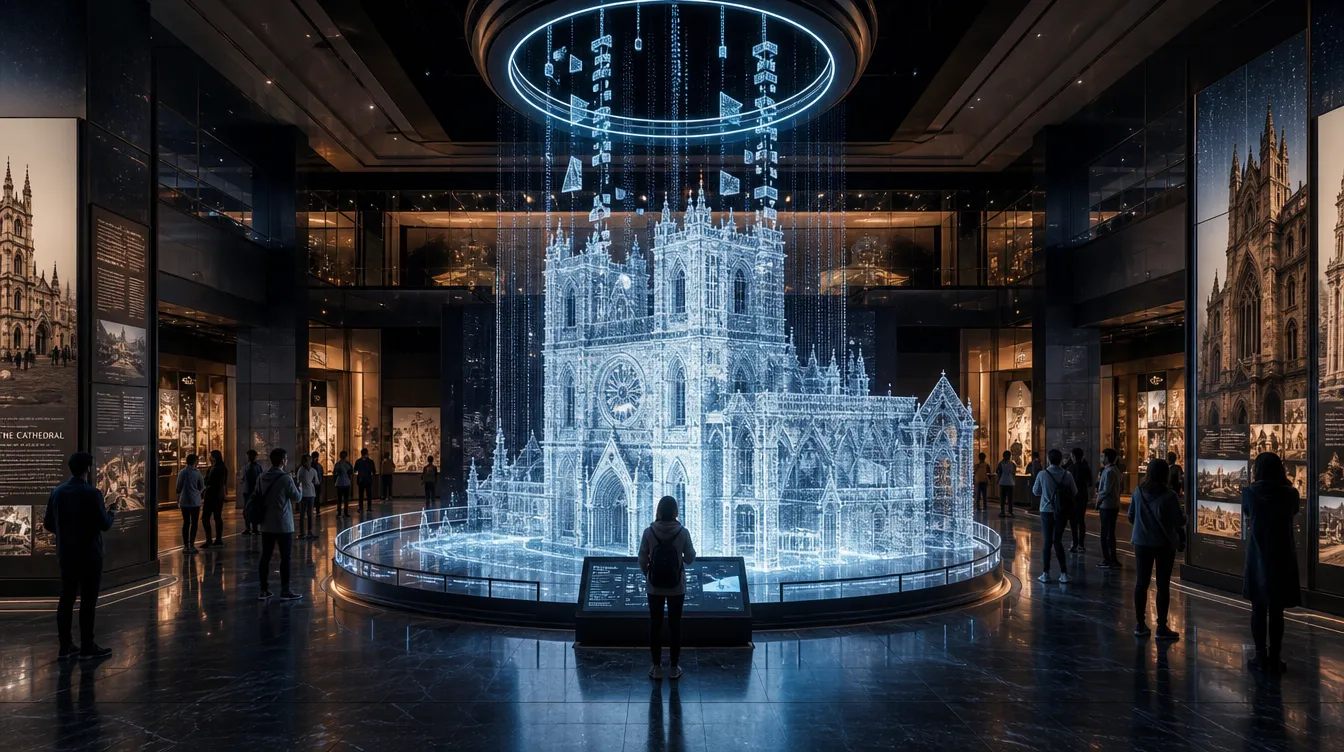
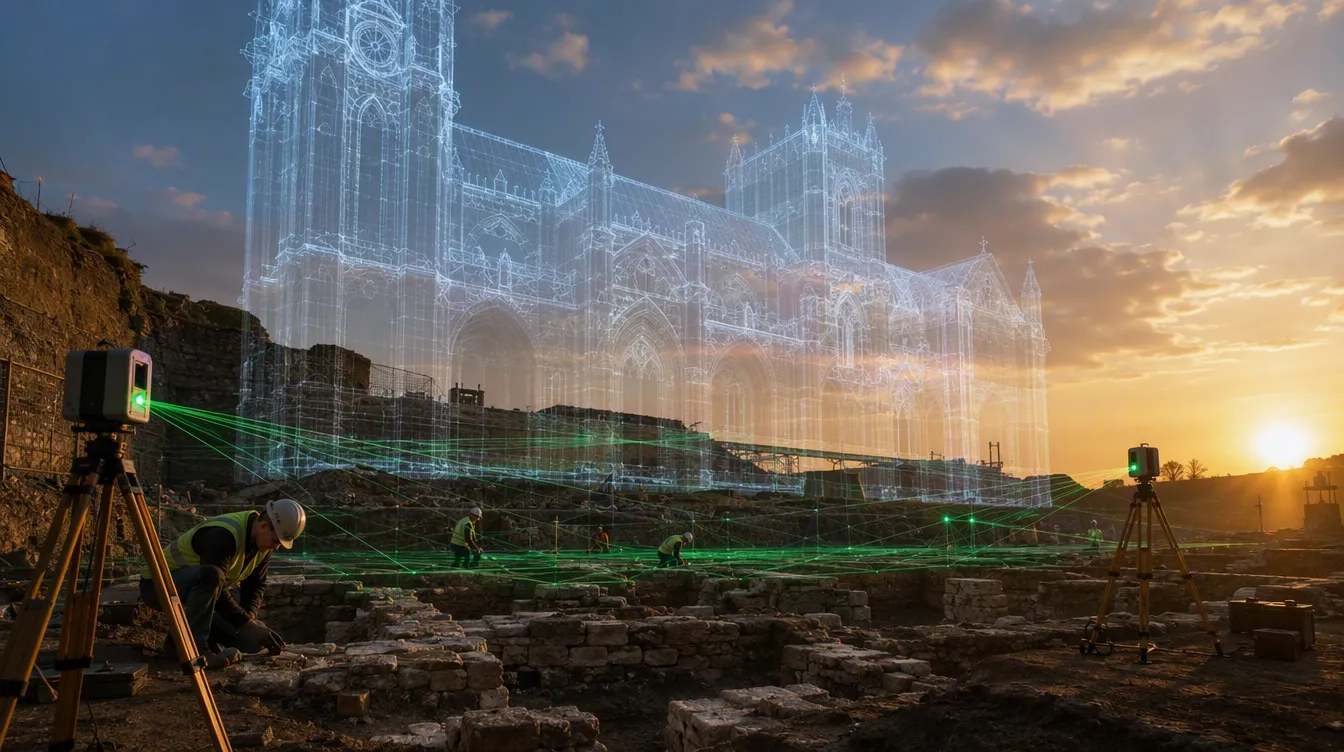
Using modern digital technologies, researchers will be able to determine which materials were used to construct the cathedral and reconstruct how it originally looked. One of the project's key outcomes will be a 3D model of the lost monument that can serve not only as a research tool but also as a foundation for its future restoration.
The new project will preserve the results of archaeological research in digital form for future generations. The three-dimensional model will allow researchers to continue studying the underground structures of the Boris and Gleb Cathedral after fieldwork ends, compare different sections of masonry, and gradually build a scientifically grounded reconstruction of the monument.
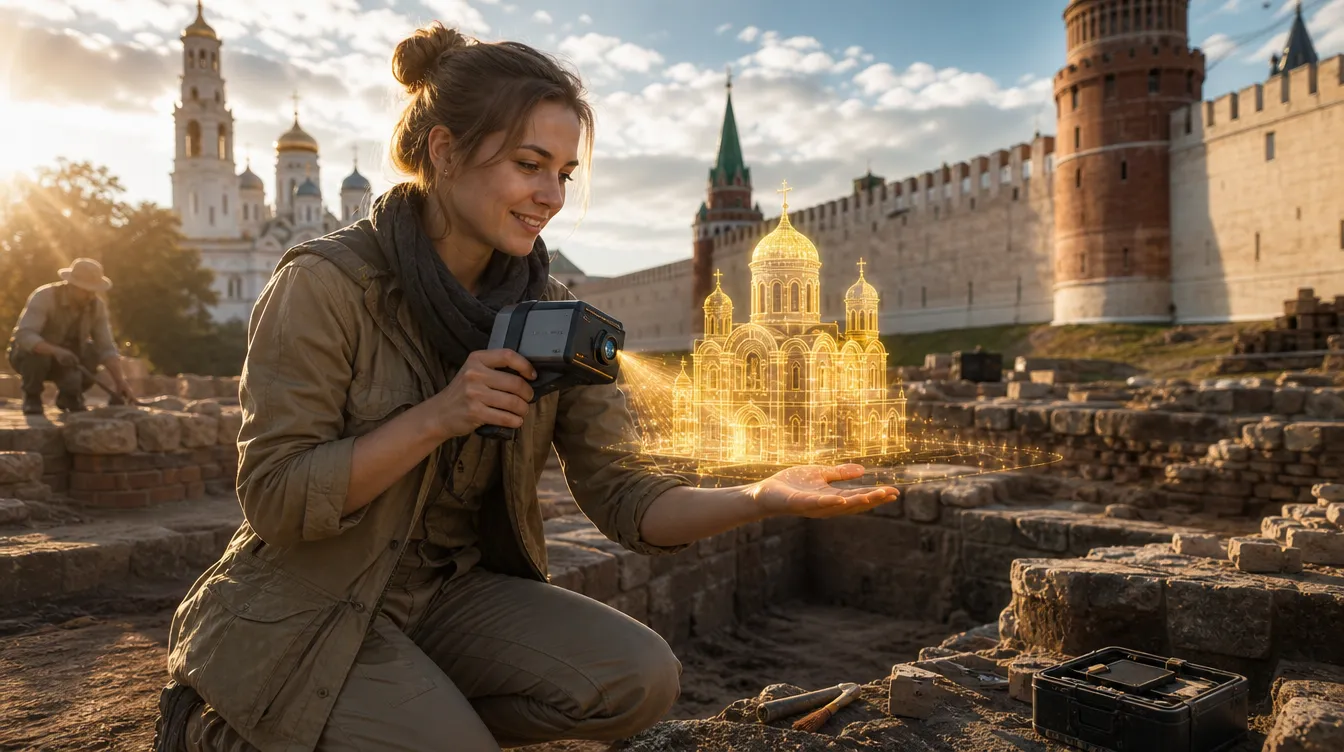
Andrey Shakhramanyan, CEO of SODIS Lab, a company that develops automated construction management, monitoring, and facility operation systems based on digital twins, says the cathedral's 3D model is not the final goal but the foundation for the site's broader digital transformation.
The model is being created as the core of an information system that will bring together every significant piece of data about the monument, including its history, current condition, survey findings, restoration work, and other archival and technical information. It will then support several areas of work, including the creation of tourism products, cultural and educational initiatives, and future architectural or construction activities at the site.
"Such a system can support a wide range of interactive scenarios, from virtual tours and educational projects to tools for monitoring the monument's condition, planning preservation work, and managing its entire lifecycle. It will not only make information easier to organize and process but also make it far more accessible to specialists, researchers, and the broader public," says Andrey Shakhramanyan.
One Model, Many Functions
The creation of the 3D model of the Boris and Gleb Cathedral reflects a broader shift in Russian archaeology from standalone digital visualizations toward comprehensive digital documentation of historical monuments. The model will be assembled directly during excavations, preserving structures that will once again be buried after fieldwork is completed. Over time, the 3D reconstruction is expected to become the foundation for a digital twin of the monument, a virtual museum exhibition, and a long-term research archive.
Experts see this approach as an effective modern framework for archaeological research that can also be applied to other lost historical structures. Beyond serving as a scientific tool, the 3D model also has the potential to support tourism as well as cultural and educational projects.