A Hand Feels, AI Corrects: Russian Students Create a Training Simulator for Ophthalmic Surgeons
In Novosibirsk, medical university students and engineers have developed a VR simulator for training ophthalmic surgeons. The system could reduce hands-on training time from two years to several months while lowering the risk of medical errors.
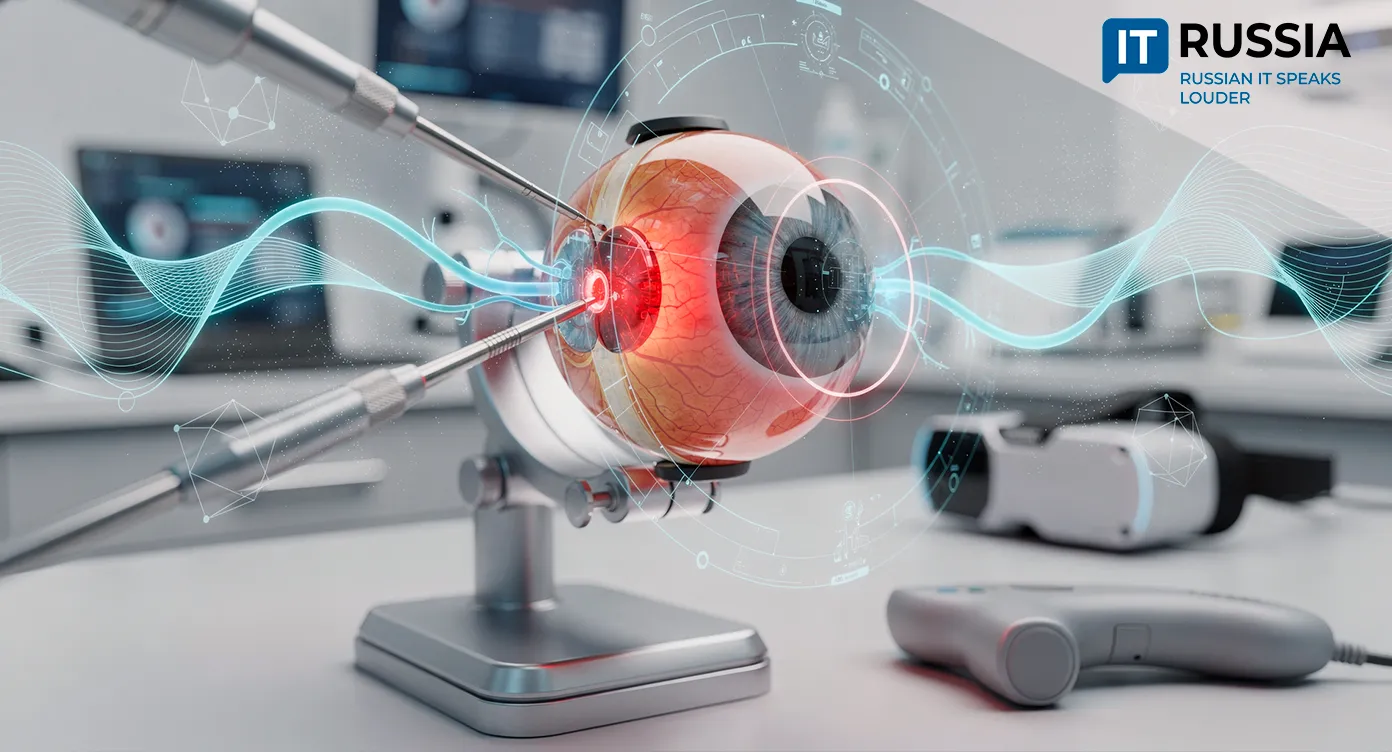
Today, future ophthalmologists practice surgical skills on pig eyes. The biomaterial differs from human tissue in density, while supervising physicians spend up to 40% of their working time monitoring students’ actions. In Novosibirsk, that problem has been addressed. Students and engineers developed Russia’s first VR simulator combining artificial intelligence with haptic feedback.
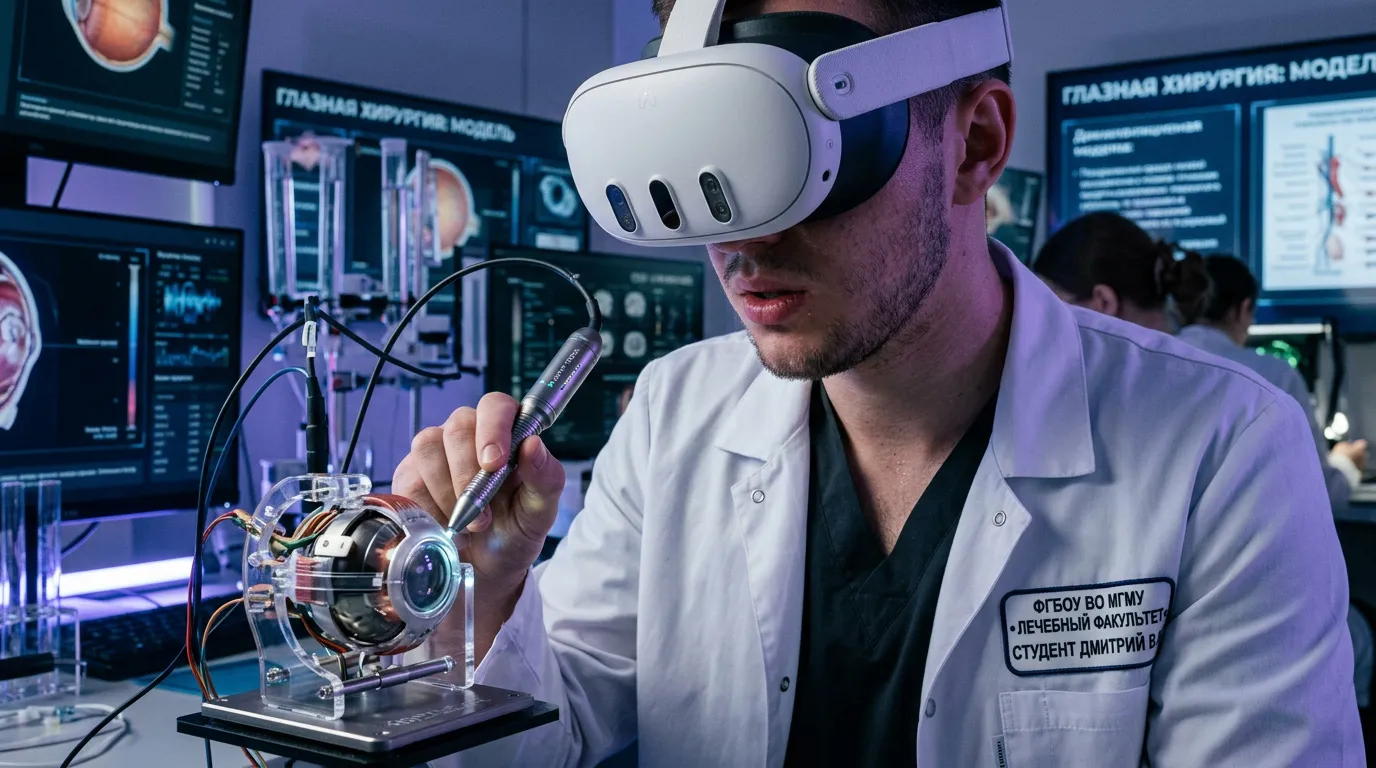
The system consists of three components. VR goggles immerse trainees in an operating room environment, a metal sensor simulates a patient’s eye, and the controller is designed to resemble a real surgical instrument.
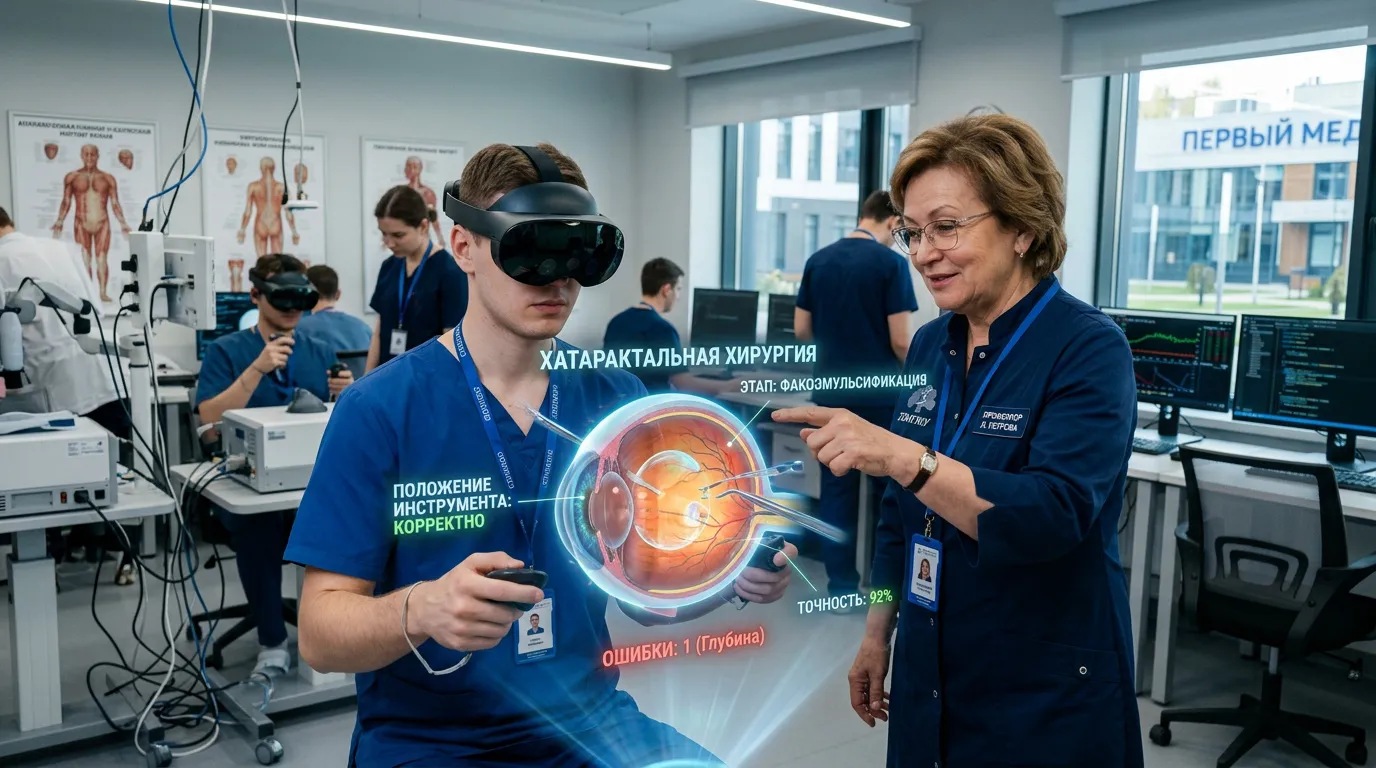
“A future physician launches a scenario – for example, cataract removal – and begins the procedure. The system features advanced haptic feedback and AI-based analytics. If a resident applies excessive pressure with the instrument, the controller vibrates, while the AI instantly generates possible consequences of the mistake on screen, such as tissue rupture,” explained one of the project’s developers, NSMU student Florida Ismailova.
In practice, the AI analyzes every movement made by the future surgeon and provides real-time feedback.
For Doctors and Patients
The closest comparable device is a German surgical simulator. However, after 2022, updates to that platform nearly stopped. In Russia, such equipment is currently available only in Moscow, with a price tag reaching 300 million rubles (about $3.9 million). According to the developers, the Novosibirsk system will cost roughly 12 million rubles (about $158,000) – 25 times less – and runs entirely on Russian software.
More importantly, however, is the impact on physician training time. Today, training an ophthalmic surgeon takes two years. The developers say their simulator could reduce that period to two months without sacrificing the quality of knowledge or surgical skills.
Supervising physicians are freed from routine oversight and can devote more time to real surgeries. Intended surgeons, meanwhile, gain an opportunity to practice complex procedures in a safe environment. A mistake on the simulator does not cost a patient their eyesight.
The development team includes medical students, while Novosibirsk region chief ophthalmology specialist Angela Zhanova served as a consultant. That means practicing physicians have been involved in the project from the very beginning.
Beyond a Virtual Simulator
The ophthalmology simulator is far from an isolated case. The project emerged from Novosibirsk Academpark, which has operated since 2006. Today, the technopark hosts 354 resident companies and employs more than 10,000 people. Revenue generated by resident firms exceeded 64 billion rubles (about $842 million) in 2024.
What emerges is a strong example of collaboration within Russia’s scientific community, where technology and business are advancing together. Equally important, the simulator is fully independent from foreign technology: it uses domestic software, local assembly, and proprietary algorithms.
Project Prospects
The challenge of training ophthalmic surgeons exists worldwide. Students are still trained on biomaterials, while mentors spend substantial time supervising their work. The Novosibirsk solution could find demand beyond Russia, especially in countries that lack access to expensive foreign equipment because of pricing or sanctions.
The developers plan to release a finished device in 2027. That will be followed by testing within an ophthalmology department and medical registration procedures. The entire process is expected to take about 1.5 years.
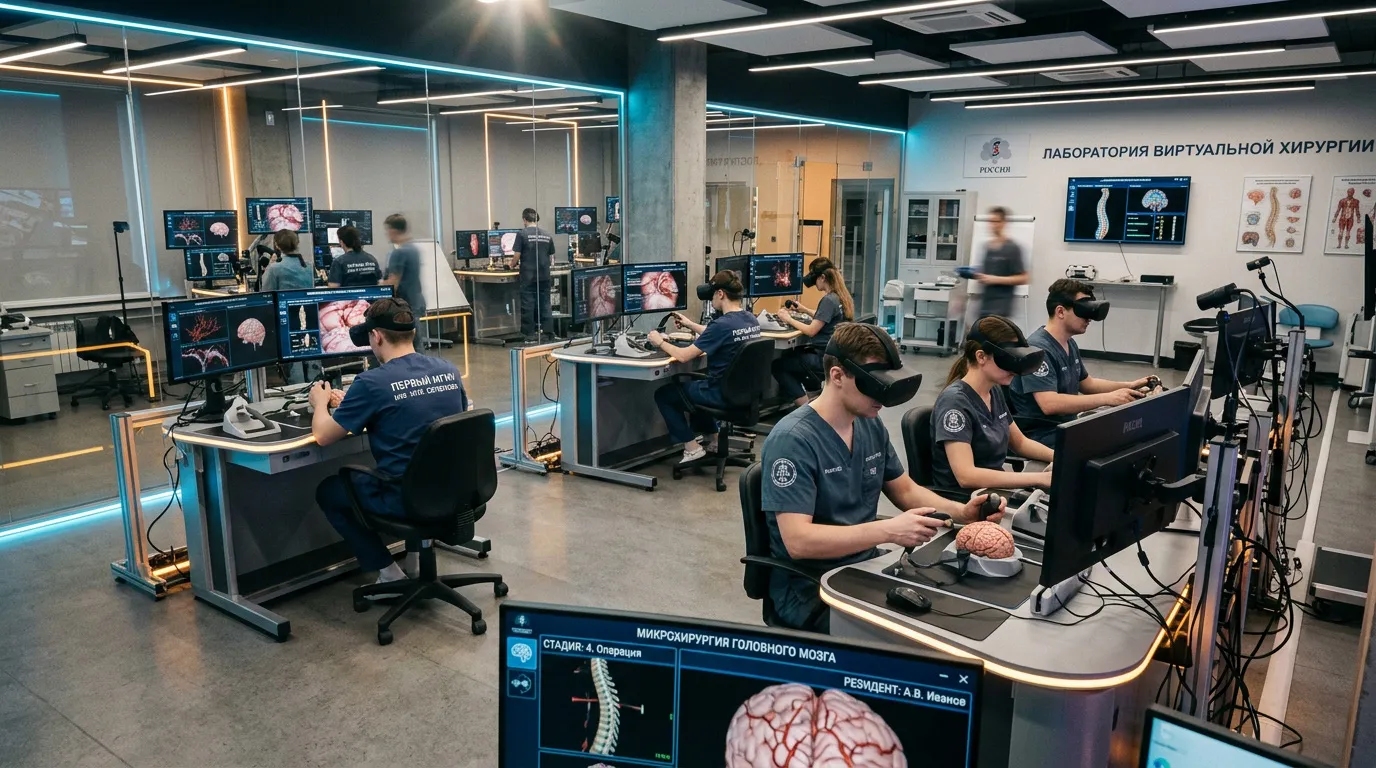
The simulator is likely to find demand among medical universities, major hospitals, and private clinics. In the future, the project’s authors plan to create similar training scenarios for neurosurgeons and other highly specialized physicians.
Export Future
The export potential is clear. In countries across Asia, Africa, and Latin America, where healthcare systems do not operate with multibillion-dollar budgets, this kind of equipment could become a critical tool for training medical students.
Future ophthalmologists will now be able to train on a simulator that is both more precise and more humane than practicing on pig eyes. As a result, they may arrive at real operations with greater confidence, steadier hands, and less fear of making mistakes.