Satellite Technologies Set to Advance Connectivity Along the Northern Sea Route
Representatives of Gazprom Space Systems have outlined new satellite communications technologies designed to strengthen connectivity along Russia's Northern Sea Route.

Russia is continuing to expand the Northern Sea Route (NSR) and develop its Far Eastern ports. Reliable maritime operations across these regions depend on resilient communications infrastructure, making domestically developed technologies strategically important. Among the most notable solutions are those offered by Gazprom Space Systems. Vessels operating along the NSR can use communications services supported by the Yamal satellite constellation, whose existing spacecraft provide coverage across 99% of the seas surrounding Russia, including waters in the Arctic, Atlantic and Pacific oceans.
Onshore connectivity is supported by Russian-built maritime Very Small Aperture Terminal (VSAT) systems. The technology enables high-speed data transmission, internet access, VoIP communications, and a broad range of additional digital services.
Fast Deployment and Reliable Connectivity
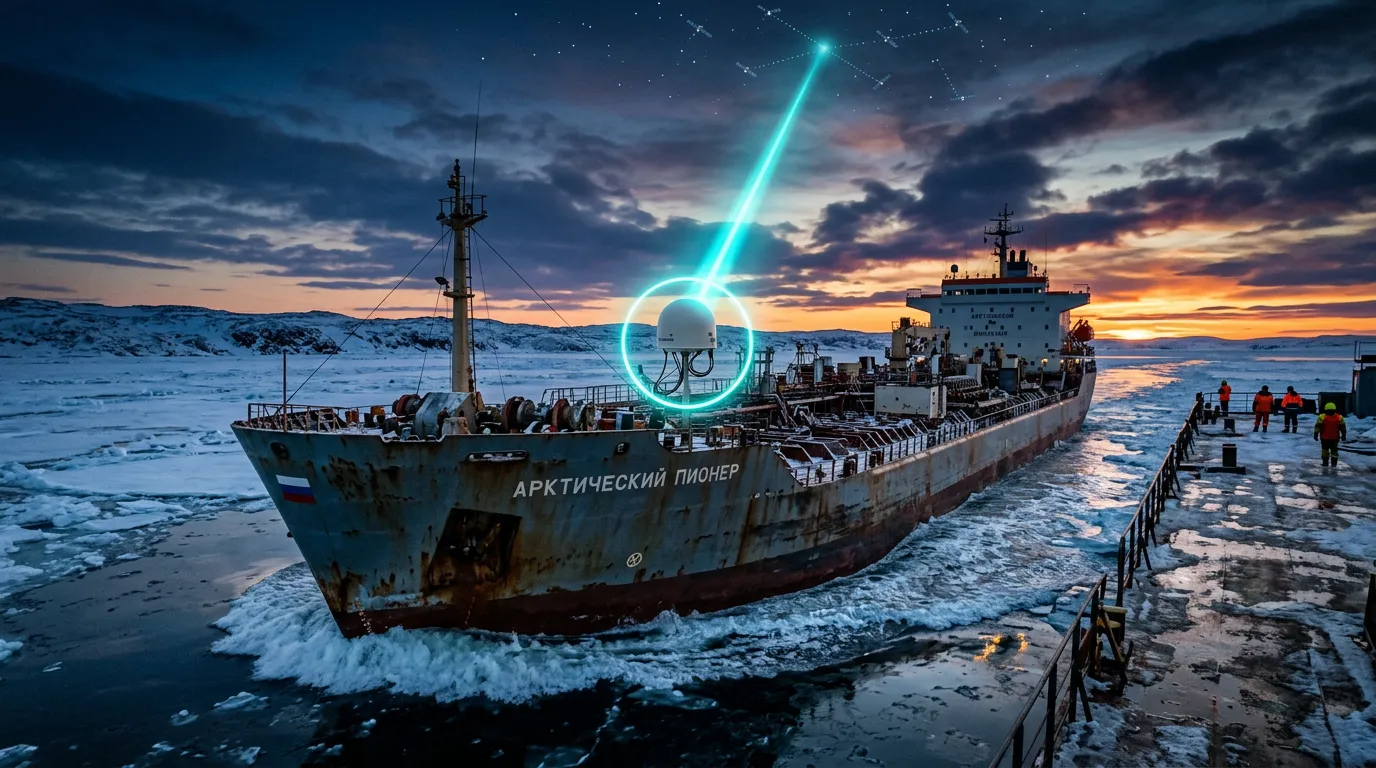
The equipment proposed by Gazprom Space Systems offers several operational advantages. Its compact design is particularly important because it allows installation to be completed within relatively short timeframes. The communications service also operates seamlessly. Automatic handover between satellites maintains uninterrupted connectivity as vessels move across coverage areas.
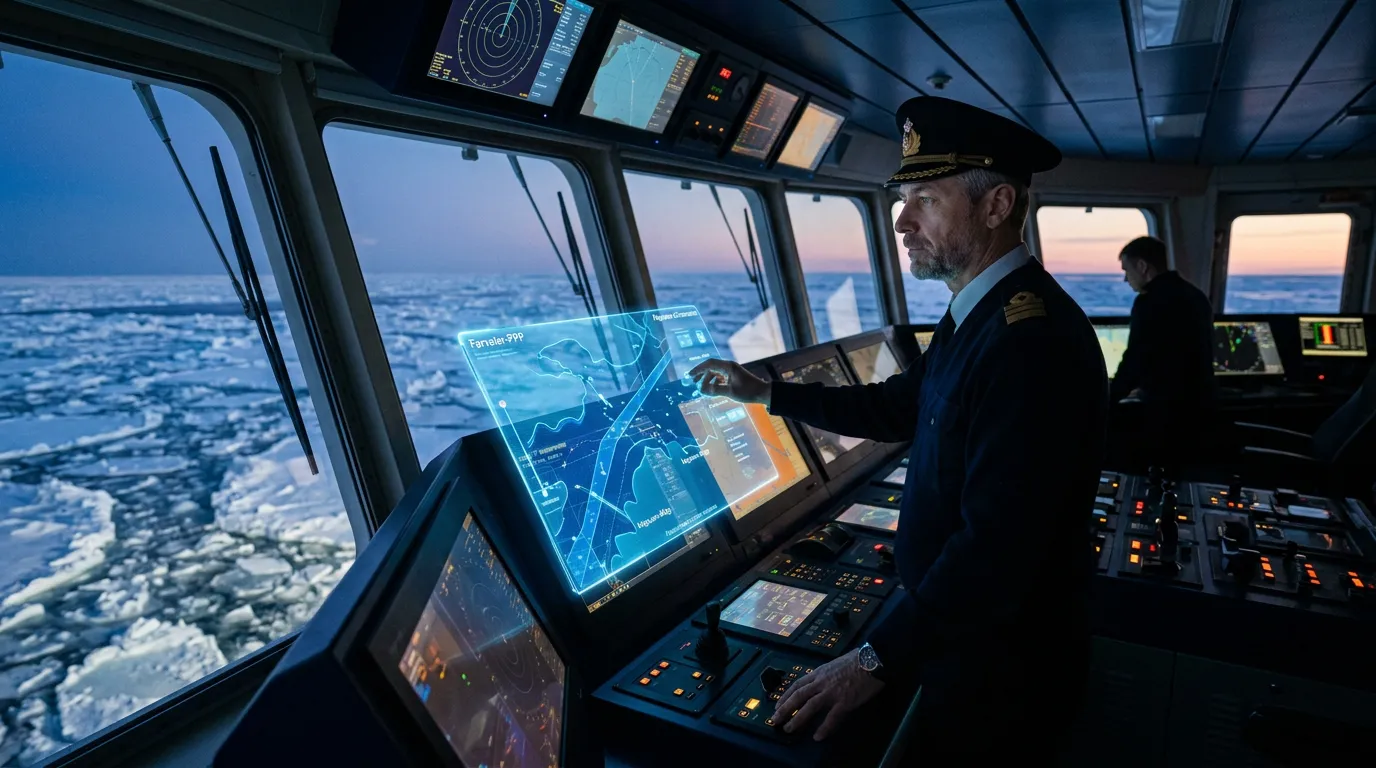
Equally important, the solutions developed by Gazprom Space Systems deliver not only high-speed communications but also navigation positioning. Standard VSAT links combined with baseline navigation services provide positioning accuracy of up to 100 meters. The system is capable of significantly higher precision, however. Positioning accuracy can be improved to as much as 10 centimeters by integrating the onboard Farvater-PPP receiver, which operates using Precise Point Positioning (PPP) technology.
Compatible with Multiple Navigation Systems
Company representatives highlighted the platform's capabilities. "The device receives signals from all major global navigation satellite systems - GLONASS, GPS, Galileo and BeiDou - across dual-frequency bands and uses the domestic PPP-C correction service to obtain positioning corrections. That allows vessels to maintain station automatically under autopilot rather than through manual control, which is especially important during operations such as cargo unloading in rough open-sea conditions," they said.
Gazprom Space Systems also said its specialists have already held discussions with representatives of transportation companies. The parties identified several priority areas for cooperation, including deploying VSAT-based maritime solutions aboard vessels operating on Northern Sea Route services, providing uninterrupted communications for data exchange between ships, dispatch centers and corporate headquarters, and using high-precision positioning to monitor vessel movements and cargo.

The Value of an Integrated Approach
Russia has been expanding satellite services to support development of the Northern Sea Route for several years. As early as 2022, representatives of Roskosmos (State Space Corporation Roscosmos) emphasized the importance of strengthening Earth observation capabilities, including satellite monitoring of the NSR maritime corridor. That mission was assigned to the Arktika-M orbital constellation.
By 2025, Russian companies had begun offering the market integrated solutions rather than standalone products. These platforms combine satellite communications, high-precision positioning, vessel monitoring and sea ice intelligence into a single operational environment. That integrated approach helps optimize shipping routes and reduce cargo transit times.
Future development is likely to focus on even tighter integration of navigation, satellite communications, ice monitoring and digital route models. Together, these capabilities are expected to provide the technological foundation for continued expansion of the Northern Sea Route. Over time, elements of autonomous and uncrewed navigation may also be introduced in Arctic waters, although doing so will require extensive testing, regulatory approval and certification.