Digital Twin Technology Drives Energy Efficiency in Pipeline Operations
A research team at Novosibirsk State Technical University is developing a digital twin of an oil pumping station, shifting operations from manual and semi-empirical adjustments to mathematically optimized control through industrial automation systems.

At Novosibirsk State Technical University (NSTU NETI), researchers are building a digital twin of an oil pumping station to improve resource efficiency. The solution transitions station operations from manual or semi-empirical tuning to a mathematically defined control mode executed through a controller and SCADA interface.
An intermediate oil pumping station increases pressure in trunk pipeline systems. In practice, operators must regulate both pressure and volumetric flow at the station outlet. Achieving this requires identifying an operating point where the required pressure is maintained while delivering the target flow rate. The developed control algorithm is designed to solve this optimization problem.
Algorithm Development and Engineering Approach
The project was led by a graduate student.
As a result, pumps and valves operate in coordination to maintain both pressure and throughput. The model incorporates two primary parameters: outlet pressure and flow rate. To develop the algorithm, the team created a full automation scheme of the station, including all installed equipment. The control logic, designed to reduce raw material losses and electricity consumption during pumping, was developed by Maxim Sukhovarov, a graduate student at NSTU NETI’s Faculty of Automation and Computer Engineering.
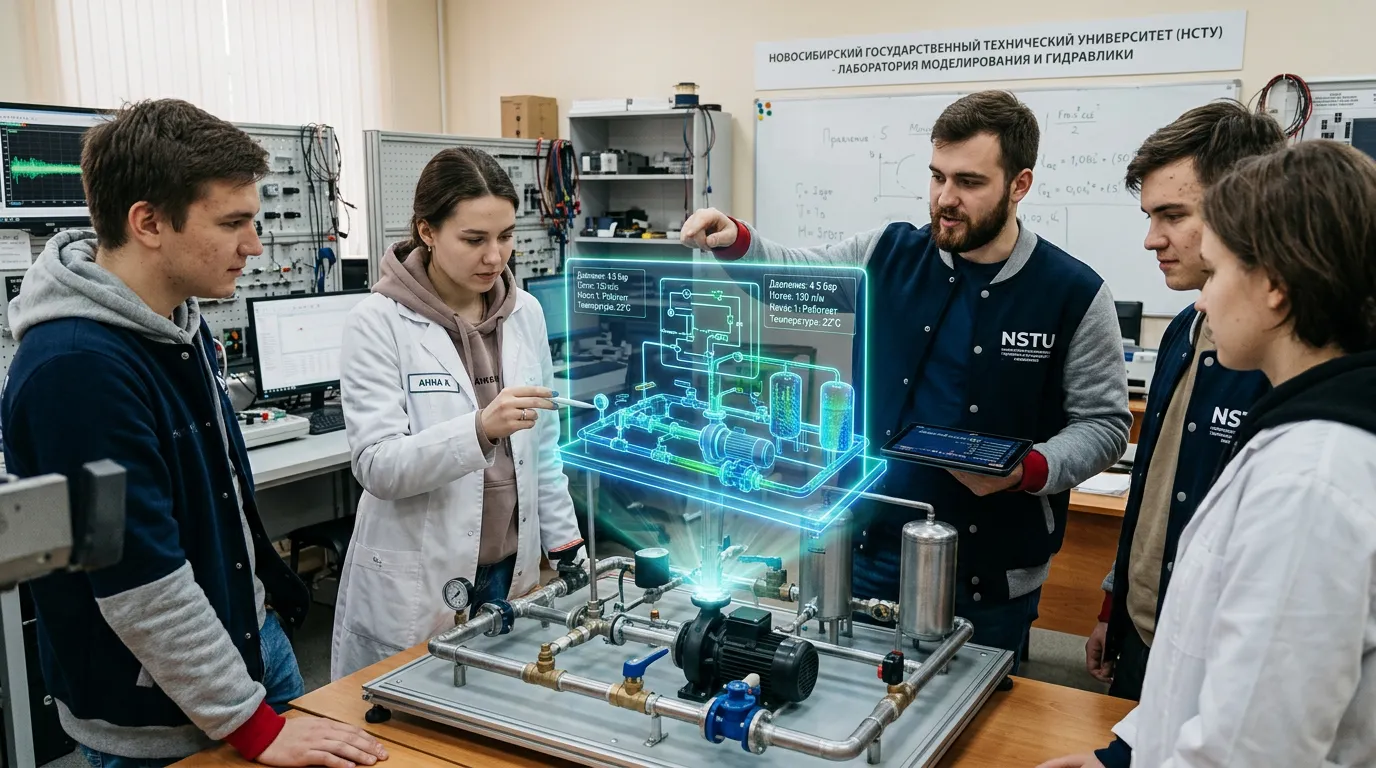
The project represents a university-driven engineering solution at the intersection of automation, simulation, and industrial software. It also signals a broader trend of academic institutions and early-career engineers contributing to real-world oil and gas operations, a core sector of Russia’s economy. A year earlier, NSTU NETI engineers developed a prototype electronic measuring device for monitoring fill levels in oil and chemical storage tanks.
Market Demand and Industrial Context
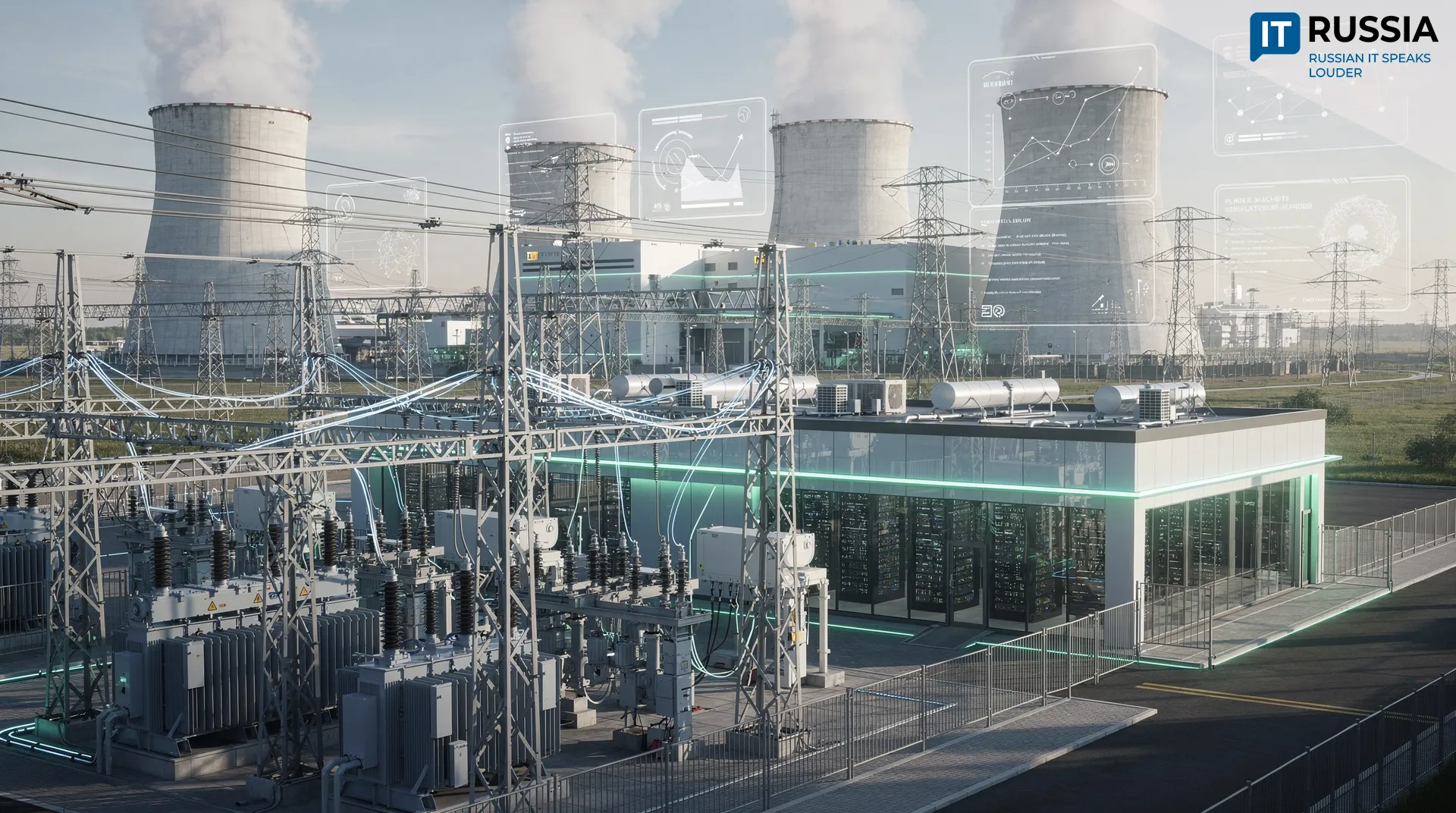
The development aligns with global industry trends, as major industrial players expand the use of digital twins in energy and critical infrastructure to model operating conditions, assess risks, and simulate failure scenarios in advance.
A key next step is to transition the solution from a university prototype to a deployable industrial tool for optimizing pumping regimes, training operators, and validating control algorithms in a safe environment. The solution already addresses practical operational challenges and has potential for integration into large-scale industrial platforms. A critical capability will be the ability to replicate and re-simulate processes, parameters, and equipment logic. This would transform the system from a standalone algorithm into a comprehensive engineering environment for simulation, testing, and predictive optimization.

The market is ready for such solutions. Since 2024, Gazprom Neft has demonstrated digital twin applications to optimize refining processes, improve efficiency, and enable more flexible production management. At the CIPR forum, the company showcased digital twins of resource bases, assets, and technological processes, emphasizing their role in improving refining efficiency, accelerating response times, and enabling real-time operational control.
The project also highlights progress toward technological sovereignty. While energy savings are important, the development of a domestic engineering modeling capability is even more significant. The solution integrates hydraulic modeling, sensor models, power equipment simulations, controller logic, and SCADA visualization. These competencies can form the foundation for domestic engineering simulation platforms and digital twin ecosystems.

Previous Developments and Industry Adoption
NSTU NETI has been building expertise in this area over several years. In 2023, the university reported a digital twin solution for remote monitoring of heat and electricity supply in schools and kindergartens. In March 2026, it introduced an electronic measurement device for monitoring fill levels in oil and chemical storage tanks, further expanding its portfolio in infrastructure digitalization.
A comparable approach is being pursued by Rosatom, a major player in the energy sector. In 2024, the company announced completion of the second phase of its Digital Water Utility system in the Belgorod region. The solution reduces losses, lowers incident rates, and improves the efficiency of water supply systems.
In 2024, digital tools were also reported in use at Transneft Druzhba facilities to continuously monitor the efficiency and reliability of pipeline valves. While not identical to pumping station control systems, the application reflects a broader trend: pipeline infrastructure is moving toward fully digital, data-driven operation.