Learning at a Click: Shkolkovo Launches New AI Assistant
The chatbot is being rolled out as part of the Shchelochok intensive program, analyzing not only what students know but how they learn – including study habits, focus, and response to workload.
What happens if you seat not just a student at a desk, but also a precise digital twin? The system can tell when the student has not fully worked through material and when they genuinely understand it. That is exactly what is now happening with students in Samara. They have become the first testers of a new AI-powered educational assistant developed by the Shkolkovo platform.
So Students Don’t Overheat
This is not just another chatbot pulling ready-made answers from the internet.
Developers at Shkolkovo describe the product as the “first in Russia” assistant built on domestic technologies. The system operates within the platform’s own data environment. Its key feature is comprehensive behavioral analysis: how often a student logs in, how long they can stay focused, whether they take breaks on time, and, critically, whether there are signs of cognitive overload. When the system detects fatigue, it adjusts the student’s personalized learning plan.
The pilot remains local and is being tested within the Shchelochok intensive program, which in 2025 attracted more than 400,000 participants and generated over 5 million views. Competition in this space is intensifying. Data from Yandex Uchebnik highlights the scale: during the last academic year, 120,000 students used its AI math assistant, while more than 220,000 high school students prepared for the Unified State Exam in computer science on the platform. The platforms are already running at industrial scale.
The outcome is clear: students receive a personalized learning experience, parents may reduce spending on tutors, and teachers gain a digital tool that flags problem areas in real time.
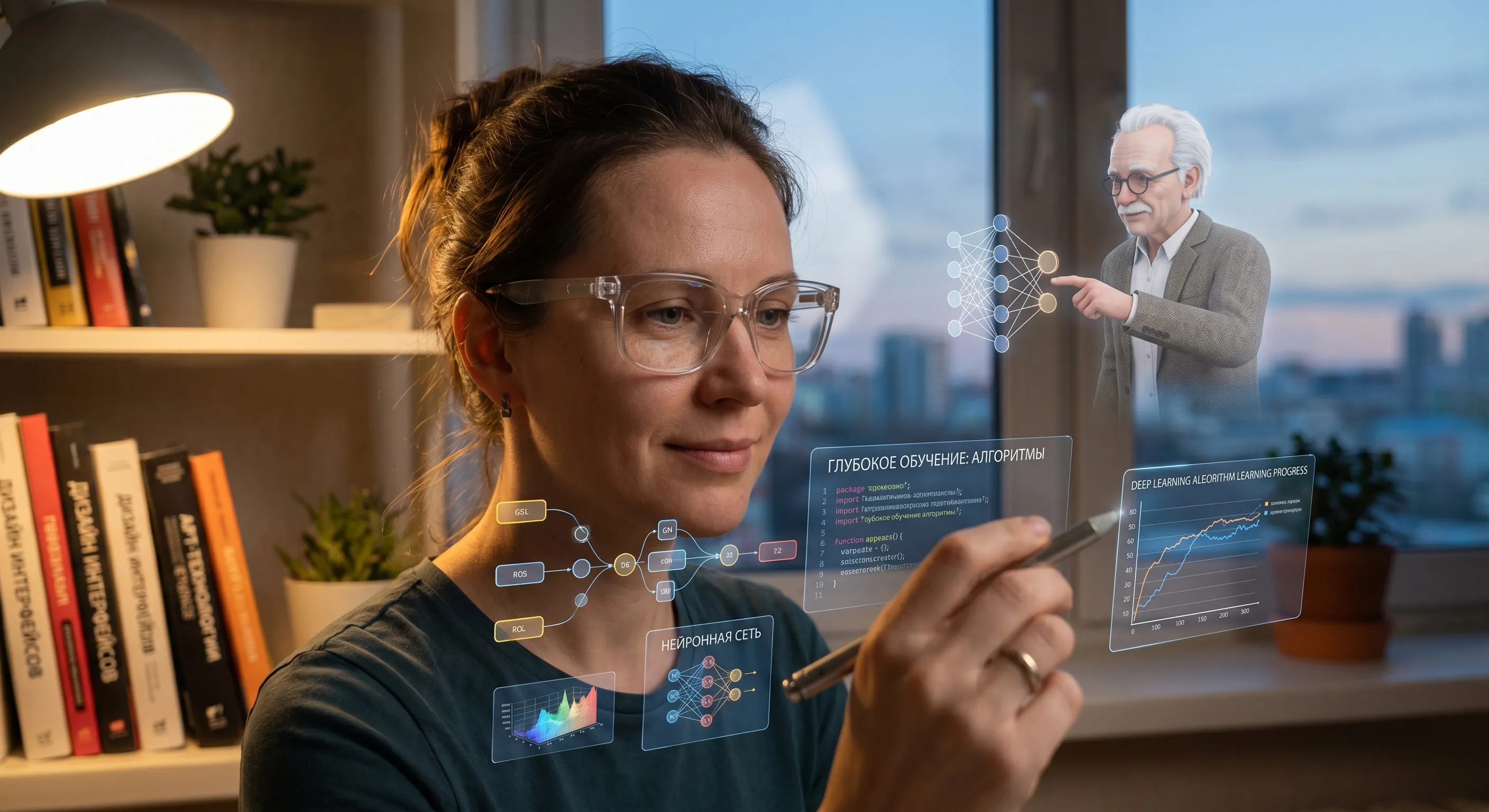
A Digital Tutor in Every Backpack
The Samara project builds on earlier edtech experiments. In fall 2024, Yandex Uchebnik introduced its AI assistant for middle school, supporting grades five through eight in mathematics. At the time, it sparked surprise – machines were now engaging in dialogue with students.
Around the same time, the AI Alliance presented Russia’s first school textbooks on neural networks. Students in grades five and six began learning about datasets and deep learning alongside multiplication tables. By the end of the 2024–2025 academic year, it was clear that hundreds of thousands of students were already relying on AI for learning support.
In March 2026, the Ministry of Education, together with the Agency for Strategic Initiatives, announced guidelines for AI use in schools. Regulation often follows technology. However, the involvement of the Russian Academy of Sciences and major IT companies signals the seriousness of this effort.
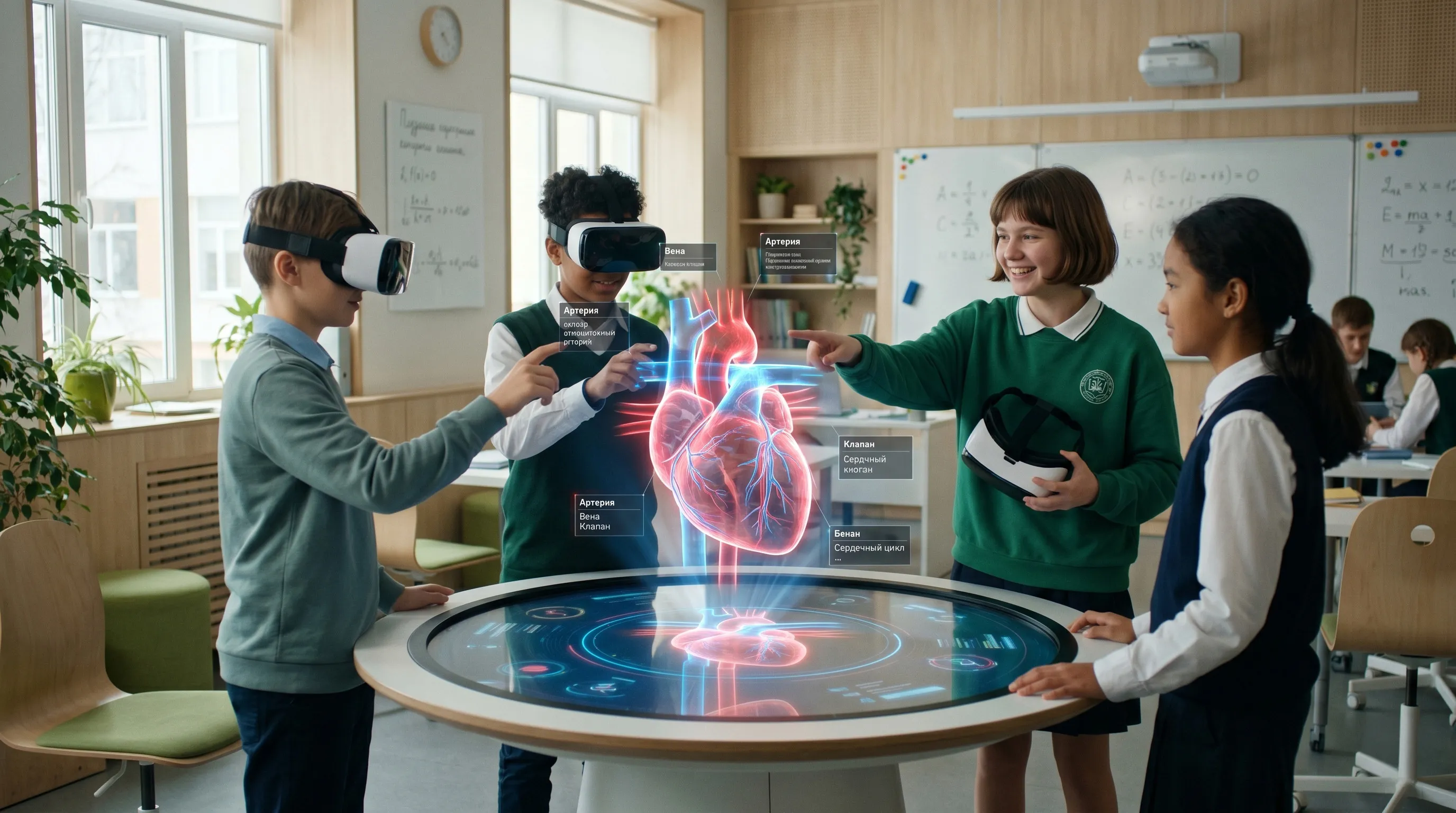
Globally, similar trends are unfolding. In 2023, Khan Academy introduced its AI tutor Khanmigo based on GPT-4. Duolingo followed with Max, which can explain mistakes in real time and simulate conversational scenarios.
UNESCO also released guidance on generative AI in education in 2023, acknowledging that technological progress is moving faster than regulators can keep up.
Now, hundreds of students in Samara are evaluating the new Russian assistant. Notably, the Shkolkovo platform, a Skolkovo resident, has already won first place in the “Nash Vklad” award.
Kinder, More Accurate, Safer
What comes next? The assistant could become as commonplace as digital gradebooks. Within the next one to two years, AI assistants are likely to become a standard feature across major educational platforms. Demand is clear – preparation for exams, competitions, and core subjects such as Russian language, mathematics, and computer science.
Soon, the key differentiator will not be whether a chatbot exists, but how well it personalizes learning. The platforms that deliver more accurate, safer, and more supportive algorithms will take the lead.
Greater oversight is also likely. Requirements for storing children’s data, methodological guidance for teachers, and clear boundaries for AI use will emerge. The challenge will be defining where AI should assist and where it must step aside for human educators. For now, Samara Region stands out as a testing ground willing to experiment with these technologies.