Rostelecom Tests Russian-Made DWDM Equipment on Its Network
The Gorizont platform developed by VPG LaserONE has met all technical requirements and standards.

Russian telecom operators are continuing their shift toward domestically developed infrastructure. Deploying locally built solutions reduces reliance on foreign hardware in critical infrastructure and strengthens the country’s technological sovereignty.
Ultra-Long-Distance Transmission
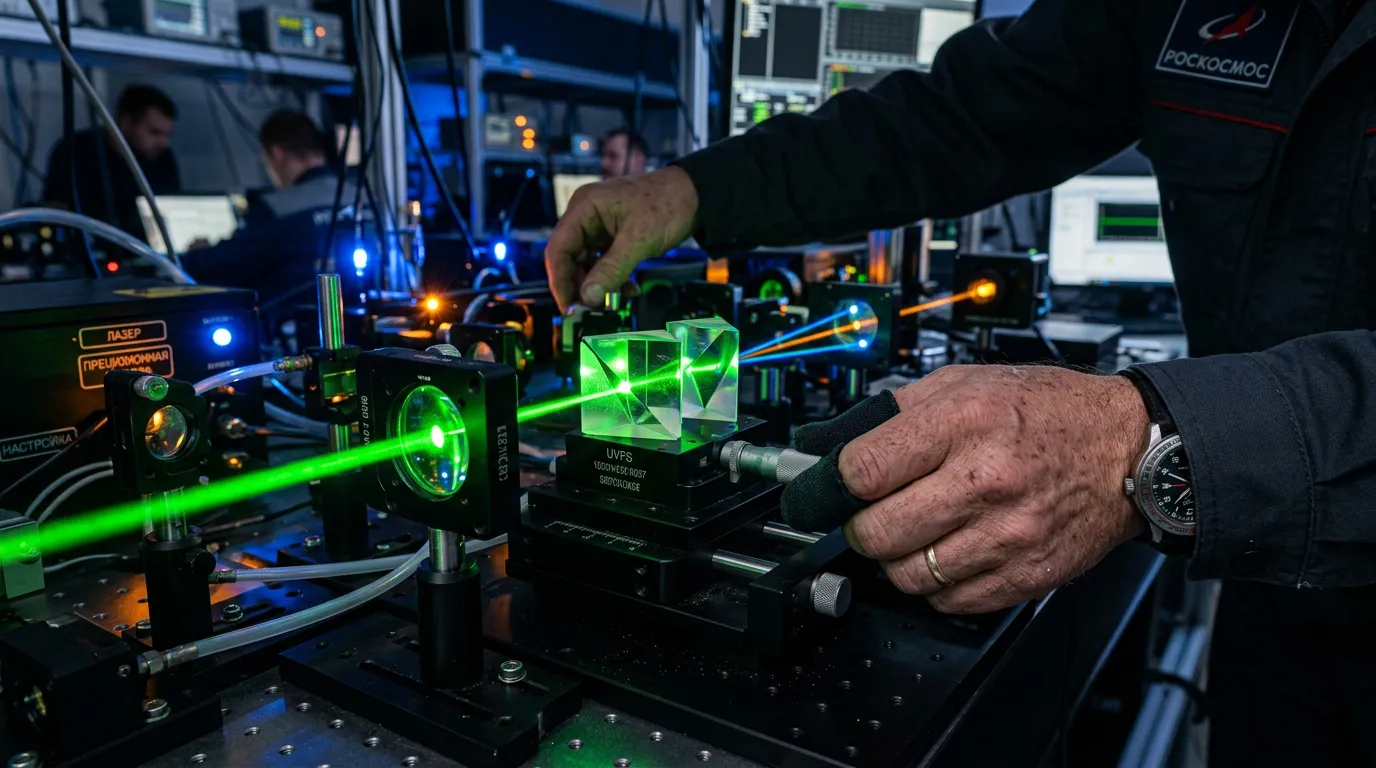
Rostelecom and Russian DWDM vendor VPG LaserONE recently tested the new Gorizont platform. The trials were conducted on a live backbone fiber network spanning more than 2,000 km.
The results showed stable and reliable performance across all systems while supporting data transmission speeds of up to 100 Gbps. The Gorizont platform is fully compatible with existing elements of critical network infrastructure.
DWDM (Dense Wavelength Division Multiplexing) is widely used technology that allows multiple signals to be transmitted simultaneously over a single fiber using different wavelengths. It is widely used in global network infrastructure and enables scalable, cost-efficient bandwidth expansion by orders of magnitude.

Broad Deployment Scenarios
The Gorizont DWDM platform is designed for both regional and ultra-long-haul backbone networks. It transmits over distances of more than 500 km without the need for intermediate amplification equipment. This enables operators to build highly resilient networks with complex ring and hybrid topologies.
According to Rostelecom’s press service, the testing followed an “Alien Wavelength, a DWDM interoperability scenario.” This approach uses identical wavelengths for data transmission between different network nodes. Engineers from VPG LaserONE, RTK-Service, and Rostelecom’s R&D and backbone network teams ran the tests. The results showed that the platform meets all required specifications and standards.
Fully Domestic Development
“The Gorizont platform is developed entirely in Russia, from architecture to software. Testing on a live Rostelecom line has shown that we have matched global standards and developed solutions tailored to the specifics of Russian networks. These trials are the next step in cooperation between our companies. We are ready to meet the demand for high-quality, locally produced DWDM equipment,” said Rufat Kriman, Head of Telecom Sales at VPG LaserONE.
VPG LaserONE is one of Russia’s leading manufacturers of high-tech solutions, with a portfolio of around 600 product types. The company has a localization level of approximately 85%.

What Other Operators Are Doing
Other major Russian telecom operators are also deploying domestically produced DWDM equipment. In May 2024, TransTeleCom deployed high-speed transit links with a total length of 16,700 km using Russian DWDM hardware and software developed by T8. The optical network connects St. Petersburg and Ulan-Ude.
In June 2025, MTS plans to transition 29 regions to domestic telecom equipment by 2028, including DWDM systems. According to CEO Inessa Galaktionova, the company expects a tenfold increase in capacity on its most heavily loaded segments.
These developments suggest that Russian telecom operators have moved past testing alternatives to foreign technologies and are now entering a phase of full-scale replacement. This shift already covers the most complex and capital-intensive parts of telecom infrastructure. The key question is how quickly these domestic solutions can be scaled and deployed in live operations.