AI to Restore Classic Films from Russia’s Gosfilmofond Archive
Gosfilmofond Rossii (State Film Fund of the Russian Federation), working with Rossiyskaya akademiya nauk (Russian Academy of Sciences), is applying AI to the restoration of legacy films. The technology serves as a tool to speed up the technical side of restoration.
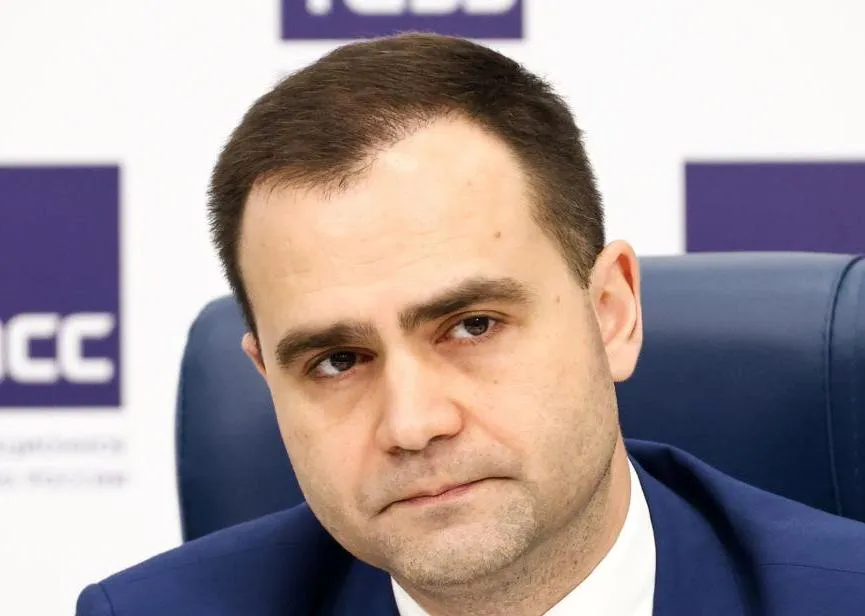
Director General of Gosfilmofond Rossii (State Film Fund of the Russian Federation) Denis Aksyonov says the fund has been integrating AI into its workflows for nearly a year. AI is mainly used to cut time spent on routine tasks.
Restoration and Subtitles
Restoring old films requires careful handling, so artistic and film-historical decisions remain with specialists. Meanwhile, AI can process technical tasks faster. One area where AI is especially useful is in services the archive offers, such as ingesting incoming film materials for permanent state storage. The team is also working on AI-driven subtitling.
“This is a costly process, and deploying AI will help simplify it and reduce both financial and labor costs,” Denis Aksyonov said.
Digital Restoration Goes National
Gosfilmofond and the Russian Academy of Sciences signed a cooperation agreement in February 2025, and it is already delivering results. Some details of joint projects emerged earlier, in November of the previous year. They include an automated system to check incoming digital film copies and a platform to automate subtitling of the archive’s collection for international audiences.
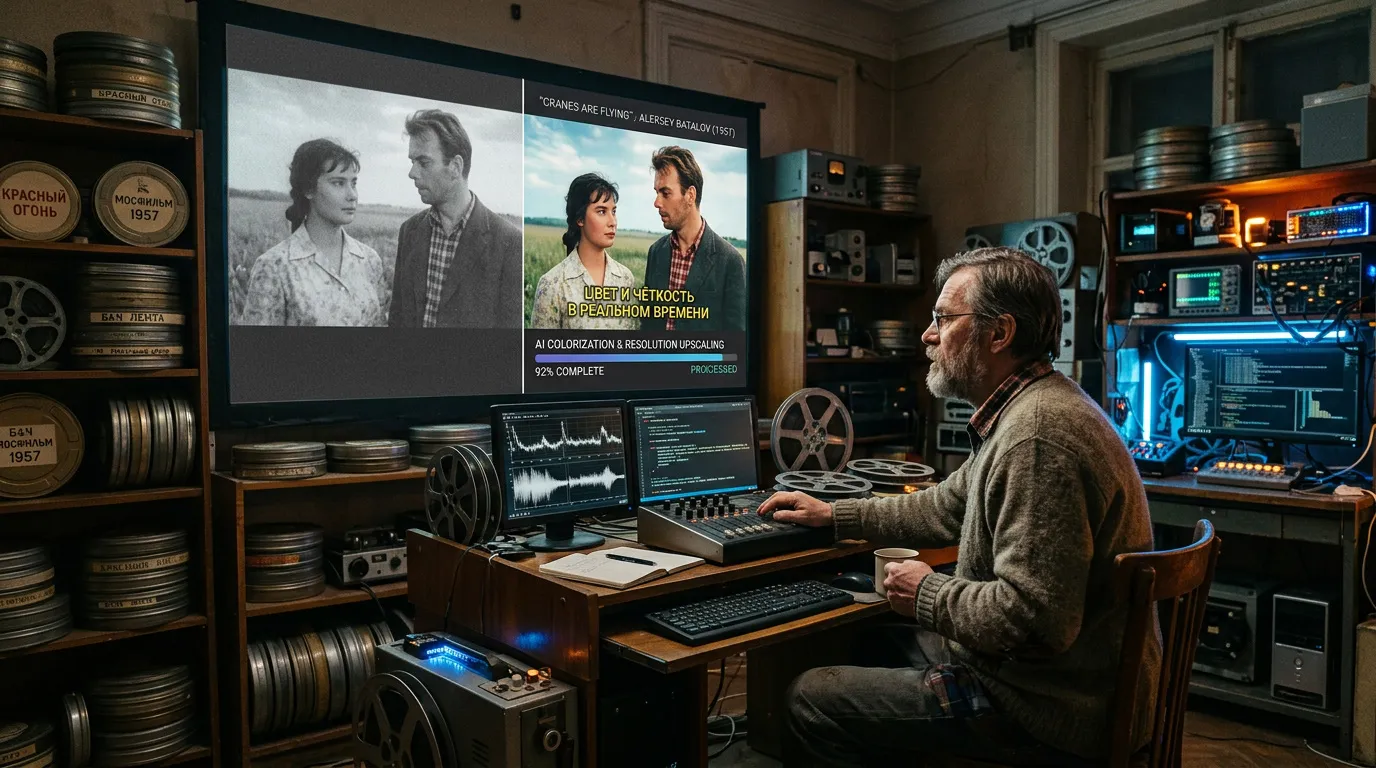
Digitizing film collections is a core mission of Gosfilmofond. In 2024 – 2025, films such as Chapaev, Dozhit do rassveta, Konek-Gorbunok and Dama s sobachkoy were restored. The institution already has a repeatable restoration workflow, and AI is being integrated into existing processes to improve efficiency.
Digital restoration is also expanding at Mosfilm. In 2024, the studio restored 22 films, bringing the total number of restored works to more than 110. This shows digital restoration is becoming a stable and growing segment of Russia’s film industry.
The partnership between Gosfilmofond and the Russian Academy of Sciences demonstrates how AI is used not only to generate entertainment content but also to preserve cultural memory.
New Demands for IT Developers
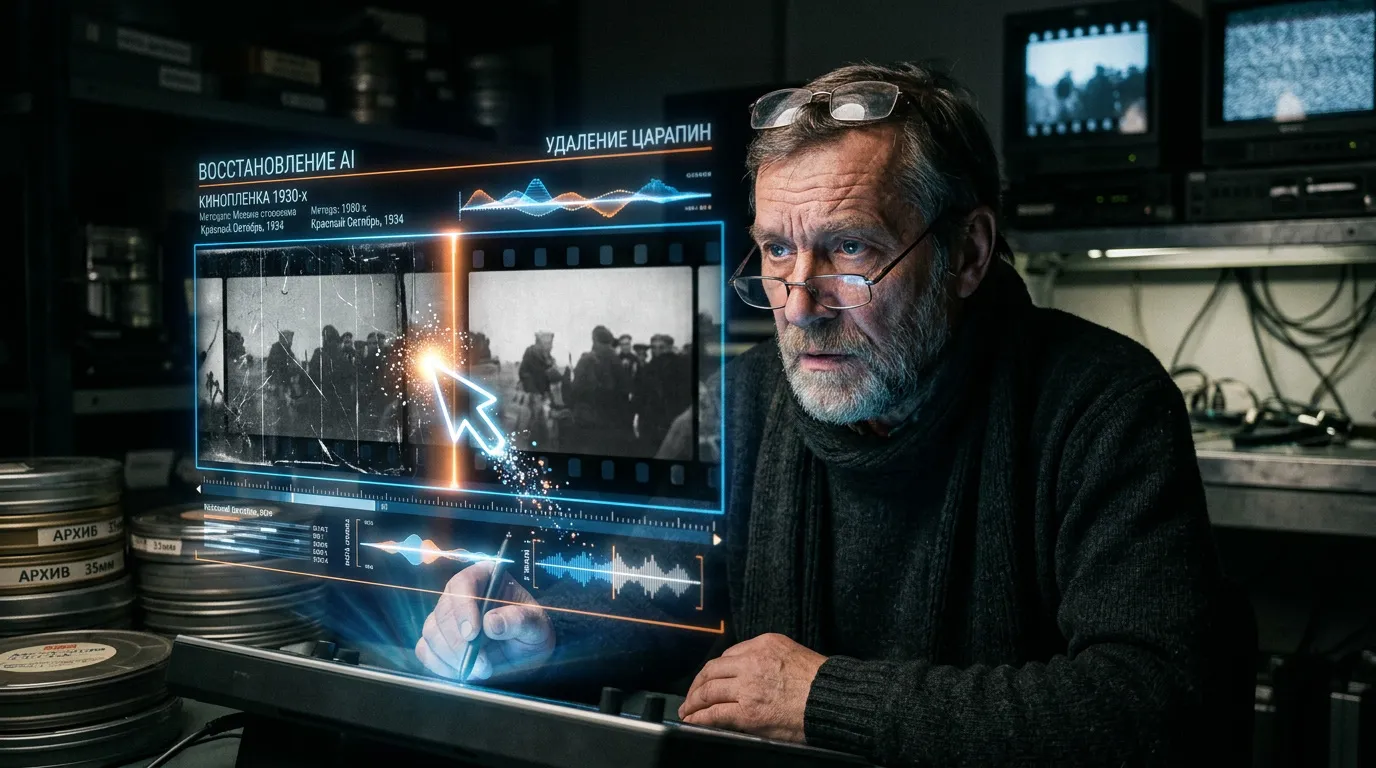
Preserving film heritage is redefining expectations for IT developers. The focus is moving beyond flashy neural networks toward precision, reproducibility, expert validation and the ability to handle large volumes of complex audiovisual data. Solutions in this segment will be in high demand, as Gosfilmofond already handles large-scale archives. As of 2022, the fund reported that 5,000 film materials had been scanned under the national project “Kultura,” equivalent to 2,662 feature-length films, while 22 titles underwent full digital restoration of image and sound. At this volume, AI can cut time significantly in sorting, quality control and preparatory stages.
Existing developments can scale into solutions for film archives, broadcasters, museums, educational platforms and national cinematheques.