

Airport Domodedovo Upgrades Precision Landing System
Moscow Domodedovo Airport has upgraded its ILS 2700 instrument landing system, a move expected to enhance flight safety and increase the airport's operational capacity.
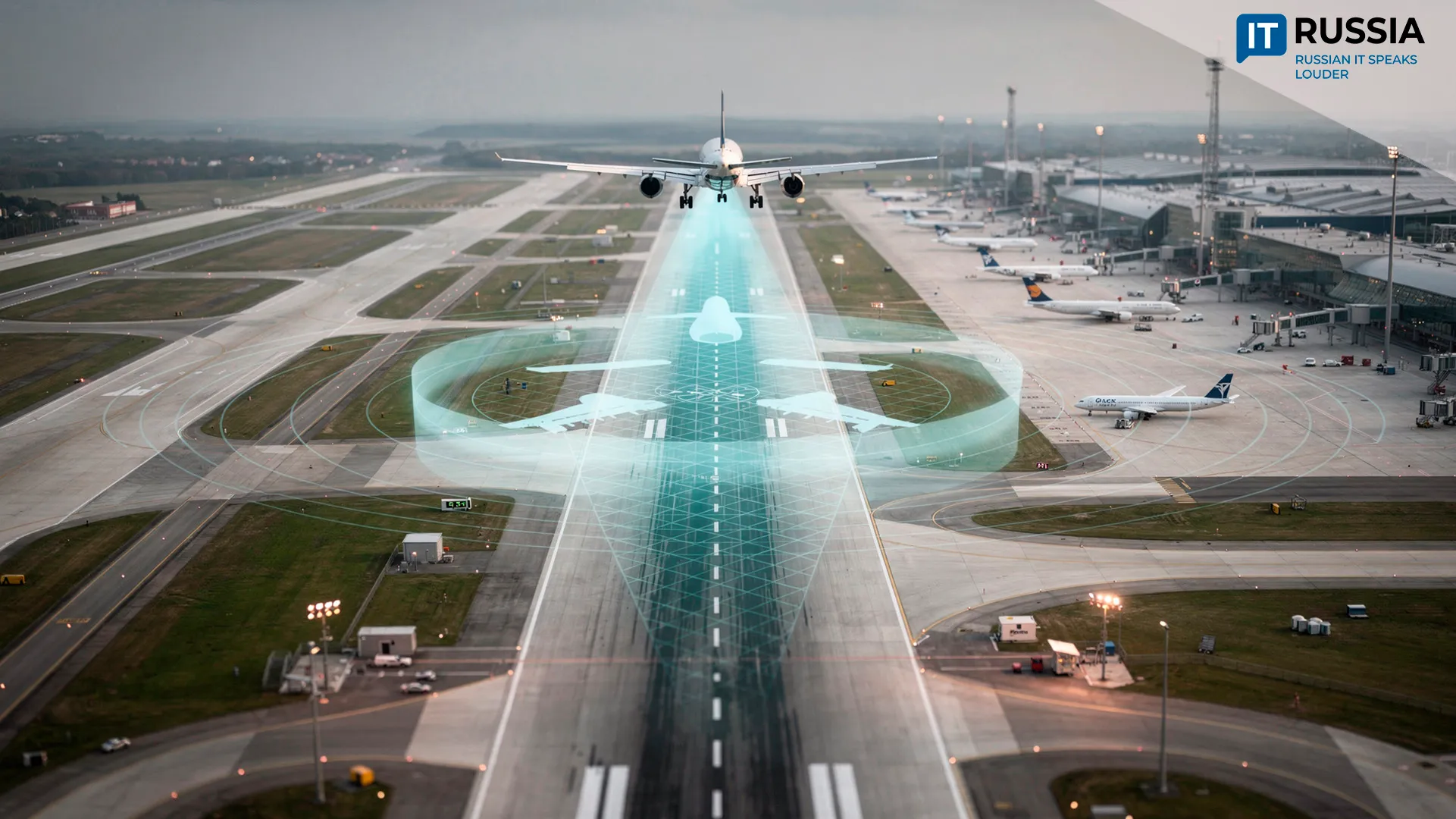
Azimut, a manufacturer within Rostekh (State Corporation Rostec), has modernised the ILS 2700 instrument landing system at Domodedovo Airport. The system is a critical navigation aid that transmits information to aircraft on distance from the runway, localiser deviation, and glide path – the descent profile used during approach. This enables flight crews to conduct precision approaches confidently even in challenging weather conditions. The installation comprises localiser and glide path radio beacons, a distance measuring equipment (DME) unit, monitoring systems, and remote-control equipment.
The system has been designed with a high level of redundancy. It features primary and backup power supplies, can operate on battery power for at least two hours, and its radio beacon has a certified service life of 120,000 hours – equivalent to roughly 15 years of operation. For Domodedovo, one of Russia's largest aviation hubs, the upgrade represents more than routine equipment replacement. It strengthens the resilience of the wider Moscow air transport system.
From the Capital to the Arctic
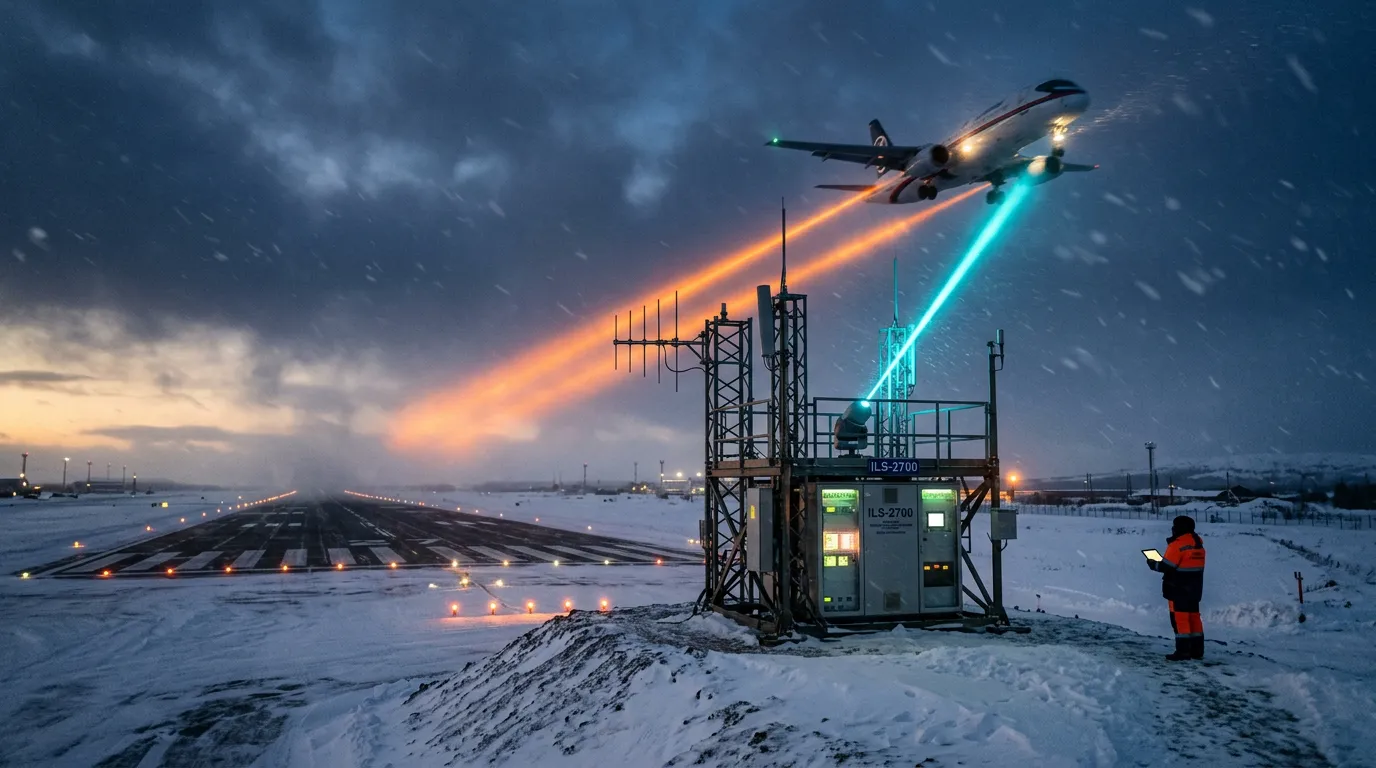
The future deployment of ILS 2700 extends beyond major hubs to regional and remote airports, where equipment reliability is fundamental to year-round transport connectivity. During 2025 and 2026, the system was installed or commissioned in Cheboksary, Novosibirsk, Sukhum, Novy Urengoy, Anadyr, Beloyarsky, and Sochi. This indicates a shift from isolated projects toward a systematic replacement of ageing landing systems.
Within Russia, further deployment of ILS 2700 is expected to focus on several priorities: replacing foreign-made and ageing radio navigation systems, introducing centralized remote diagnostics, integrating with automated air traffic management systems, adapting equipment for severe northern operating conditions, and standardizing maintenance. One of the system's key advantages is its operating temperature range of -50C to +50C, allowing deployment across virtually every climatic zone in the country.
The system's export potential appears strongest in CIS countries and in states where Russian or Soviet aviation infrastructure remains widely used. Another advantage is compliance with International Civil Aviation Organization requirements, a capability confirmed during commissioning at Tolmachevo Airport. The most viable export model is expected to combine not only the hardware itself but also software, system integration, calibration, flight inspection, personnel training, and long-term maintenance support.
Pursuing Technological Independence
As early as 2022, Azimut carried out calibration and verification of the ILS 2700 system at Sheremetyevo Airport while also preparing systems for Syktyvkar and Pevek, expanding the deployment of Russian-made landing technology. During 2024 and 2025, Tolmachevo Airport replaced ageing equipment with the ILS 2700/DME/NL2700 system. In January of the same period, a comparable system featuring remote control and diagnostics entered service in Cheboksary. In February 2025, the complex was commissioned in Sukhum, Abkhazia, demonstrating the export application of Russian technology and its role in restoring aviation infrastructure.
Deployment subsequently expanded to regions with particularly demanding weather and climatic conditions, including Novy Urengoy, Anadyr, and Beloyarsky. For these territories, aviation is one of the primary modes of transport, making a dependable landing system essential to maintaining connectivity and supporting everyday life. In May 2026, the system was also upgraded at Sochi, one of Russia's busiest tourist airports, where accurate and reliable landing capability is especially important during the peak travel season.

Strengthening Technological Resilience
The ILS 2700 upgrade at Domodedovo forms part of a broader programme to replace airfield equipment and strengthen the technological independence of Russia's aviation sector. Demand for such systems is expected to remain strong over the coming years, driven by the replacement of equipment reaching the end of its service life, airport reconstruction projects, and the need to reinforce the resilience of critical infrastructure.
The project is significant for the aviation industry because it demonstrates that a domestically developed hardware and software system can operate reliably at one of the country's busiest and most demanding airports. As more airports deploy this level of protection against adverse weather, flight operations will remain more dependable, even when the runway disappears into fog.