Moscow Unveils the “Eyes” of Its Driverless Metro Train
City officials detailed how the autonomous train detects obstacles and builds a 3D map of the track in real time.
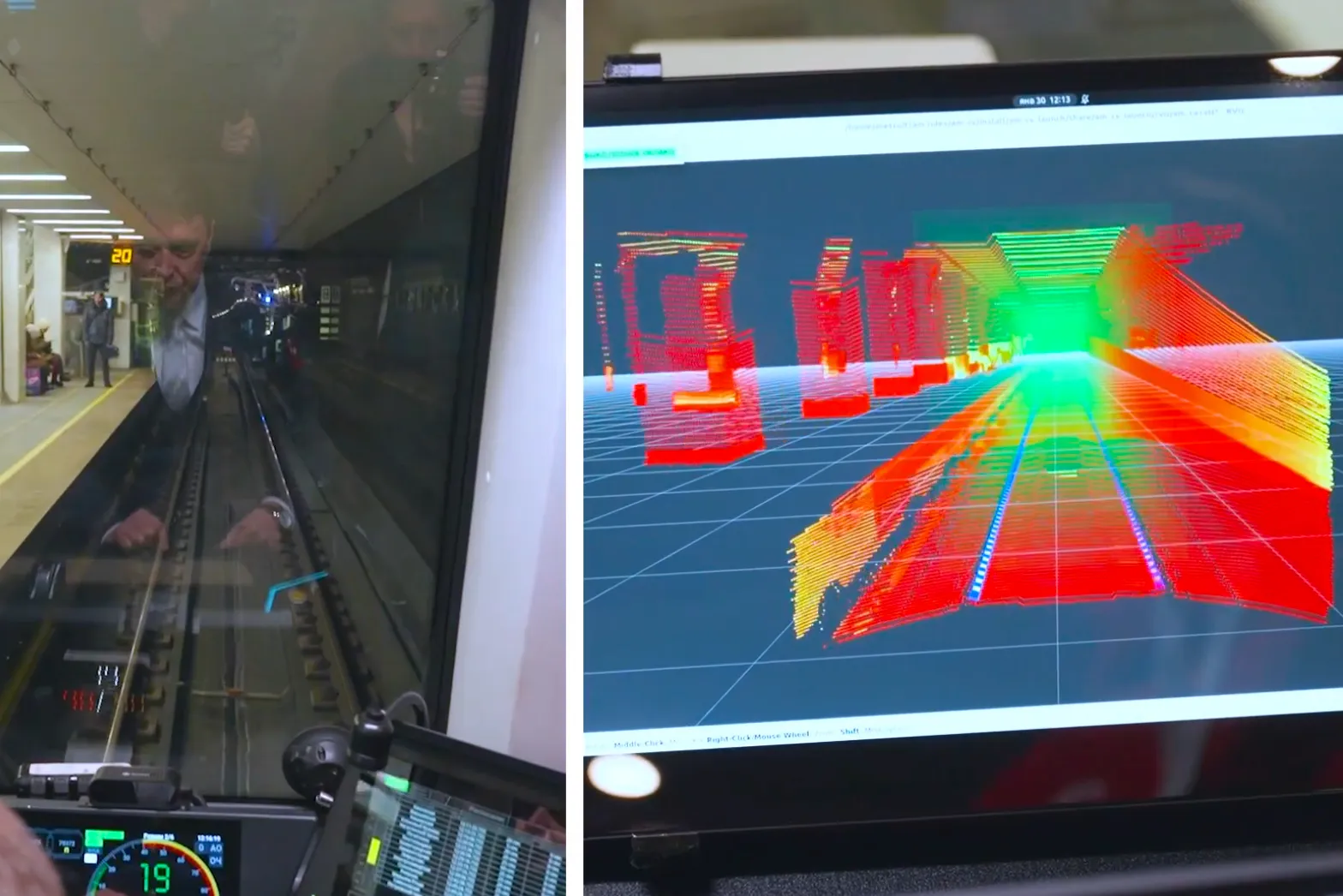
The Moscow Department of Transport and Road Infrastructure Development has revealed how Russia’s first driverless metro train perceives its surroundings. The innovative train is already undergoing testing in Moscow. It can detect objects at distances of up to 200 meters and construct a three-dimensional map of the track in real time.
Sees Objects, Measures Distance, Detects Obstacles
A laser lidar is mounted on the exterior of the driver’s cabin. The beam scans surrounding objects, while 360-degree rotating sensors capture the reflected signal. By measuring the return time of the laser pulse, the onboard computing system determines the shape and location of obstacles with high precision. The margin of error does not exceed 2 centimeters. This allows the train to “see” the entire surrounding space and react instantly to changing conditions. All data from cameras and lidars is transmitted to the train’s control center through a high-speed secure communication channel.
At the same time, engineers are testing automated track intrusion detection systems. The train can identify within a second if a person or object appears ahead. Upon receiving a signal, the train will stop in advance of the obstacle, and metro services will be dispatched to the site.
90 Seconds
The autonomous train is currently being tested without passengers. A driver remains in the cabin to supervise the automated systems. By the end of 2026, the train is expected to begin scheduled test operations, and in 2027 it will start carrying passengers. By 2030, Moscow plans to launch its first fully driverless metro line.
Earlier, we reported that the electric truck GAZelle e-NN completed real-world trials, traveling 120 kilometers without a driver behind the wheel. It is the first Russian project in which all key algorithms were developed domestically.