Russia Is Getting Its First Digital Back Office With 100 Virtual Employees
The future is already here: MTS Web Services (MWS), a subsidiary of MTS, one of Russia’s leading telecommunications companies, is preparing to launch the country’s first digital back office.

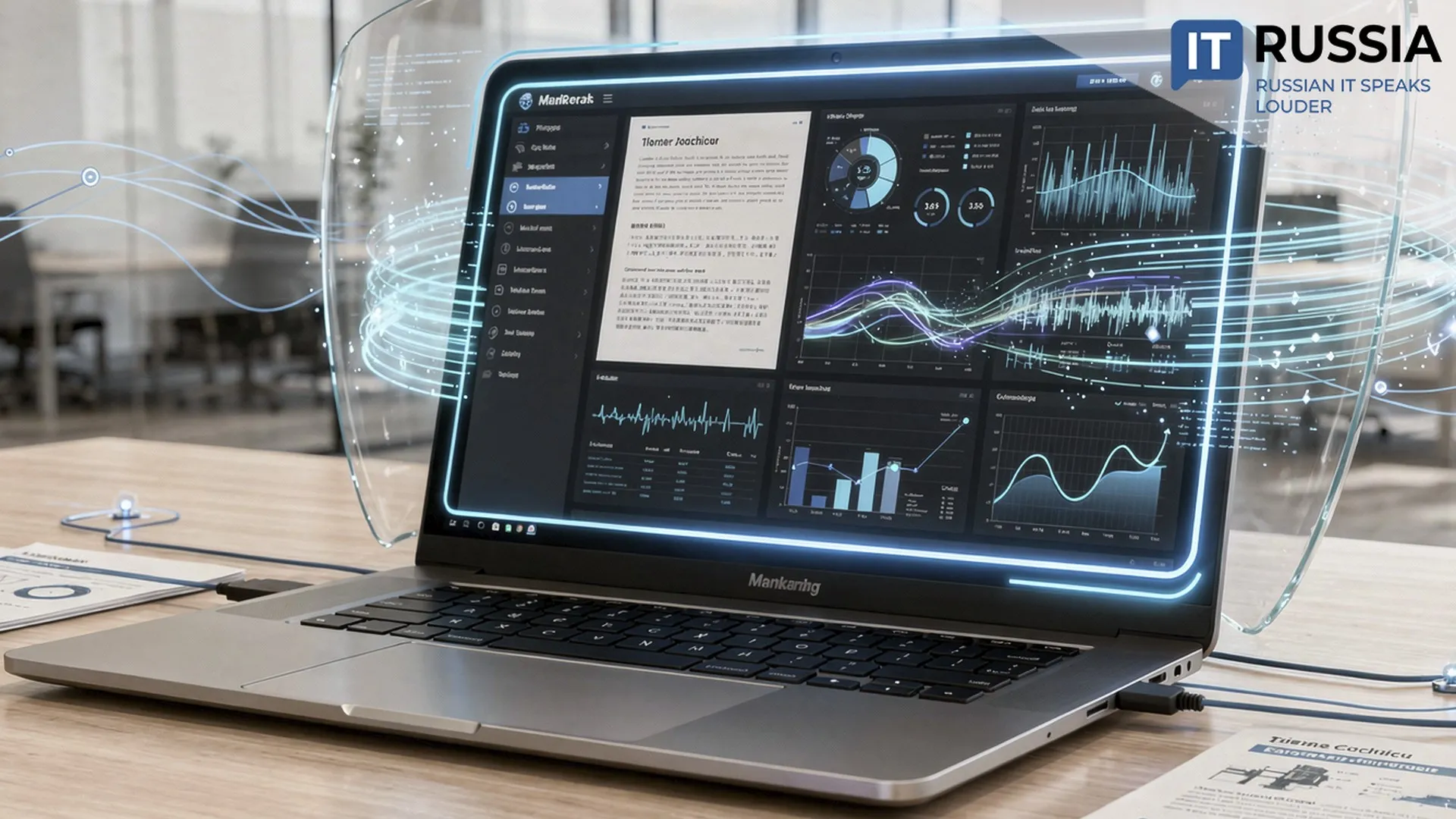
The team will consist of 100 virtual employees handling a wide range of operations, from recruiting to legal support and public relations. The AI agents are expected to perform routine business tasks independently, without human intervention.
MTS Web Services has also posted an opening for a head of its Virtual Employee Center of Excellence, meaning a human will still manage this “disembodied” workforce. Eventually, that person will be expected to replicate the back-office model across companies in the AFK Sistema group. According to the job posting, the digital office will start with 10 roles: analyst, communications project manager, resource planning manager, HR professional, financial analyst, standard-contract lawyer, accountant, technical support professional, procurement professional and document workflow administrator. The roster of virtual professions is expected to expand over time, growing the team.

A First for Russia
The back office is a logical next step for MTS Web Services. The company previously announced a program to create AI professionals called Semeystvo virtualnykh sotrudnikov (Virtual Employee Family), designed to integrate AI professionals into everyday operations as full-fledged members of a team. Pilot deployments of these digital employees proved effective, increasing business process speeds by as much as 40%, depending on the role of each AI agent. In effect, MWS had already laid the technological groundwork for deploying Russia’s first digital back office.
Each virtual employee is a standalone system – an AI agent responsible for its own part of a business process. Each will have a defined role, instructions, access to the corporate knowledge base and measurable quality metrics. An orchestration mechanism will connect all the virtual employees, assigning tasks and monitoring the sequence of operations. The digital service is expected to take over the company’s routine tasks and become part of its day-to-day operations. Eventually, it could scale across dozens of organizations.

Creativity and Oversight
The head of the Virtual Employee Center of Excellence will be responsible for mapping business processes, building a portfolio of virtual employees for specific tasks, and coordinating and overseeing their work as a unified digital back office. MTS Web Services said the person will monitor the digital team as a whole rather than individual AI agents and will be able to assemble virtual employees into functioning business processes. The process starts by mapping a workflow, then identifying which parts can be handled by individual virtual employees and how those agents will collaborate with one another and with people.
Experts see this type of back office as a promising model because the future of enterprise AI is closely tied to systems that work with companies’ internal data and information systems. Virtual employees are already a practical tool, and the model allows businesses to divide tasks between humans and AI based on the complexity and context of the work. For projects like these, the critical measure is not how many virtual employees are created but how deeply they are integrated into a company’s operations and whether they can deliver measurable results.

Faster Service
For Russia’s IT industry, creating the country’s first digital back office is an important step in the development of enterprise AI. The timing reflects a fast-growing market: According to the developer, AI services in Russia grew 30.8% in 2025, faster than any other segment of the IT services market. MTS Web Services, meanwhile, plans to turn its AI agents into a standalone organizational structure with its own tasks and functions. The most obvious areas for virtual professionals include accounting, finance, document workflows, routine legal work, technical support and analytics. These areas tend to involve recurring tasks and procedures that can be clearly defined before AI is given access to corporate systems.
For now, companies cannot simply hand every operation over to AI agents because their access rights and responsibilities remain limited. There is also the risk of AI errors and hallucinations. In the near term, digital employees will handle specific functions while humans retain oversight of the most important decisions to protect corporate information. A successful rollout and stable operation of the back office could eventually benefit ordinary customers of the telecommunications company as well: The project could speed up customer service by accelerating the processing of documents, requests and internal operations.
It is still too early to talk about exporting the IT product to the global market, but similar systems could eventually appeal to Russian-speaking markets and companies across the Commonwealth of Independent States.