Samara Builds SIMMED, a Digital Command Center for VR Medical Training
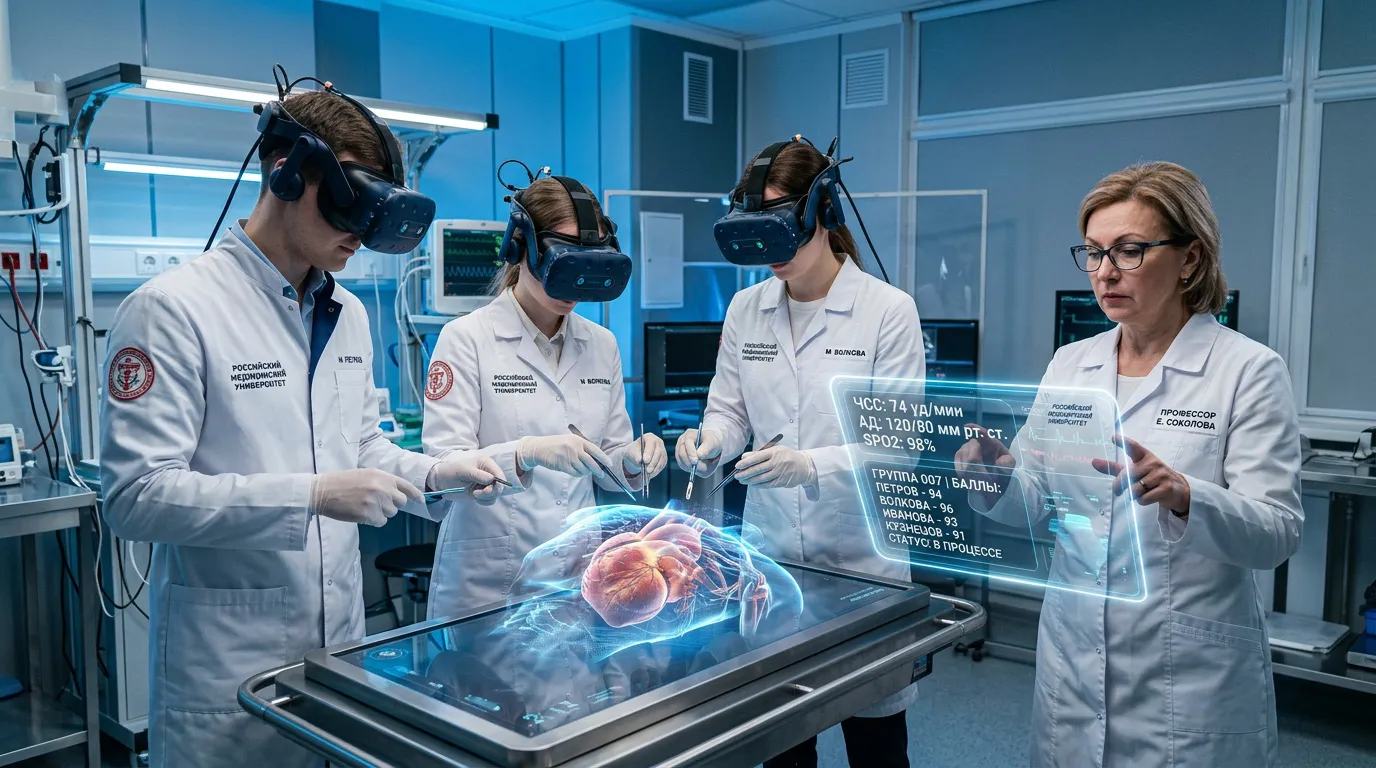
At Samara State Medical University, a scattered collection of VR simulators has been transformed into a unified digital training ecosystem complete with centralized oversight, automated reporting, and AI acting as a strict virtual examiner.
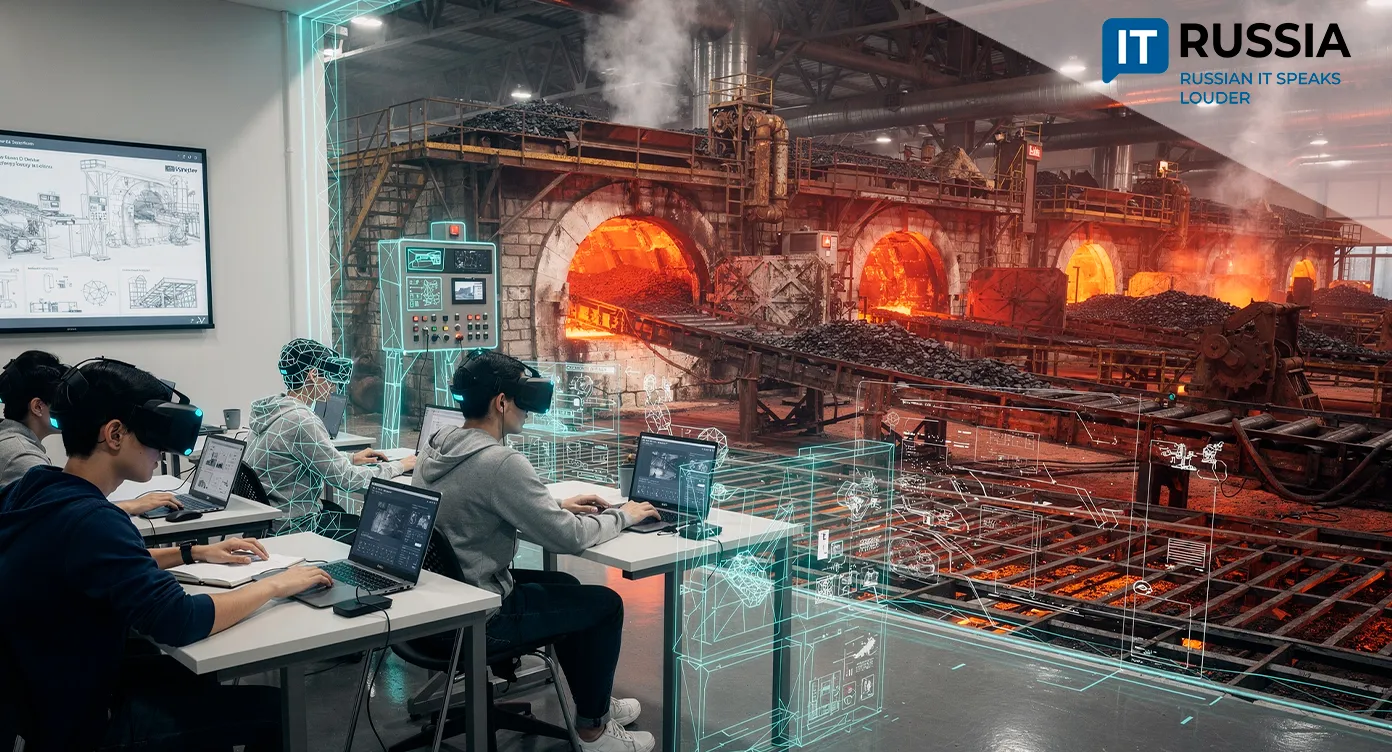
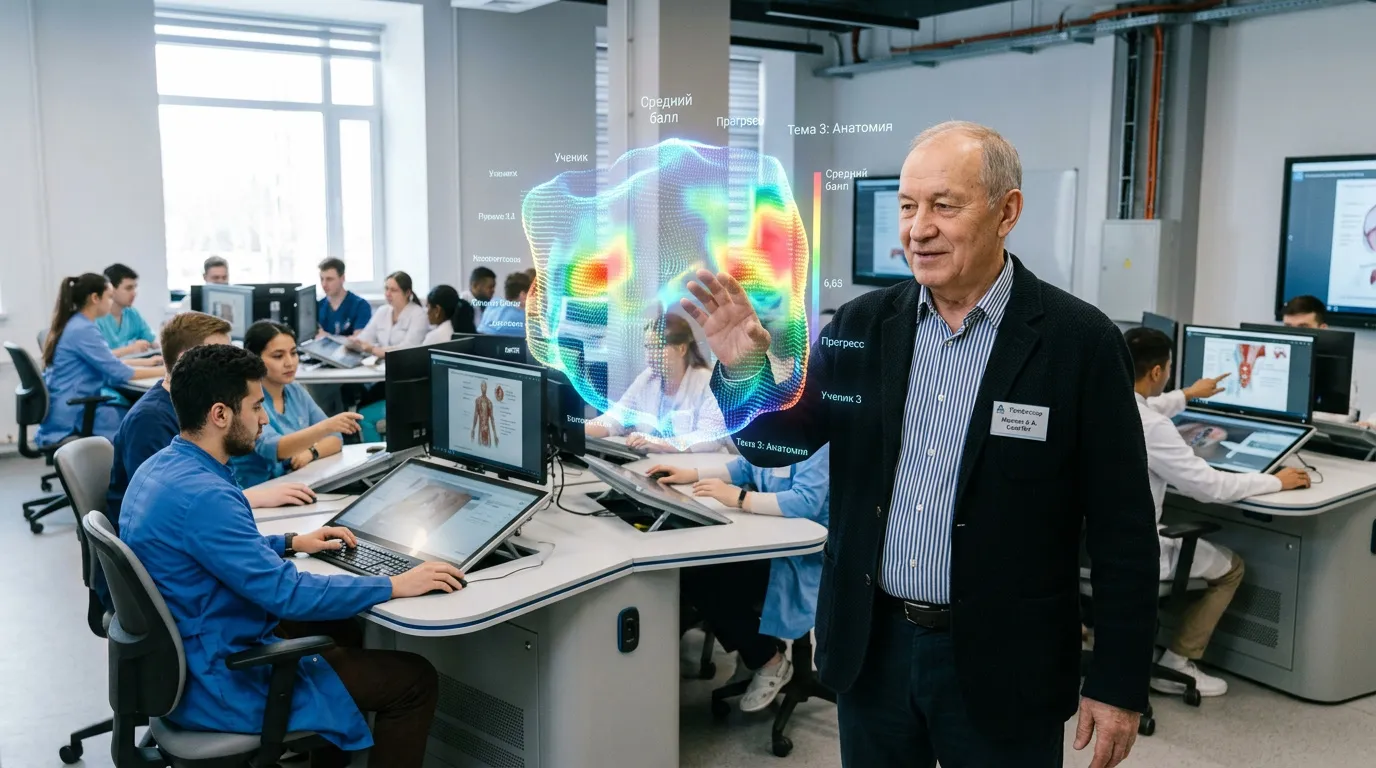
The system allows instructors to monitor a trainee’s actions in real time from a first-person perspective – literally through the student’s eyes. Educators can pause a session at any moment, explain a mistake, or restart the scenario. Or they can switch into assessment mode, where the system stops offering prompts and instead records every action the trainee makes. After each session, the platform automatically generates a report showing where the student made mistakes, what steps were missed, and how many points were earned.
Hospital Scenarios
The development, created by the Institute for Innovative Development at SamSMU of the Russian Ministry of Health, matters far beyond Samara itself. It could also prove valuable for a small medical college somewhere in Russia’s Far East. The reason is straightforward: building a full-scale simulation center with robotic mannequins, consumables, and dedicated emergency-care facilities is expensive and time-consuming. The virtual “SIM-Klinika” (SIM Clinic), by contrast, functions as a digital twin of such a hospital. It can be deployed across just five workstations. That gives regional institutions a way to train healthcare professionals at a level comparable to major global medical centers without requiring enormous budgets.
The system may also have a promising commercial future. Russian-made medical simulators, including mannequin patients, are already in demand internationally. Back in 2021, Russia’s national projects portal highlighted how Eydos-Meditsina (Eidos Medicine) expanded exports with support from the Russian Export Center. Later, manufacturers in Kazan reported that 30% to 40% of their products were being exported. That context matters because SIMMED is already positioned as a ready-to-market commercial product. It could find customers across the CIS, Asia, and the Middle East, where demand for high-quality medical simulation technologies continues to grow.
Training Under the Sound of Explosions
The Eydos-Meditsina story became one of the first signs that Russian medical simulation technologies had export potential. It took off from there. In 2022, amid major economic disruptions, manufacturers in Kazan announced that localization levels for physical medical mannequins had reached 95%. Even international sanctions failed to leave Russia’s healthcare sector without access to simulation equipment.
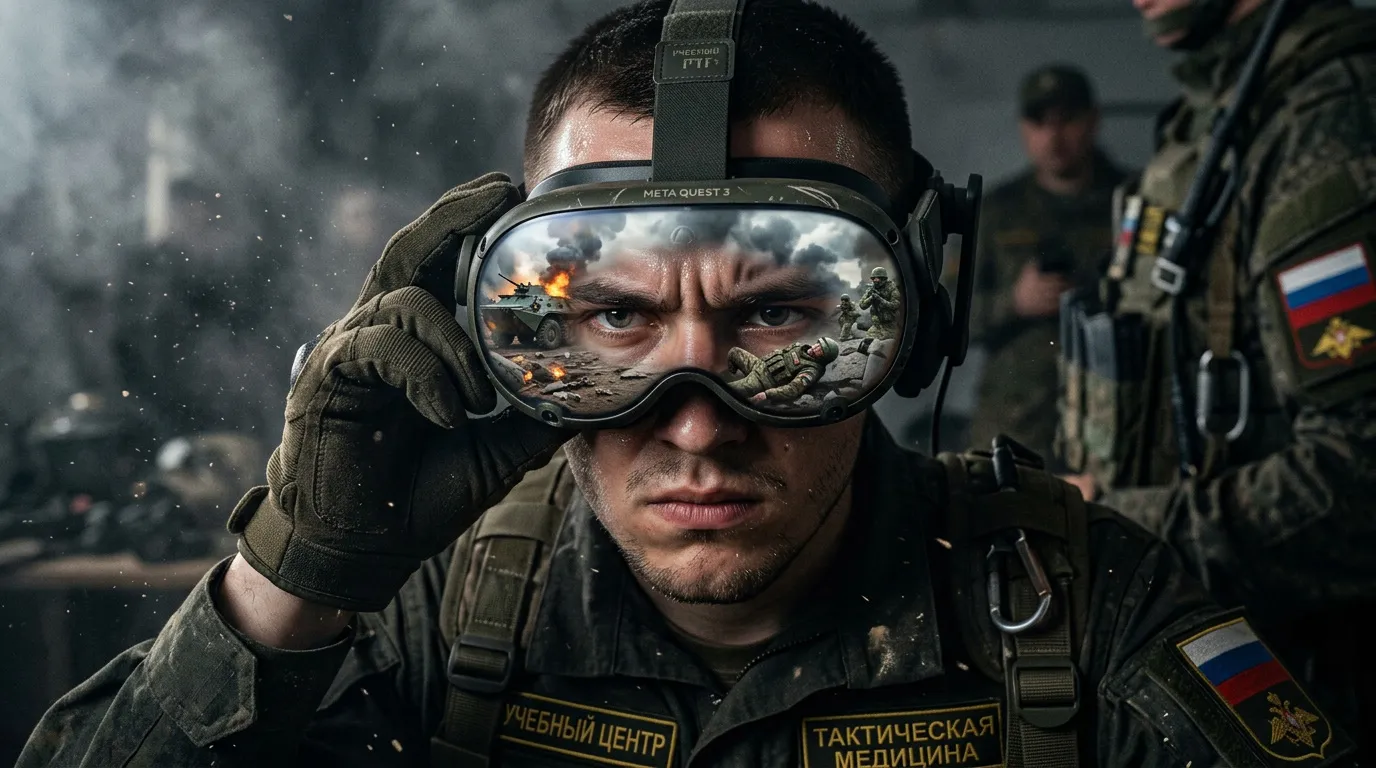
Meanwhile, virtual reality kept advancing as well. One of the most striking examples came from a joint project between SamSMU and the S. M. Kirov Military Medical Academy. Together, they developed a VR simulator that recreates combat conditions complete with explosions, gunfire, and severe time pressure. The goal goes beyond practicing how to apply a tourniquet. The system is designed to prepare medical personnel psychologically for working in extreme environments.
By 2025, the ecosystem had expanded even further. The Institute for Innovative Development at SamSMU reported that its “First Aid Delivery” VR simulator had moved beyond universities. It is now used not only by physicians, but also by emergency-response agencies, police officers, the Ministry of Defense, and even ordinary schoolteachers.
At the beginning of 2026, shortly before the launch of the new management center, the university already operated more than 100 simulators covering pediatrics, childbirth, emergency medicine, and tactical care. What these systems lacked was a unified “brain” capable of coordinating the fragmented infrastructure. SIMMED was designed to become that central management layer.
Toward a Gold Standard for Medical Training
Over the next several years, the project is expected to expand aggressively. The platform offers clear advantages for nearly every participant in medical education. Universities gain a way to prepare residents for accreditation exams without consuming large amounts of medical supplies and disposable materials. Faculty members are relieved from manually reviewing lengthy assessment checklists. Over time, more competency centers using the platform are likely to emerge. Doctors may eventually pass through SIMMED not only during university training, but also during routine recertification. That could help confirm that emergency-care skills have not deteriorated after years of clinical practice.
At the same time, a virtual clinic is not intended to replace real-world clinical training. No matter how realistic a digital patient may look, it cannot fully replicate a human being. The platform functions as a preliminary training environment – a safe space where trainees can make mistakes and learn from them before treating real patients. “A VR simulator is ultimately just a tool that helps people practice action algorithms. But it cannot teach clinical reasoning and cannot replace a real patient with all of their unpredictability,” SamSMU Rector Aleksandr Kolsanov said in an earlier interview.
The main risk, according to the developers themselves, is the illusion that technology can solve everything on its own. However, if implemented thoughtfully, SIMMED could become a gold standard for medical training.