5G Networks Roll Out in Moscow and St. Petersburg Metros
Operator T2 is doing much of the work in this area.
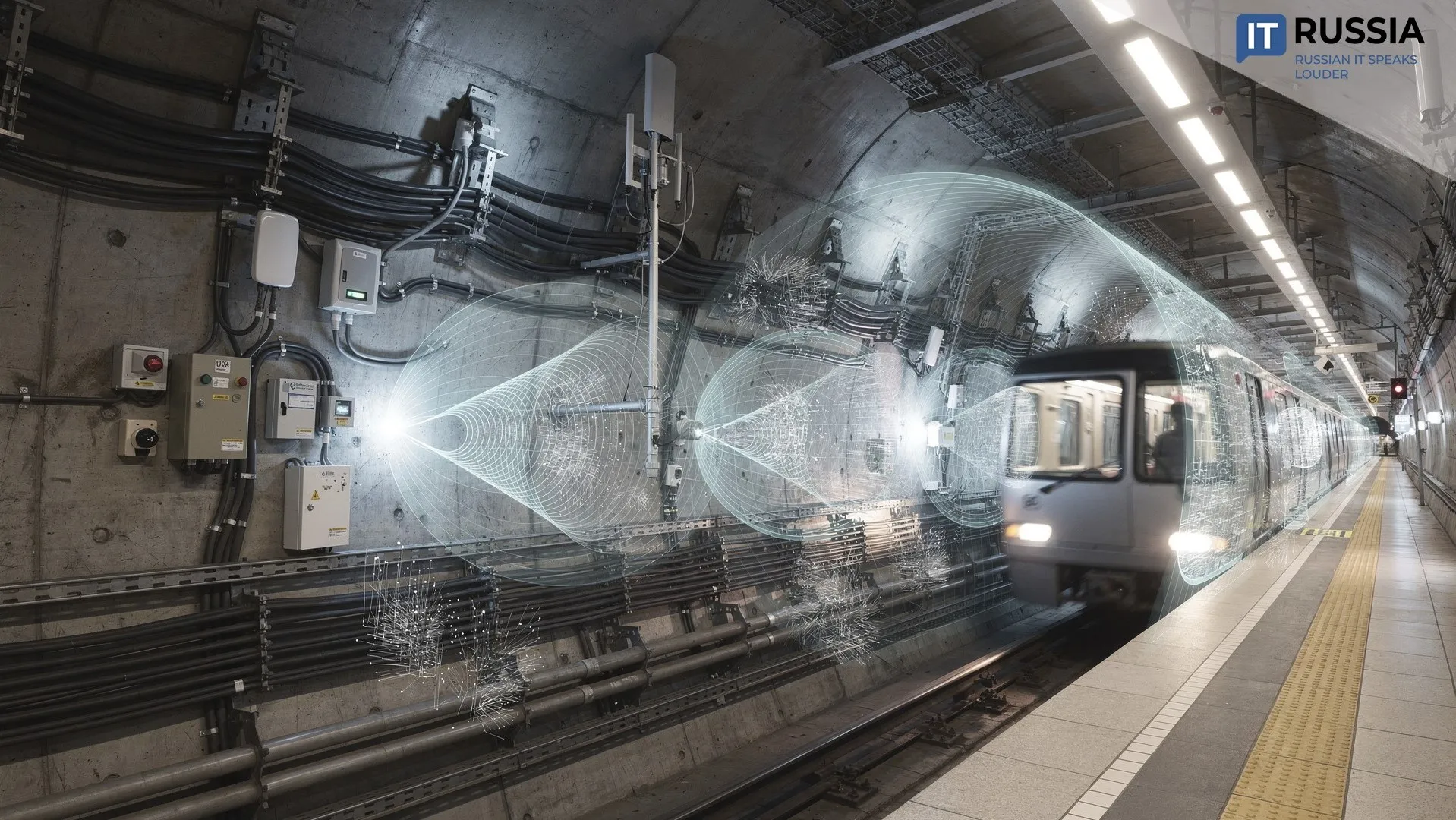
5G coverage is gradually expanding in Russia’s cities with populations of more than 1 million. Operators are deploying equipment not only in open areas – upgrades are gradually reaching underground transit systems as well.
New Connectivity Reaches Dozens of Stations
Active 5G deployment is underway in the Moscow and St. Petersburg metros. T2 has already completed a substantial amount of work. In the capital, higher internet speeds are available at 172 stations on key lines, representing 62% of Moscow's metro stations. Fifth-generation technology has also been deployed on the new Rublyovo-Arkhangelskaya Line, which opened in September this year. In St. Petersburg, 5G is available at 24 stations – more than one-third of the city's total.
“Metro systems are therefore becoming one of the largest areas of T2 5G coverage in the two cities: the technology is available to passengers both during their journeys and at stations with heavy daily traffic. 5G users can already record speeds four to five times higher than LTE. Peak speeds reach 635 Mbps in the capital and 251 Mbps in St. Petersburg. Further infrastructure development will allow coverage to be expanded in stages while increasing the network's technical capabilities,” T2's press service said.

An Ideal Test Bed
Experts emphasize that the metro's distinctive architecture makes it one of the best environments for testing new equipment under real-world conditions. Serving large numbers of subscribers concentrated in a single location requires highly reliable equipment. Underground transit systems can also be used to test performance in scenarios that are virtually impossible to recreate in a laboratory.
T2, meanwhile, says that only locations where the equipment is operating in a standard, rather than pilot, mode are designated as actual 5G service areas.
T2's new standard is currently available in seven Russian cities: Moscow, St. Petersburg, Volgograd, Chelyabinsk, Yekaterinburg, Perm and Krasnoyarsk. Depending on the city, the infrastructure already supports 5G across 30% to 70% of the territory.

More Than a Passenger Benefit
The 5G network will clearly make metro travel more convenient. Passengers will be able to use familiar services with less disruption from drops in data speeds. But the new standard is arguably even more important for businesses than for ordinary subscribers. It creates a new infrastructure layer for the digitalization of transportation, opening up opportunities across a wide range of applications. These include transmitting data from monitoring equipment, supporting video analytics systems, and automating the management of metro facilities.
Telecom operators have been preparing for 5G deployment underground for several years. In 2021, for example, T2, then still known as Tele2, launched a pilot 5G network at all metro stations in Kazan together with Nokia and technology partners. The project was one of the first Russian examples of using fifth-generation networks inside underground transportation infrastructure. During testing, peak data transmission speeds reached several gigabits per second.

Building the Technology Foundation
Also in 2021, Beeline announced the completion of communications infrastructure construction in the Moscow metro, including the tunnels between stations. In April 2023, MTS, together with the Moscow Department of Transport, began testing a dedicated 5G network at five stations on the Bolshaya Koltsevaya Line. The network was primarily intended for metro employees and operational use cases, including data transmission, improved safety, deployment of digital services, and equipment operation.
Over the following years, operators continued expanding their infrastructure, laying the technological foundation for the eventual transition. Pilot deployments are now moving into full commercial operation. Further development of such projects will depend on spectrum availability, equipment costs, the development of domestic telecommunications solutions, and operators' willingness to expand their infrastructure.