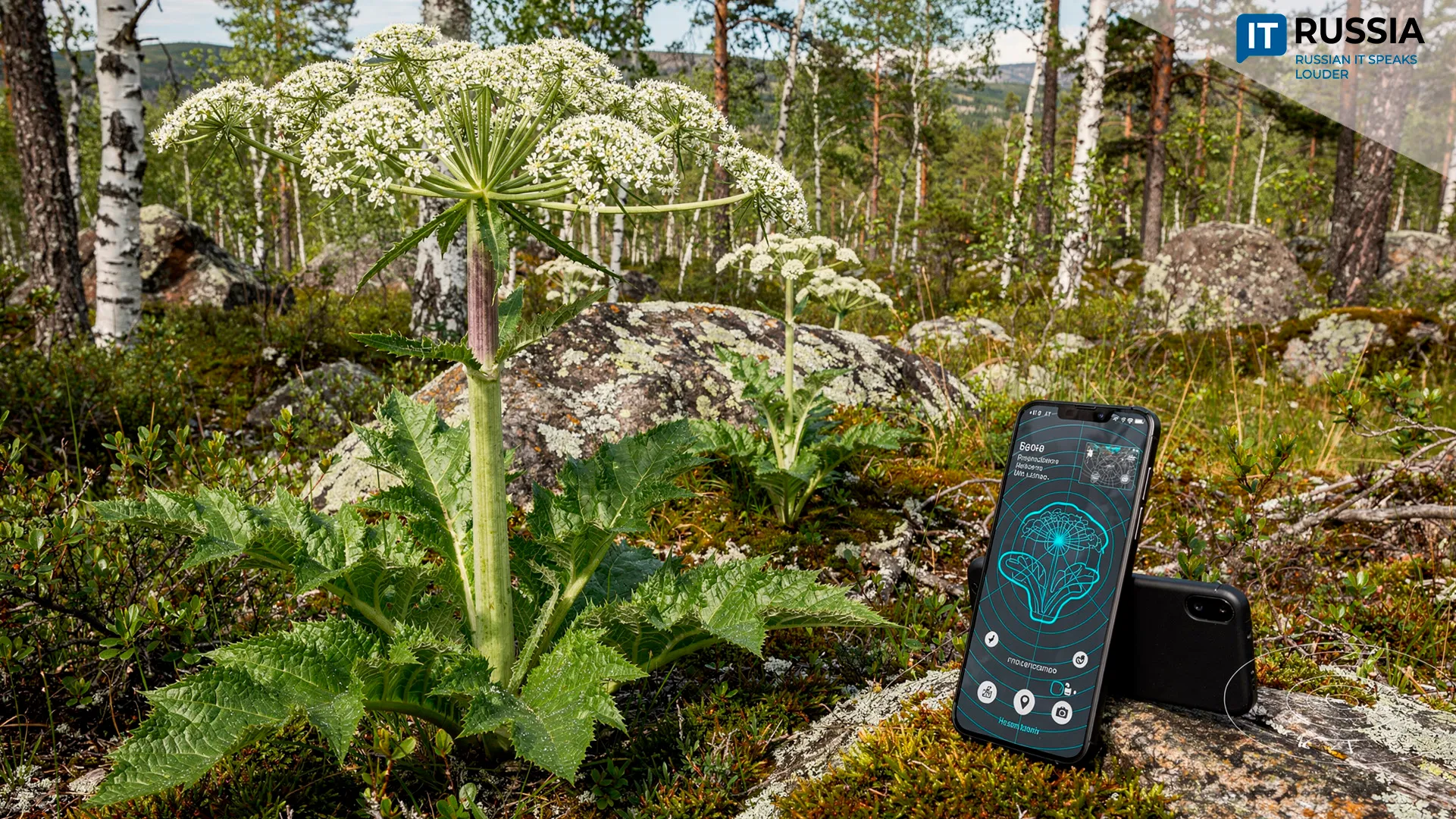


AI System to Monitor Crops
Scientists at Far Eastern State Agrarian University are developing an AI-based predictive agricultural analytics platform.
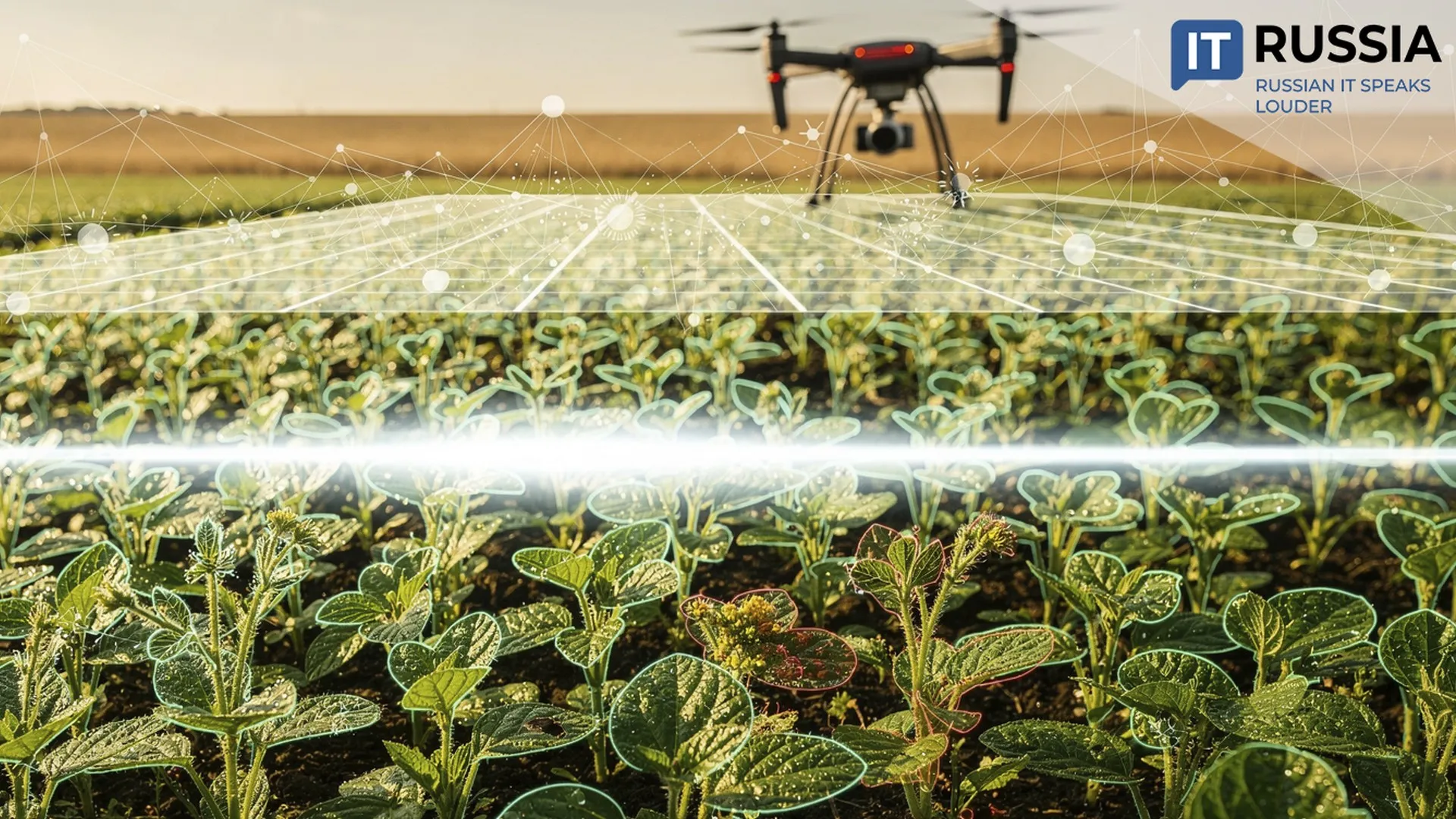
One of the most labor-intensive tasks in crop production is monitoring and assessing field conditions. To evaluate plant health, spot weeds, detect diseases or pest damage, an agronomist has to personally inspect large fields scattered across different parts of a farm. During crop maturation, when every hour counts, this takes an unjustifiably large amount of time. Add fatigue, the risk of error, and the physical impossibility of inspecting every meter of a large field, and it becomes clear that this process should be automated as much as possible.
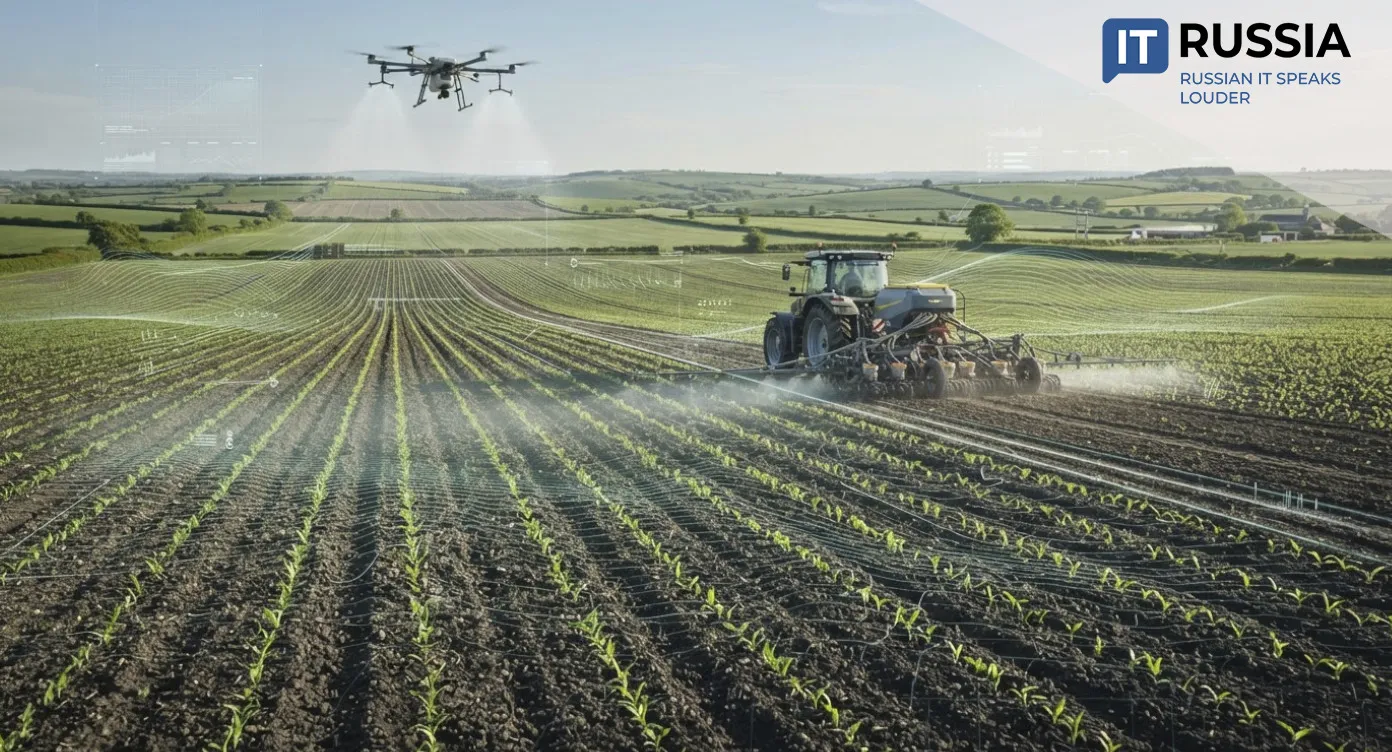
Far Eastern SAU’s UAVs
Scientists at Far Eastern State Agrarian University (Far Eastern SAU) are developing an AI-based predictive agricultural analytics platform. The ultimate goal is to create an IT platform capable of quickly and accurately assessing crops in the field and promptly detecting weeds, diseases, and pests. The project is being carried out under Priority 2030, Russia’s strategic university support program.
UAVs are currently surveying and analyzing soybean crops. A group of organizations is involved, with each responsible for a specific part of the work. Far Eastern SAU is developing the system, operating the imaging equipment, providing the research site, and supplying the crops used to build the dataset for training the neural network – soybeans, wheat, and barley.
Professionals from the Amur Region branch of Rosselkhoztsentr (Russian Agricultural Center) conduct ground-based field inspections using traditional methods. Their findings serve as ground-truth data, allowing researchers to compare information collected by agricultural drones with actual phytosanitary conditions and train the neural network as effectively as possible. Also, Inno-Agro JSC, part of the EFKO Group, is contributing to the development of digital tools and analytics.
A New Level of Agronomist Efficiency
The university still has a substantial amount of work ahead. It needs to build databases for different crops, including images covering every stage of plant development and every possible phytosanitary condition. The collected information will then be used to train the AI model.
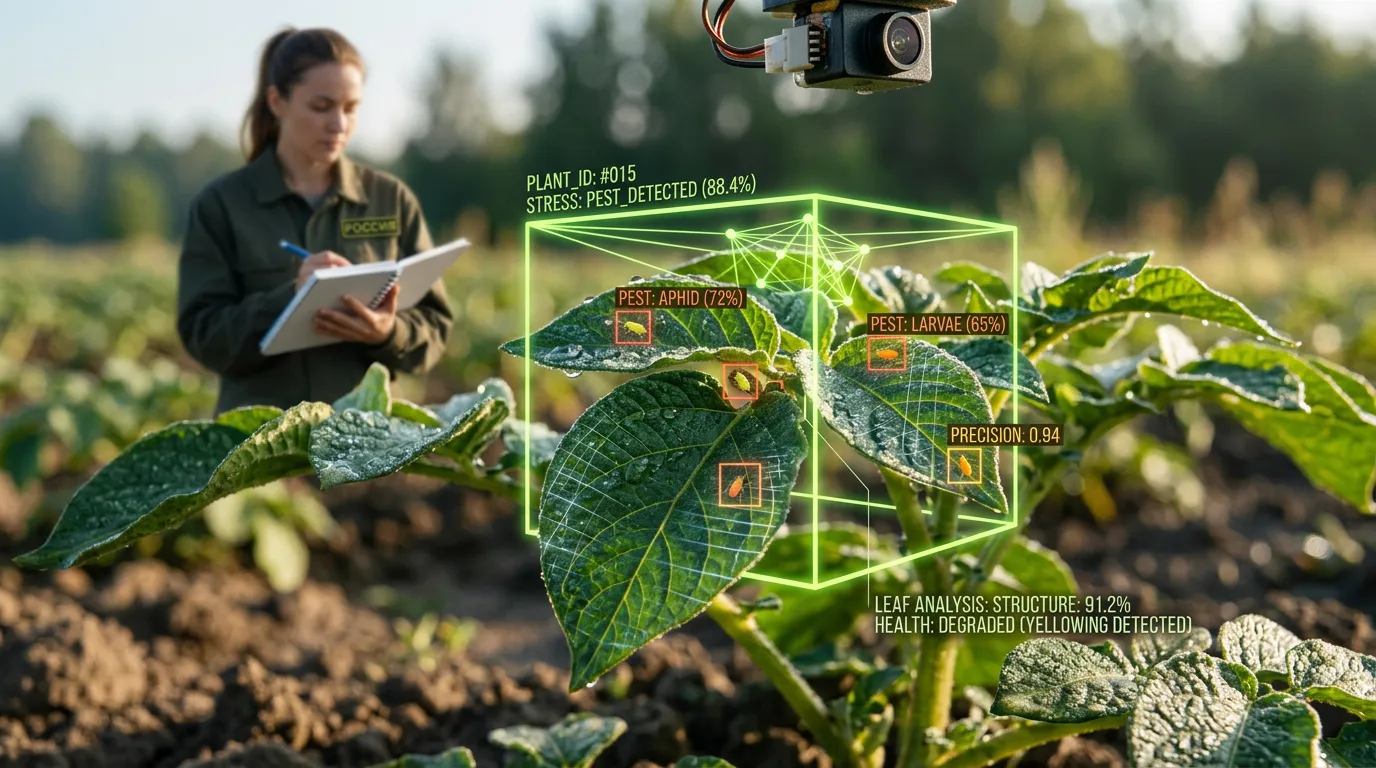
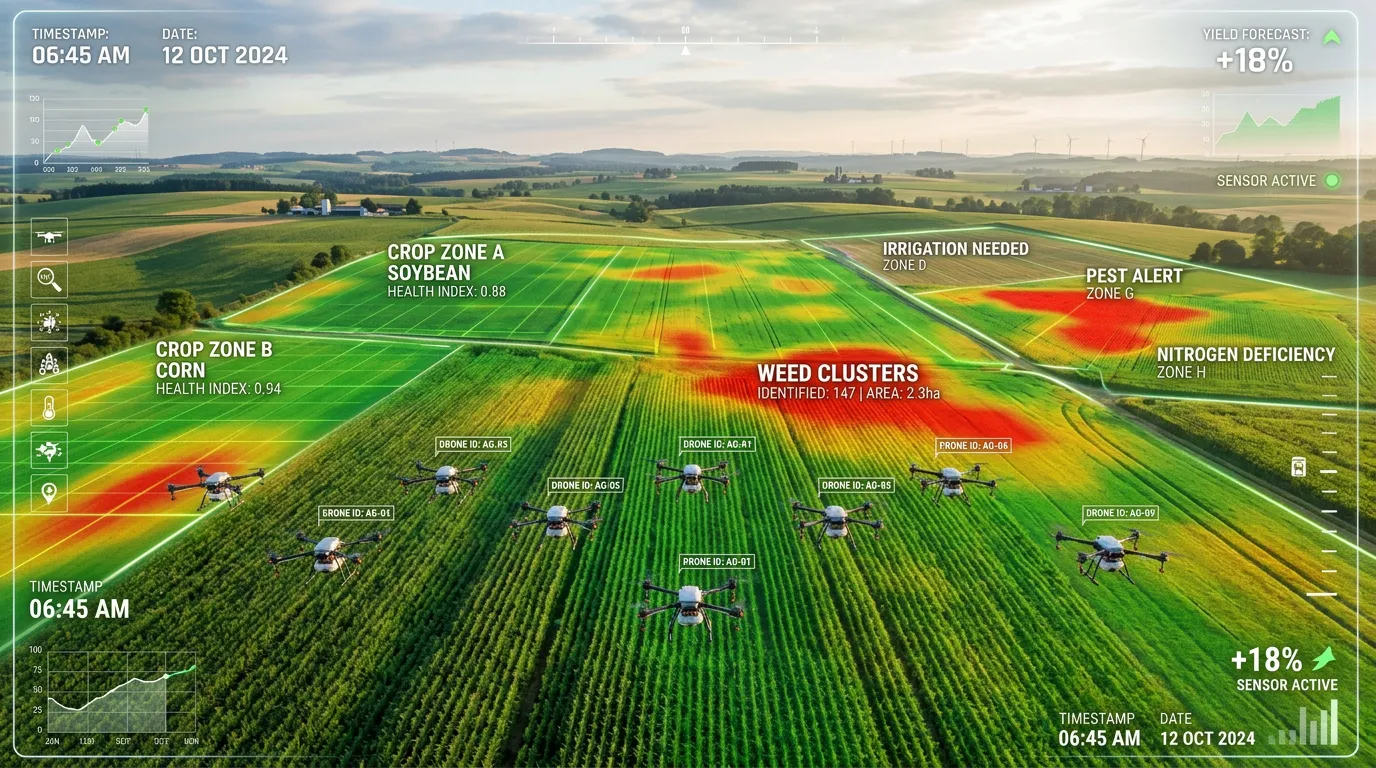
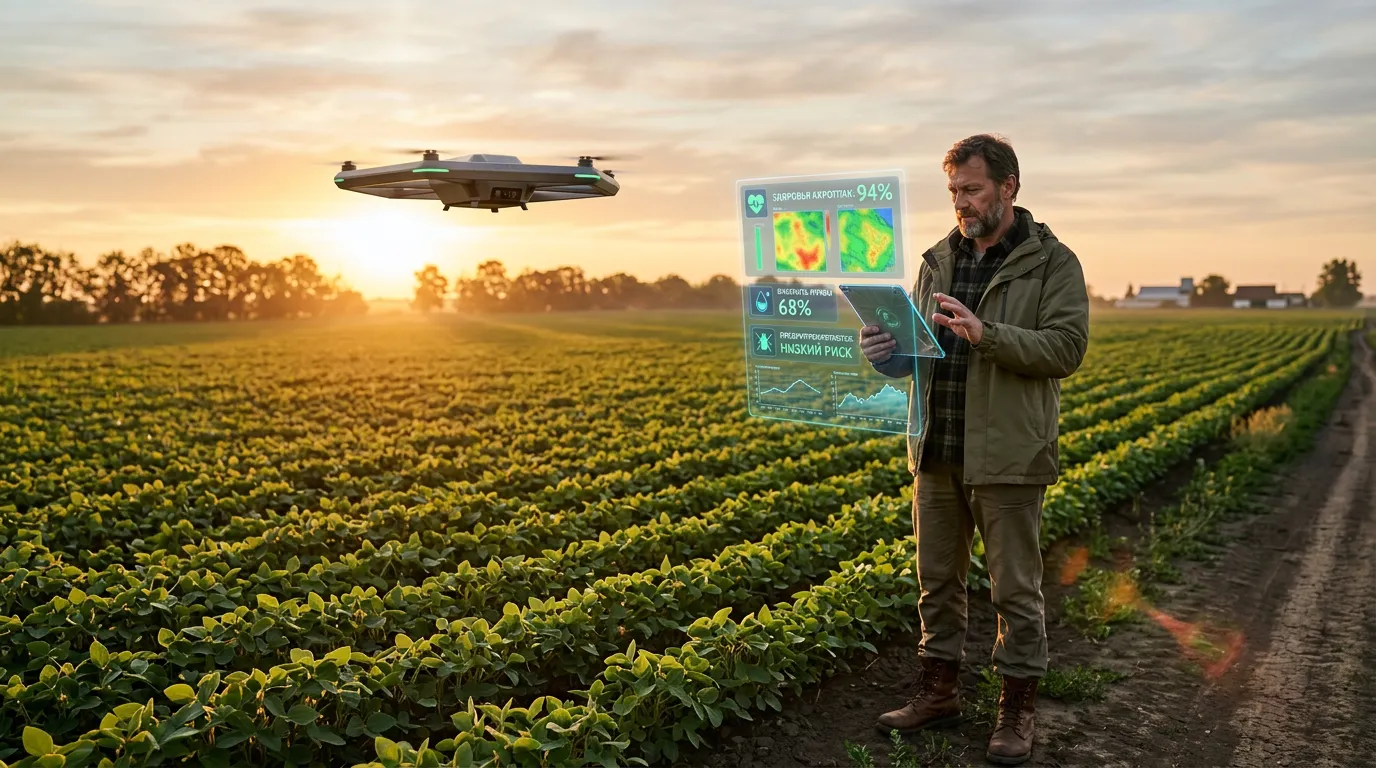
The result will be a digital assistant for agronomists and phytosanitary monitoring professionals. They will gain a recommendation system designed to make their work more efficient. Drones will survey the fields, the AI platform will analyze the collected data, and the algorithm will identify potentially problematic areas and flag them for professionals. The final decision will always remain with a human.
In this way, the Russian Far East’s agricultural sector will gain its own digital systems tailored as closely as possible to regional operating conditions and widely grown crops. The university, meanwhile, will be able to better prepare students for emerging technology-driven professions in agriculture. Over time, these technologies could also be scaled to other Russian regions where farmers are prepared to train the AI platform using locally grown crops.
A Step in the Development of Smart Crop Production
By developing the predictive analytics system, Far Eastern SAU is not simply advancing methods for using drones in agriculture. It is creating an integrated system combining UAVs, digital imaging, machine vision, recognition algorithms, and recommendation analytics. Over time, the technology could become part of a smart crop production platform incorporating yield forecasting models, ERP systems, and systems for analyzing a farm’s economic performance.
Work on other elements of such an integrated model is already underway. In 2024, Far Eastern SAU presented a yield forecasting system that used satellite monitoring to update field boundaries, followed by ground surveys and digital analysis of the results. Based on these data, yield forecasts were generated for the Amur Region Ministry of Agriculture.
Demand for such integrated platforms is evident across the agricultural sector. According to estimates cited by RBC, if digital platforms and artificial intelligence are adopted on a large scale, gross value added in Russian crop production could increase by 25%. These platforms with proven effectiveness would also find buyers across countries friendly to Russia.
Even now, a functioning predictive model for analyzing crops, weeds, and diseases – one that can operate in different territories once trained – could find demand in countries with large agricultural areas, particularly across the CIS, the Eurasian Economic Union, and BRICS markets.