MTS Deploys FSM System to Improve Engineer Efficiency
It significantly speeds up the process of resolving network failures.

For a telecom operator, the ability to quickly resolve infrastructure problems is one of the most critical parts of the job. Even the most reliable equipment inevitably fails at some point. That makes incident response times and the speed of troubleshooting top priorities.
The System Is Constantly Evolving
That is why MTS regularly improves its equipment maintenance processes. The operator is now actively moving its mobile network engineers to a unified digital FSM (Field Service Management) system. The tool is designed to automate and accelerate much of the work performed by field crews. At the same time, the amount of time spent preparing technical documentation is expected to fall by at least 10%.
Those projections are based on MTS’s successful experience with FSM. In 2025, fixed-line internet installers were connected to the system. After specialized modules were developed and the interfaces adapted, the platform was made available to engineers responsible for maintaining base stations, the transport network, and the company’s other telecom facilities.
“MTS fixed-line internet installers gave high marks to FSM’s usability and functionality, and it was important for us to give engineers working with mobile infrastructure access to the same digital tools,” said Elena Yakupova, head of MTS’s Operations Directorate.

Two Key Components
FSM currently consists of two key elements: the MTS Koordinator (MTS Coordinator) web platform for intelligent planning and the Field mobile application for work at telecom sites.
MTS Koordinator significantly accelerates planning processes. The platform can process hundreds of thousands of tasks and build optimal routes. Its algorithm takes into account geolocation, work schedules, employee qualifications, request priorities, and current traffic conditions.
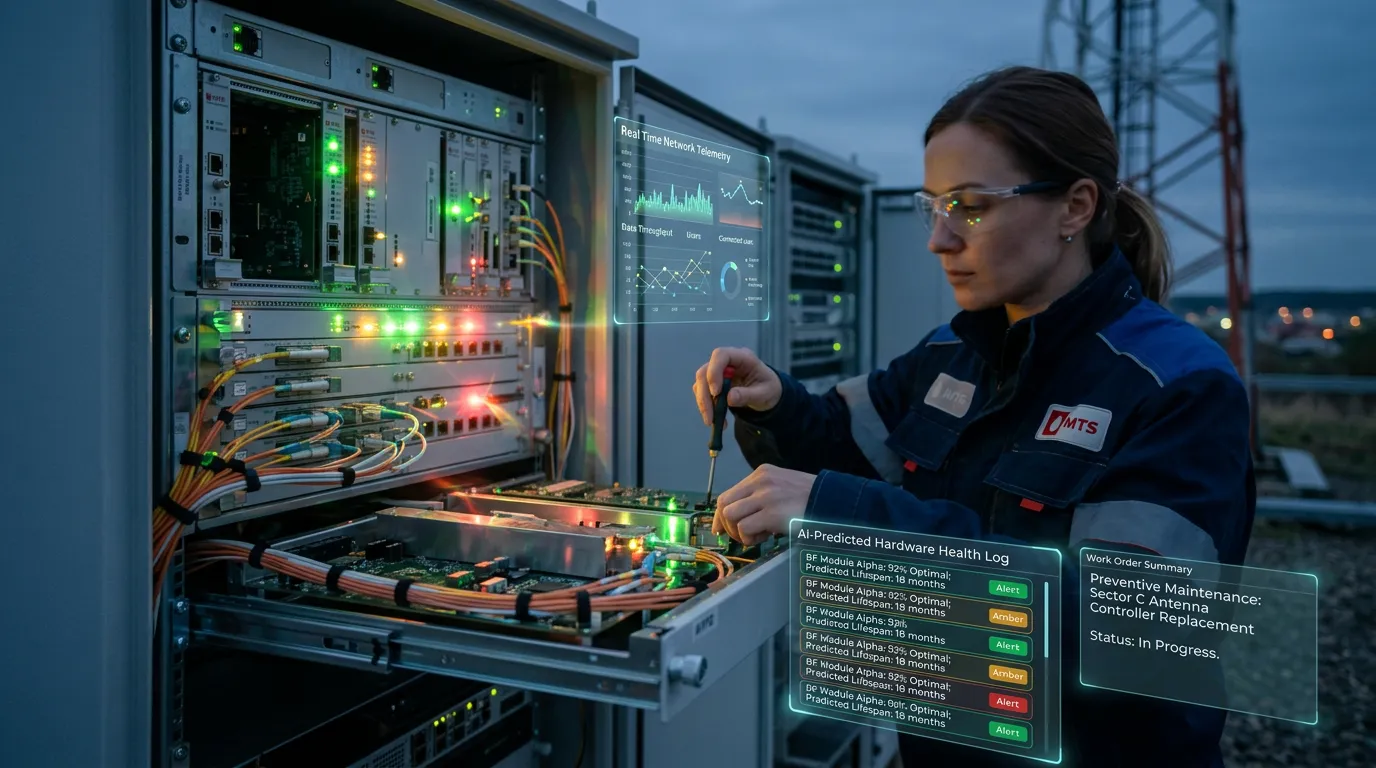
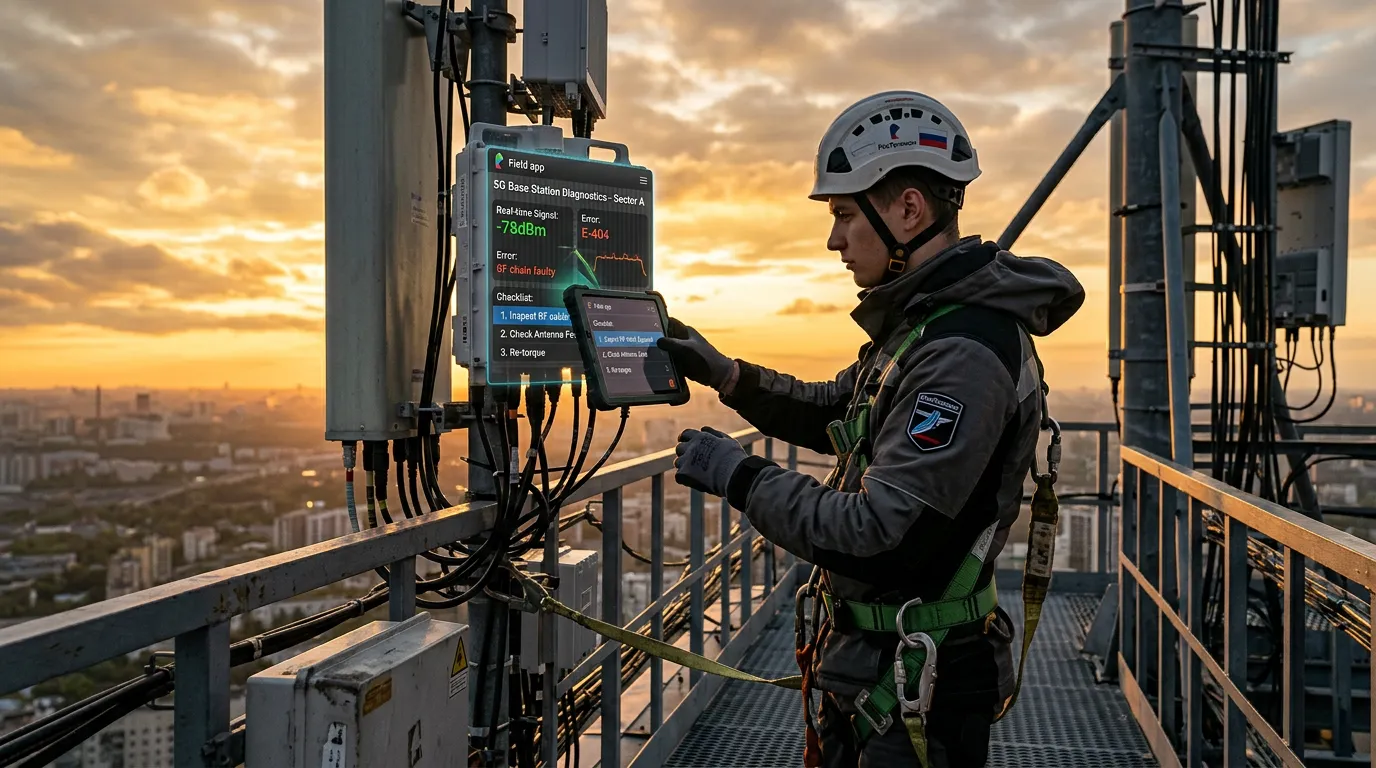
The Field mobile application serves as a unified digital workspace, providing access to a wide range of functions. These include: completing checklists, work completion reports, and related documentation directly on site without paper forms; online monitoring integrated with network management systems, allowing engineers to view error codes and the incident history of a specific base station in real time; and much more.
Scaling Across the Country
Mobile network engineers are already using FSM in six Russian regions: St. Petersburg and the Leningrad Region, Tatarstan, and the Voronezh, Kaluga, and Kemerovo regions. By the end of 2027, the system will be deployed across all regions where the mobile operator has a presence.
In other words, MTS is actively moving away from a fragmented set of infrastructure operations tools toward a unified platform. Standardization will significantly accelerate many processes for a company with a large operational presence across the country.
A Broader Trend Among Major Operators
Other major operators are also actively adopting advanced technologies to automate telecom infrastructure maintenance. As early as 2023, Rostelecom was developing predictive network monitoring. According to the operator, the system enabled its engineers to resolve more than 60% of network problems before customers noticed any changes; nearly 30% of incidents were resolved remotely, while only about one in ten required an engineer to travel to the site.
In 2026, Beeline began deploying the II-Inzhener (AI Engineer) system. It is designed to automatically resolve equipment problems. When an alert arrives, the algorithm analyzes the information and initiates actions on the equipment. For example, some devices may need to be rebooted. If the system cannot resolve the problem on its own, it sends structured information and a task to a human engineer.
It is now safe to say that automation of communications infrastructure operations will continue to advance. The most likely direction is predictive maintenance: automatically identifying the risk of equipment failure, assessing how critical an event may be, and preparing a task for an engineer before an actual outage occurs.