AI Without Borders: Vladivostok and Shah Alam Build a Technology Bridge to Southeast Asia
Far Eastern Federal University (FEFU) and Universiti Teknologi MARA (UiTM) in Malaysia are set to launch a mirror laboratory focused on artificial intelligence systems.

When two universities at opposite ends of Eurasia agree to establish a joint artificial intelligence laboratory, it is more than an academic formality. It sends a signal: in the race to develop AI technologies, Russia is seeking and finding partners in places where, until recently, such partnerships might have seemed unlikely.
Far Eastern Federal University and Malaysia’s Universiti Teknologi MARA have announced plans to establish the Tsentr sistem iskusstvennogo intellekta (Center for Artificial Intelligence Systems), or CAIS. FEFU Vice President for International Relations Evgeny Vlasov and Shahrin bin Sahibuddin, vice chancellor of Malaysia’s largest university, reached the agreement to create the center. Behind the dry institutional name is a project with the potential to reshape scientific and technological cooperation across the Asia-Pacific region.

A Mirror Lab: How It Works
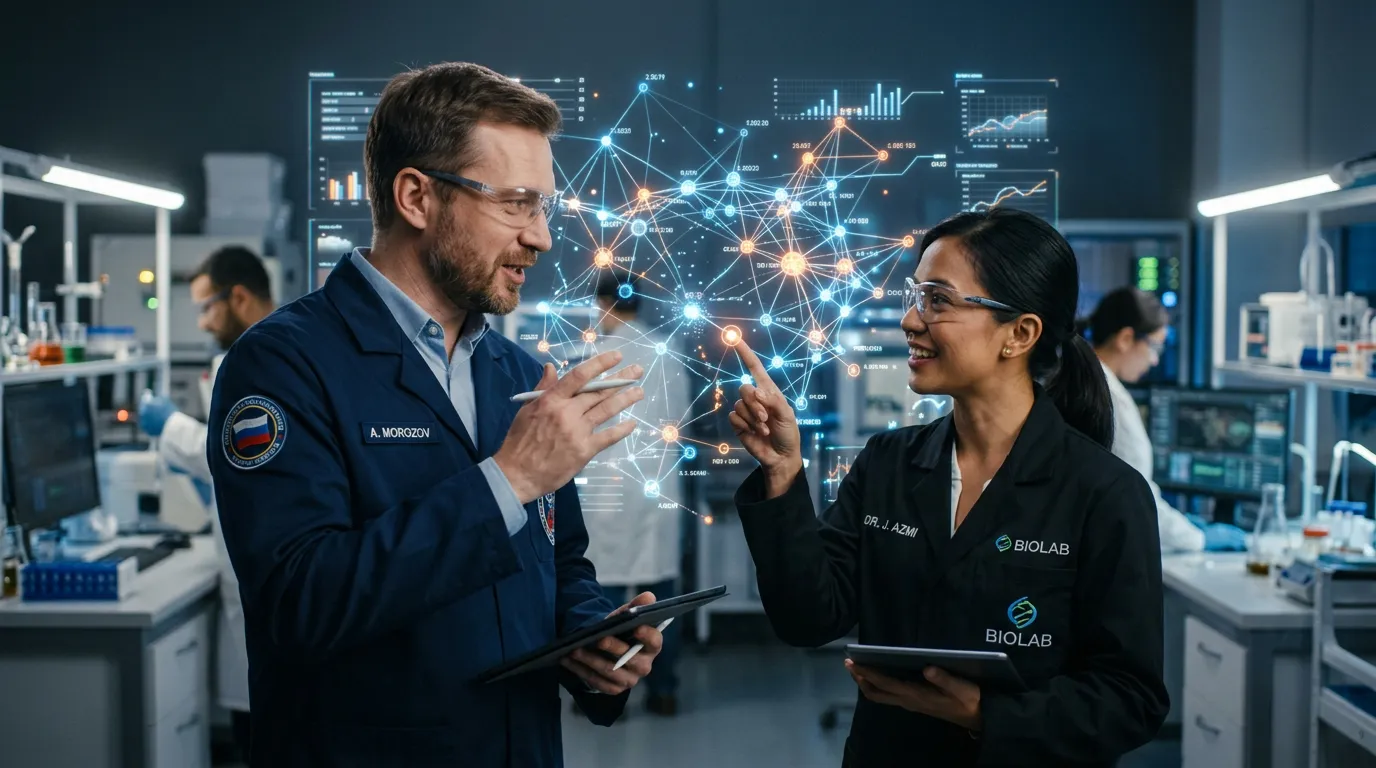
CAIS will operate as a “mirror laboratory.” The Malaysian side will provide space at UiTM’s campus in Shah Alam and appoint a director. FEFU will appoint a co-director and coordinate research on the Russian side. There is no hierarchy, no “junior” or “senior” partner – symmetry is built into the project’s architecture.
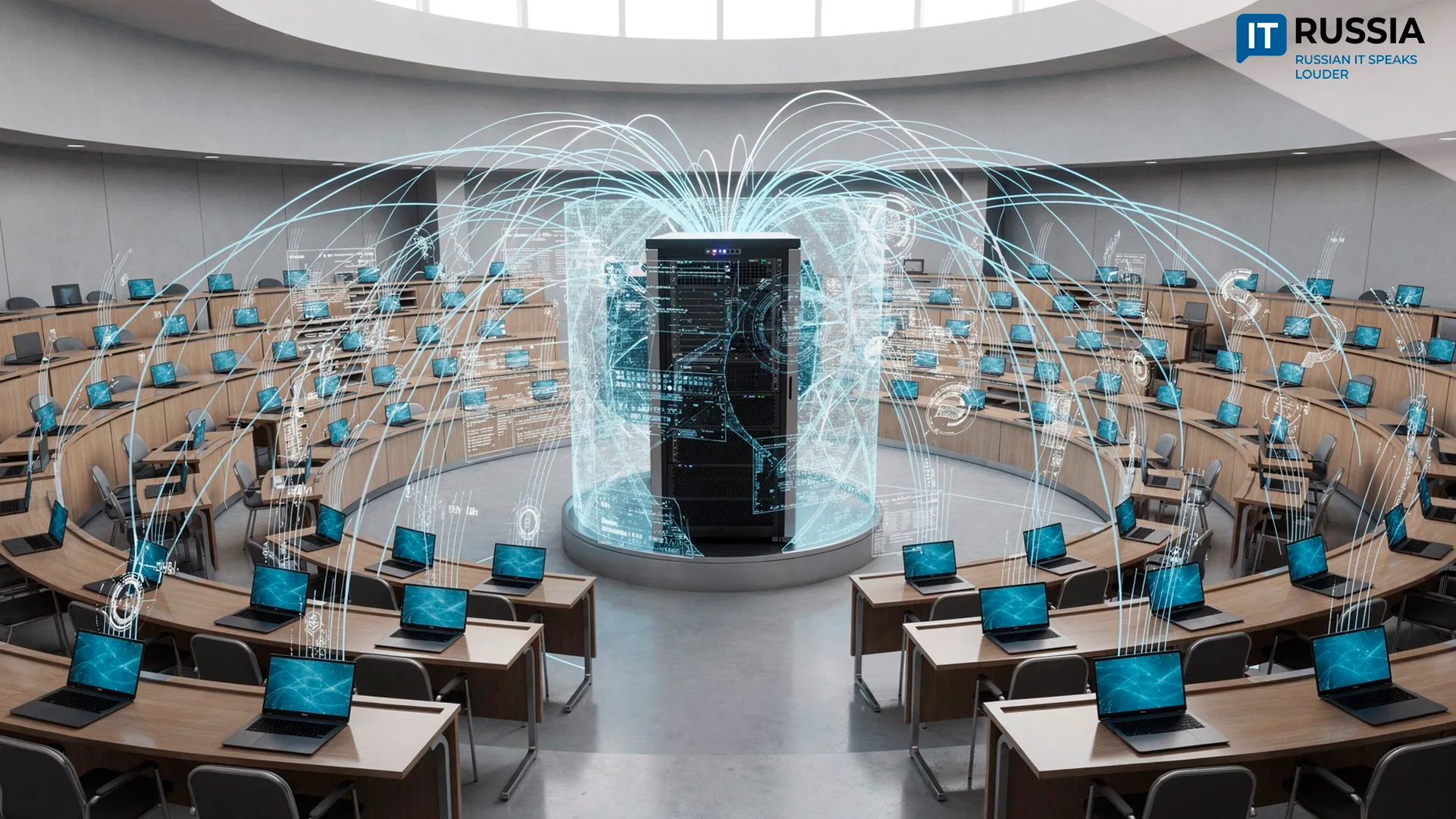
The center’s research agenda spans nearly the full range of current AI fields: large language models and generative AI, natural language processing, deep learning and machine learning, autonomous and multi-agent systems, and explainable and ethical AI. Its applied work will cover education, health care, climate research, government, business and smart-city projects. Plans also call for developing cloud infrastructure for AI, producing joint publications, arranging internships, jointly supervising doctoral students and, eventually, creating a full-fledged educational program.
Not a One-Off Partnership, but a Broader Strategy
It would be a mistake to view CAIS as an isolated goodwill gesture between two university leaders. The agreement fits into a steadily expanding Russian-Malaysian scientific and technological partnership. Back in 2024, Moscow and Kuala Lumpur established a working mechanism for cooperation in higher education, science and technology. In May 2026, ROSBIOTECH and Universiti Teknikal Malaysia Melaka agreed to pursue joint projects in AI and manufacturing systems automation, including the possibility of grants aimed at ASEAN countries. CAIS is not an exception but a logical next step.
Just as important is the environment the Russian partner is entering. Malaysia is no longer simply a “catching-up” digital economy. The country launched its National AI Office in late 2024, adopted an action plan through 2030, and is developing an AI regulatory framework and code of ethics. This partnership is taking shape in a market where artificial intelligence has already become a national priority.
Lessons From the Recent Past
Russia has already tested similar models. In 2023, Skoltech and the University of Sharjah opened a joint AI laboratory in biomedicine, focusing on machine learning for diagnostics and precision medicine. That project showed that an international university lab can grow from a memorandum into a permanent research operation with commercialization in view. CAIS follows a similar trajectory, but with a broader research agenda and in a different geographic direction.

What Comes Next and What to Expect
For now, the project is not about releasing a commercial AI product or exporting finished Russian software. Its direct impact on Russia’s domestic IT market is limited at this stage. Yet, the project’s value lies elsewhere. It creates a channel for international cooperation in one of today’s most competitive technology fields. It can train talent through joint internships and doctoral programs. And it offers a way to test Russian algorithms and models in a different linguistic, cultural and applied environment.
Work on multilingual models and local-language data looks particularly promising. The potential for NLP research at the intersection of Russian, Malay and English is substantial, although the two sides have not yet announced plans to build specific Russian-Malay LLMs.
The clearest sign of progress would be tangible results: jointly developed models, patents, pilot deployments in medicine or government, and technologies for smart cities. If the laboratory moves beyond academic publications, it could become a full-fledged technology bridge between Russia’s AI research community and ASEAN’s digital economy.
It is too early to talk about full-scale exports of Russian AI technologies on the strength of the current agreement. But the first, and perhaps most difficult, step has already been taken: permanent research infrastructure is being established where, until recently, there was little more than mutual interest. And in a world where artificial intelligence increasingly shapes technological sovereignty, bridges like this are becoming a strategic resource.