From Flared Associated Gas to Cryptocurrency
Russian IT integrator First Bit has completed a project for diversified holding company Kastor, deploying BI analytics to manage industrial-scale cryptocurrency mining. The system processes data from 21,000 devices in near real time, refreshing reports every 10 minutes.

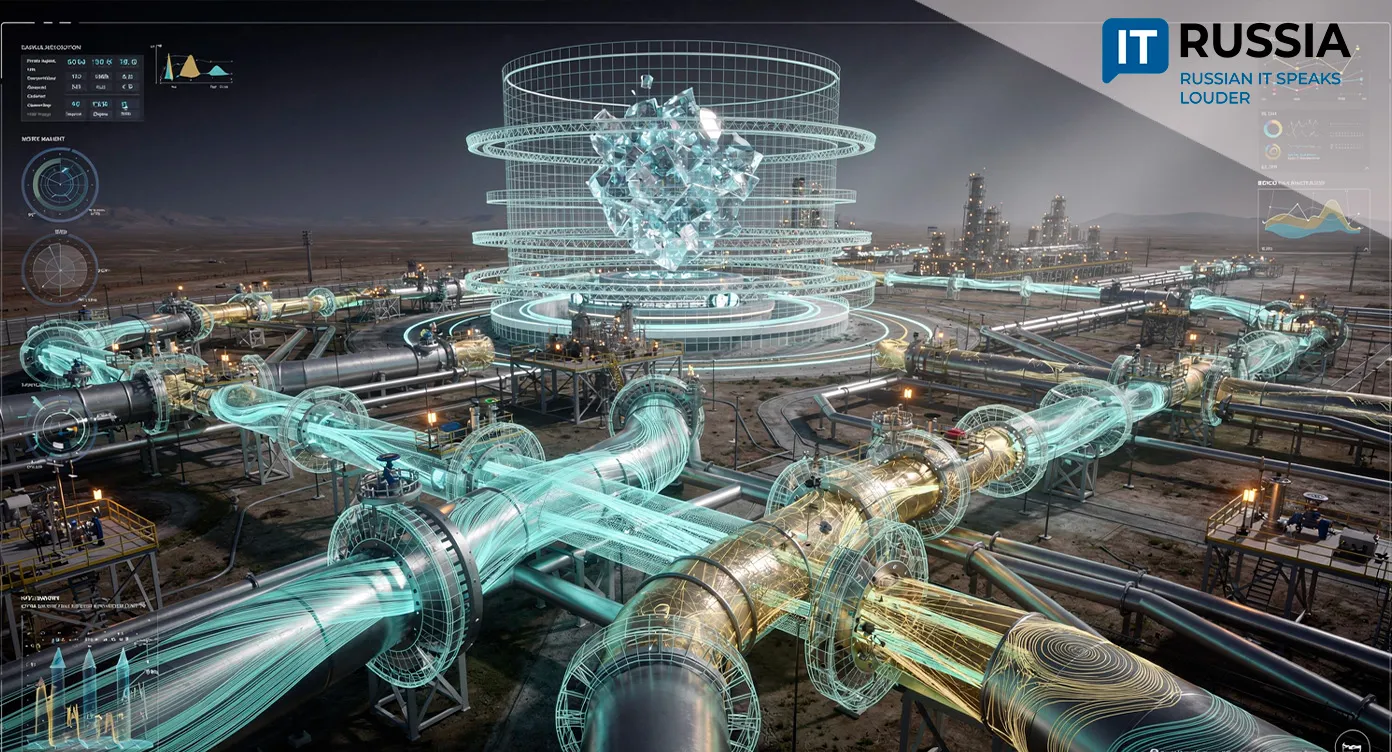
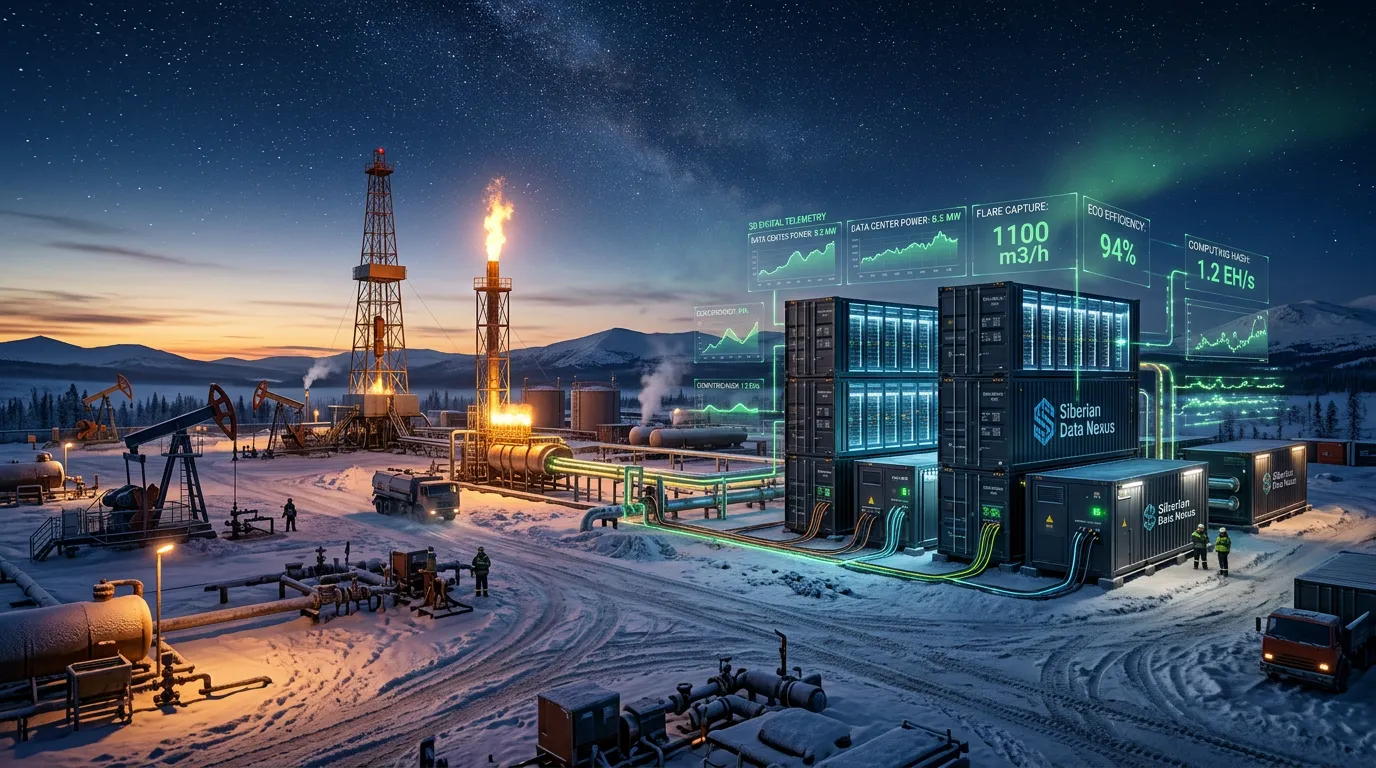
In 2021, Kastor, which specializes in engineering and construction for the oil and gas, mining and energy industries as well as hydrocarbon production and processing, launched a project to utilize associated petroleum gas (APG). At remote fields cut off from centralized grids, the company deployed mobile gas-processing units to generate electricity independently. To monetize that energy, the holding company began building its own data centers for industrial-scale mining. Associated gas that had previously been flared now fuels computing servers, allowing Kastor to convert what was once a waste resource directly into cryptocurrency.
By 2023, the business had evolved into a full-cycle model, spanning infrastructure construction through the consumption of generated energy by computing equipment. That closed-loop “hydrocarbons – computing” system created a need for end-to-end analytics.
21,000 Mining Machines on One Screen
Before the software was deployed, manually collecting and consolidating data from 21,000 specialized mining devices, or ASICs – application-specific integrated circuits – was virtually impossible. Operators needed a single, up-to-date view of each machine, including its hash rate, or computing power; uptime; energy consumption; current status, such as operating, under repair, in reserve or being moved; physical location, down to its storage slot; and financial metrics covering revenue and profitability.
Rather than deploying a stand-alone product, First Bit configured automated data imports from disparate sources into the holding company’s existing BI platform. Interactive dashboards built on that platform now cover all operational and financial metrics for the data center.
The system now tracks the hash rate and status of each of the 21,000 ASICs over time and aggregates repair statistics by equipment type and model. Its financial module calculates revenue based on the amount of cryptocurrency mined and current BTC and USD exchange rates. Energy consumption is monitored at the container level, with each container housing 200 to 300 devices, while energy efficiency is calculated as the ratio of computing power to electricity consumption in kilowatts.

From Individual Mining Farms to a Systematic Industry
Kastor’s experience reflects a broader economic trend. In recent years, industrial-scale cryptocurrency mining in Russia has evolved from isolated experiments into a systematic industry. In 2022, only about 10 data centers with roughly 85 MW of capacity were operating at Russian oil fields. By 2023, the Association of Industrial Mining had been established, bringing together major players including BitRiver, Intelion Mine, Promminer, Stella and NGE FARM. By 2024, combining oil and gas infrastructure, power generation and computing had become standard practice: BitRiver alone used more than 150 million cubic meters of APG to power mining farms with more than 30 MW of capacity. Russia’s two largest players, BitRiver and Intelion, generated more than 16 billion rubles ($189.2 million) in revenue in 2024.
Today, the combined capacity of Russia’s mining data centers has reached 5 GW, twice the capacity of conventional commercial data centers, putting the country in second place globally.
According to J’son & Partners Consulting, more than 50 industrial mining companies operate in Russia, while the segment’s combined revenue grew by an average of about 100% annually from 2020 through 2025. Revenue is forecast to exceed 100 billion rubles (more than $1.1 billion) by the end of 2026. At that pace, the market could reach 200 billion to 300 billion rubles ($2.3 billion to $3.5 billion) by 2030.

Under Government Oversight
The market’s rapid expansion and legalization are increasing the need for transparency. In 2025, Russia’s Federal Tax Service introduced electronic reporting of mined cryptocurrency, creating a closed digital regulatory framework for the industry. Under these conditions, end-to-end analytics is becoming more than an optimization tool – it is increasingly necessary for regulatory compliance.
The government is actively supporting this transition: data management and the adoption of analytics systems are included in the Ekonomika dannykh (Data Economy) national project, which runs through 2030.
A Market-Ready Product for Global Markets
The industry’s next step is expected to be the integration of BI with AI, allowing systems to predict failures autonomously and shut down unprofitable nodes. Another global trend is the repurposing of infrastructure for high-performance computing and neural network training, increasing the value of general-purpose monitoring platforms.
The technology stack Russian companies have refined at remote oil fields – mobile gas-processing units, independent power-generation systems, containerized data centers, ASIC fleets, EPC support and BI platforms for end-to-end analytics – amounts to a market-ready export product. Oil-producing regions in the Middle East, Africa, Latin America and Southeast Asia face an equally pressing challenge in utilizing APG, while demand for computing capacity for cryptocurrency mining and AI workloads continues to grow. That makes Russia’s experience converting associated gas into digital assets a potentially competitive offering in international markets.