End of the Motorola Era: Russian Standards Push Western Solutions Out of Critical Infrastructure
Rostekh (Rostec) plans to deploy a new digital radio communication system at its first waste-to-energy plant in the Moscow region, based on the Russian MCDR protocol. The solution is designed to replace imported systems, ensure resilient communications on site and provide management with additional tools to monitor operational safety.

The new system will be launched at a facility for the energy recovery of municipal solid waste with a capacity of at least 700,000 tons per year. It is expected to provide full signal coverage across the plant. Its primary function is to enable uninterrupted exchange of voice communications and telemetry between on-site personnel and the dispatch center.
MCDR Smart Network and Full Autonomy
Using the capabilities of the new protocol, the system will support tracking of users outdoors when GPS/GLONASS signals are available, as well as recording communications with a retention period of at least 30 days and the ability to export recordings as audio files.
In practice, this represents a comprehensive enterprise radio network management system with capabilities extending well beyond basic voice communication.
For facilities with stringent industrial and environmental safety requirements, a fault-tolerant communication channel is a critical component, enabling rapid response to incidents and coordination of technological processes.
Self-Organizing and Resilient
The developer of the new radio communication system for Rostekh is Leo Telekom (Leo Telecom), which released the product under the technical brand IntranK MS in 2024. The system is based on the MCDR protocol, a digital radio standard developed in Russia as an alternative to foreign solutions such as TETRA and DMR.
One of its key differences is the use of the 868.7–869.2 MHz frequency band, which in Russia is classified as license-free. This means the system can be deployed without obtaining a dedicated radio frequency license or regulatory approval, provided that established technical parameters are met. Transmission power must not exceed 100 mW, and modulation uses 2FSK or 2GFSK schemes.
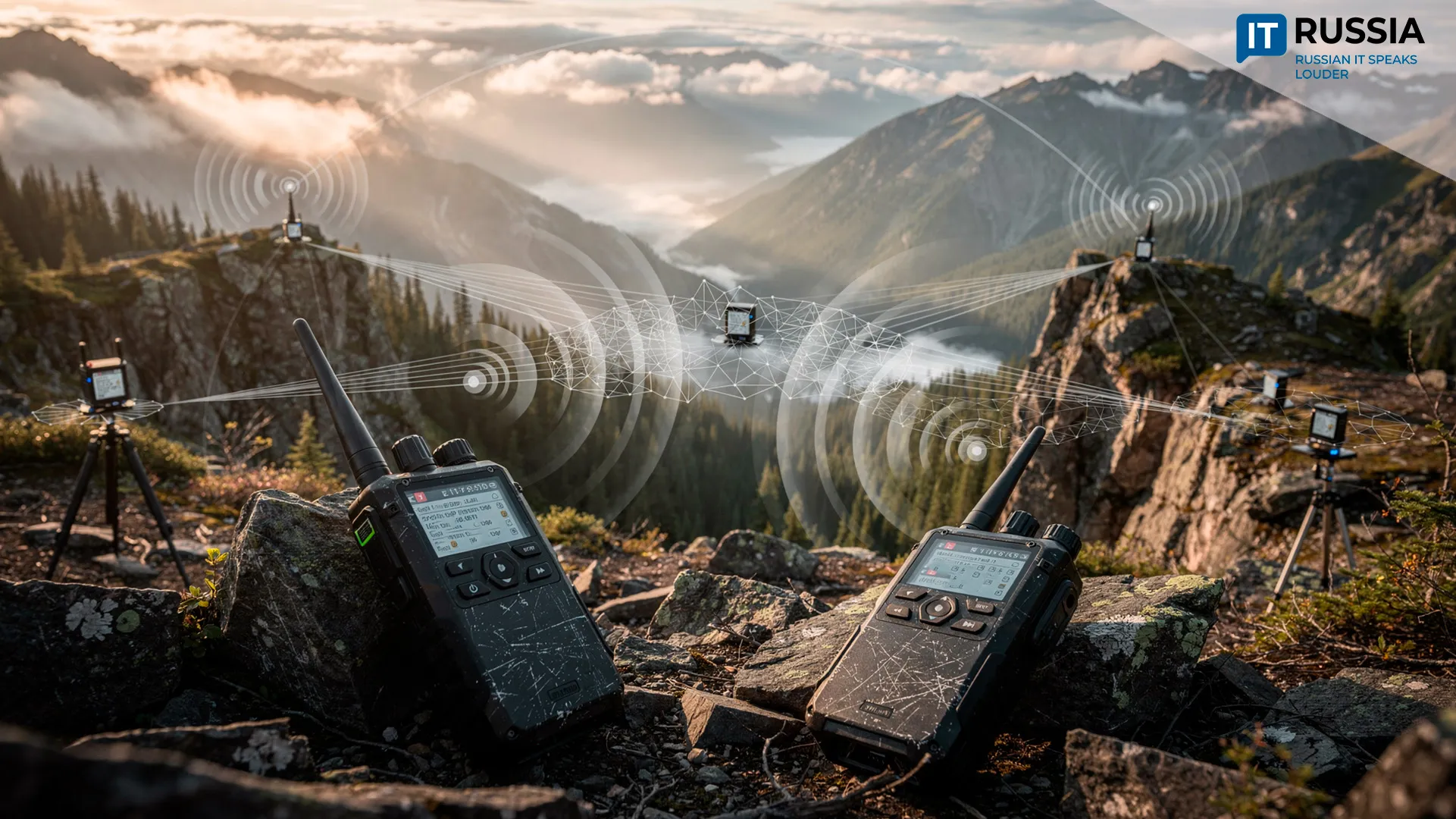
At the core of the MCDR protocol is a “smart” self-organizing algorithm operating in a distributed peer-to-peer architecture. This allows the system to function without external control nodes such as base stations, controllers or switches, with all devices in the network operating as equal nodes. If one device fails, the network does not collapse but automatically reconfigures, routing data through neighboring nodes.
In effect, the system offers high fault tolerance and enhanced security. Low effective radiated power reduces the risk of detection, while the absence of fixed routing paths helps prevent interception. Communication confidentiality is ensured through encryption of all voice and data transmissions between network users.
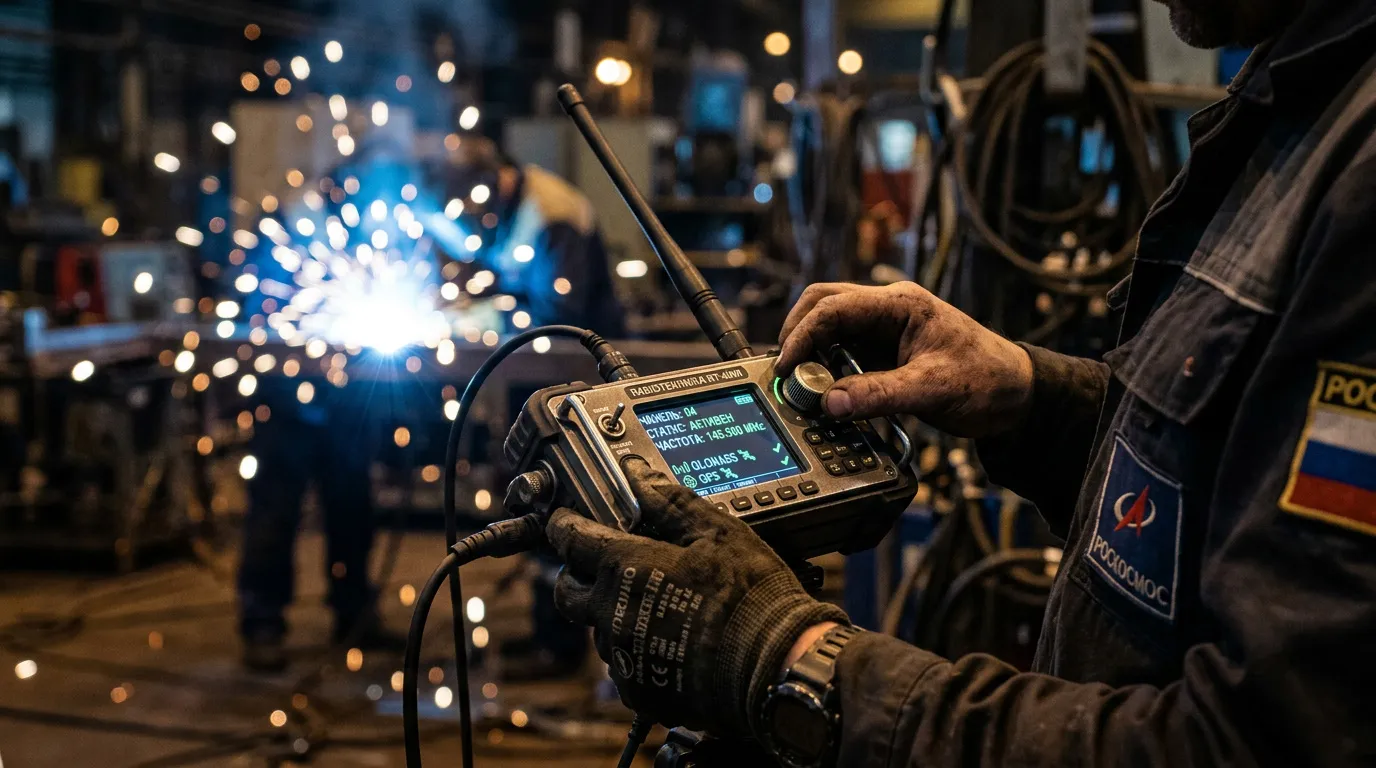
Leo Telekom’s solution has already proven effective as a technological communication system at critical infrastructure sites, including enterprises in the fuel and energy sector, resource extraction and mining and metallurgical industries.
Rostekh Reshapes the Industrial Communications Market in Russia
The project implemented by Rostekh reflects a broader trend in Russia’s industrial sector: the market is shifting from one-off hardware procurement to system-level design of communication networks built around domestic standards from the outset.
Following the exit of major vendors from the Russian market, including Motorola Solutions, whose equipment had long served as a de facto industry standard for professional radio communications, industrial customers now require reliable, controllable and legally transparent communication systems that are not dependent on geopolitical conditions or access to foreign technologies.
The transition to the MCDR protocol will reduce critical dependence on external vendors and telecom operators by enabling the creation of autonomous infrastructure that is easier to maintain, upgrade and scale domestically. MCDR-based systems may also be more cost-effective than traditional TETRA and DMR solutions, as their architecture is simpler and therefore more affordable while delivering comparable functionality within specific use cases.

In the future, the product line and software stack are expected to expand to include communication analytics, automated reporting and integration with industrial management systems. The ecosystem around the protocol is also likely to grow, from training programs to service centers and turnkey engineering solutions.
Sovereign Communications
Overall, the Russian market already offers several proven solutions similar to the MCDR protocol. These include systems from vendors such as Radiy and Informator, as well as TETRA-based systems and modern LTE and 5G solutions adapted for industrial use. The Private LTE segment is also developing in parallel, particularly in the mining industry. This diversity enables enterprises to take a flexible approach to import substitution by selecting technologies tailored to specific operational needs.
The deployment of the new industrial communication system at a Rostekh facility marks another step toward technological sovereignty, creating infrastructure in which critical components are controlled domestically and production processes are no longer dependent on foreign vendors.