MAI Student Develops Russia's First Neural Network Module for Hearing Aids
The prototype's main feature is selective noise suppression that distinguishes between important sounds and background noise.
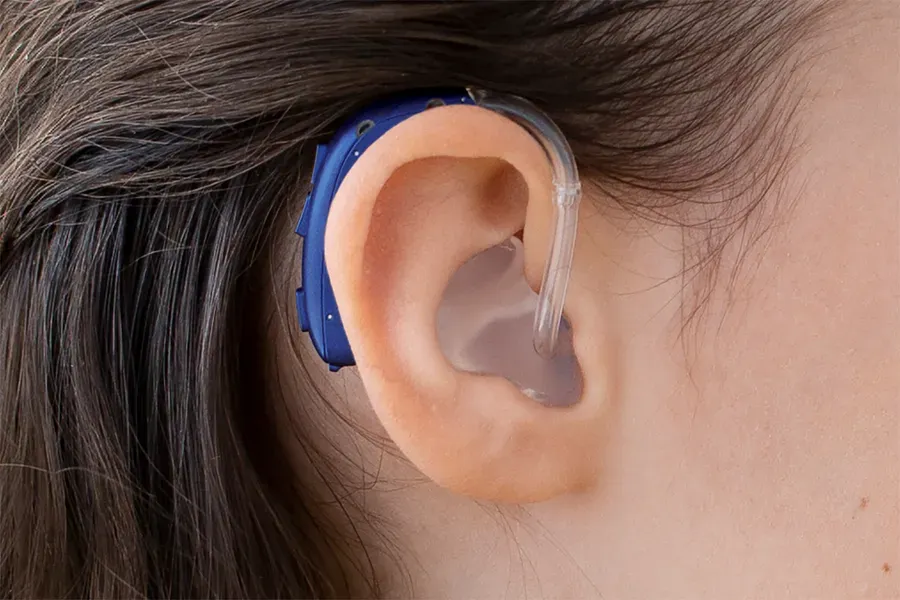
MAI student Vasily Barabanov has developed Russia's first prototype neural network module for hearing aids with selective noise suppression. The device is trained to classify sounds and adjust their volume based on their importance. Unlike conventional noise reduction, which can suppress both background sounds and a conversation partner's voice, the new approach is designed to preserve speech while reducing unwanted noise.
A compact neural network model was developed specifically for the new device, allowing it to operate without requiring significant computing power.
The module functions as an integrated hardware and software system built around the hearing aid's processor. A microphone captures incoming sound, after which a converter digitizes the signal and transforms it into a spectrogram—a representation of sound as a range of frequencies. The neural network then analyzes that spectrogram.
The prototype has already completed testing and is ready for deployment.