

MAI Students Develop a Drone Carrier Designed for Future Rescue Missions
Imagine a drone that can rush smaller autonomous aircraft directly into the heart of a disaster within minutes. That's the idea behind Glaukha, a new student project at the Moscow Aviation Institute that could reshape emergency response and become part of Russia's growing unmanned aviation ecosystem.
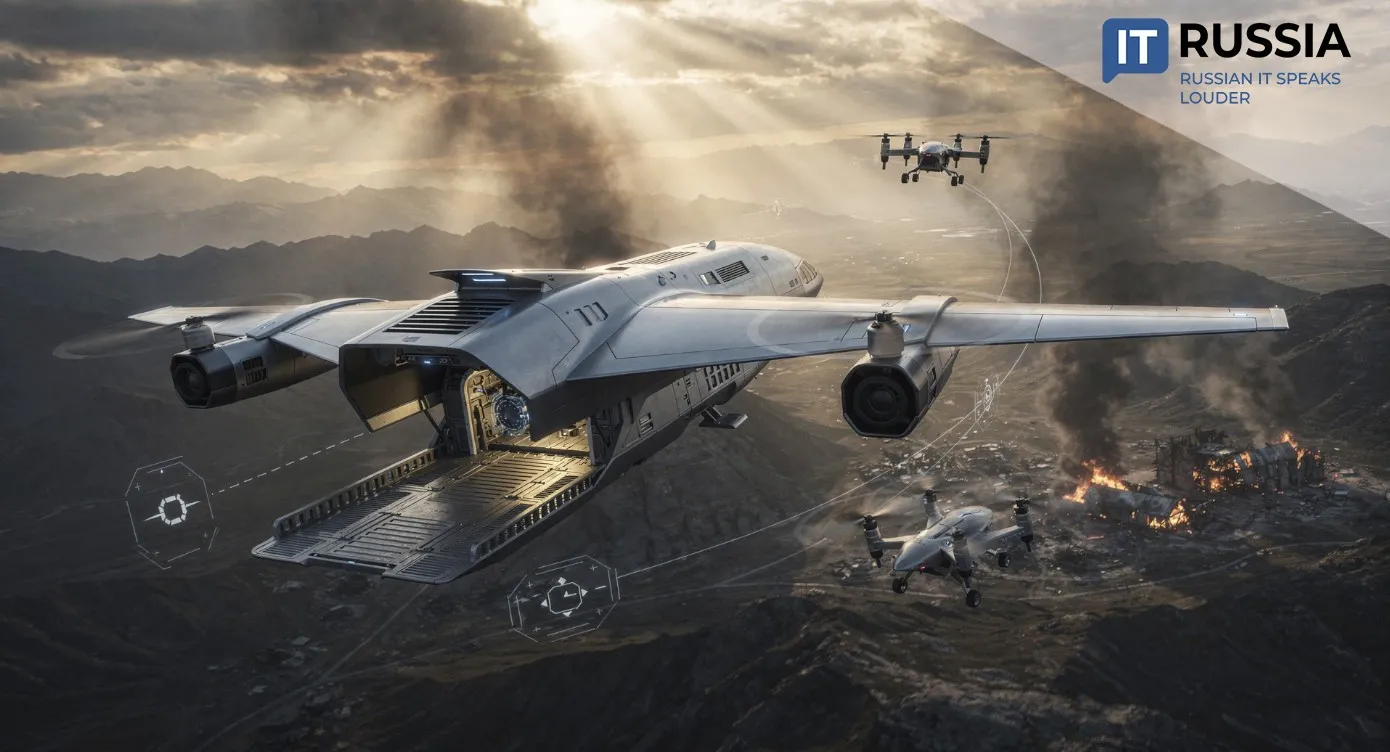
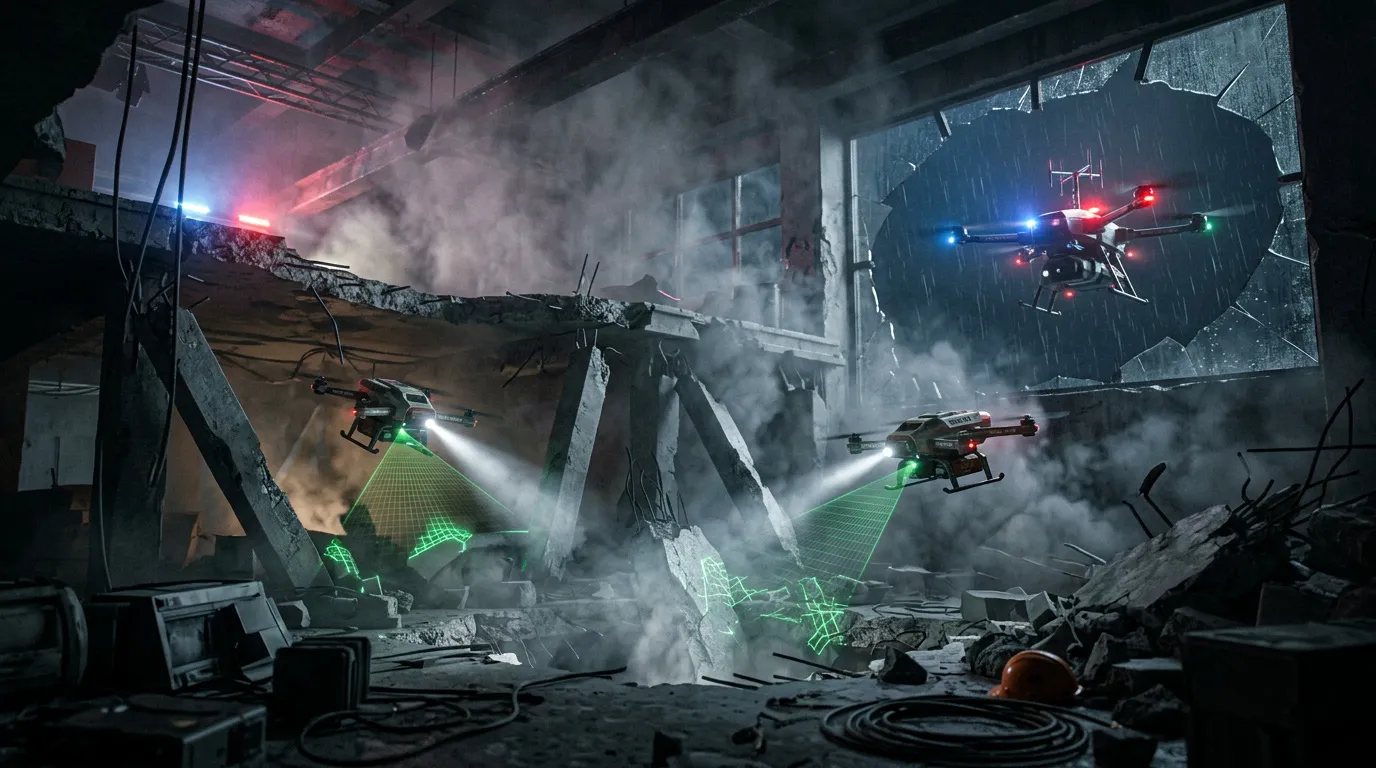
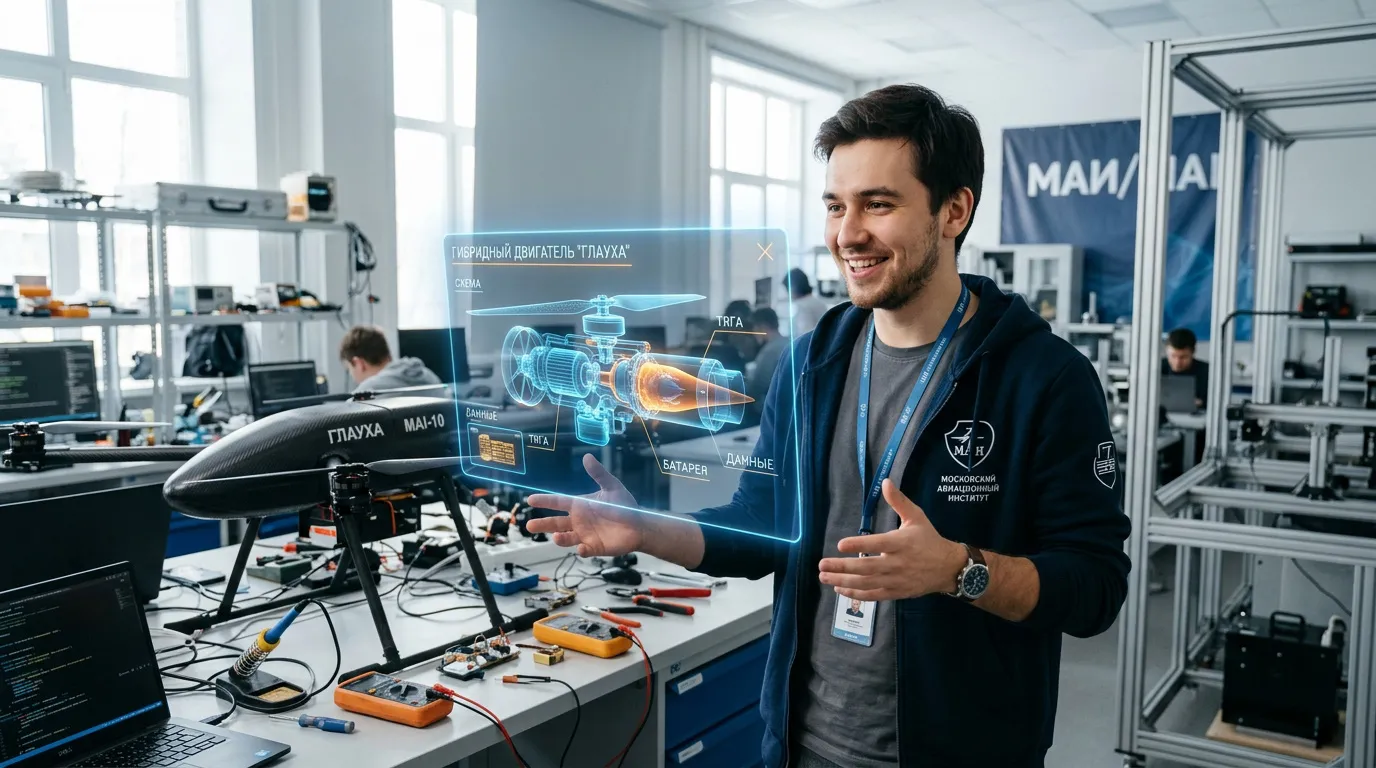
Students at the Moscow Aviation Institute (MAI) are developing Glaukha, an unmanned rapid-response system designed to transport and deploy small drones in emergency zones. The aircraft combines the roles of carrier, reconnaissance platform and communications relay. It is designed to take off vertically from a compact launch area, transition into forward flight at a cruising speed of about 180 km/h, and release two or three mini-drones from its payload bay near an incident site. Those drones can then inspect locations that are difficult for rescuers to reach, including the interiors of burning buildings.
The project's target specifications include a top speed of up to 300 km/h, a maximum takeoff weight of 22 kg and an operating radius of about 70 km. Adding a hybrid propulsion system could increase its range sixfold. Although the project is still in its early stages, it already demonstrates a promising combination of coordinated UAV operations, mobile data transmission, computer vision and a modular architecture.
Short-Term Goals and Long-Term Potential
The team's immediate objective is to build a working prototype and validate its performance during flight testing. To reach that goal, the developers must solve several demanding engineering challenges, including safely deploying mini-drones in midair, maintaining reliable communications between aircraft, enabling autonomous navigation inside buildings without satellite signals, securing command links and preventing collisions.
In Russia, the system could support wildfire response, search-and-rescue missions, emergency communications, industrial inspections and light cargo delivery. According to Russia's Ministry of Industry and Trade, the country's UAV market could exceed 46,000 aircraft by 2030, with domestically produced systems accounting for more than 70% of the total.
Export opportunities could emerge later, once the system has been certified and its reliability has been demonstrated. Countries across the CIS, Asia, Africa and Latin America with vast remote territories, frequent natural disasters and limited ground communications could become potential customers. Success, however, will depend on localized component production, compliance with aviation regulations in different countries and competitive pricing.
How Russia's UAV Industry Has Evolved
The project builds on a series of large-scale government initiatives. Russia approved its UAV Development Strategy through 2035 in 2023, followed by the launch of the national Bespilotnye aviatsionnye sistemy (Unmanned Aircraft Systems) project in 2024. During the same period, MAI also introduced concepts for so-called tethered drones designed for monitoring missions and communications relay.
Applied technologies have advanced in parallel. In 2023, Russian developers created a drone capable of delivering medical kits weighing up to 30 kg to people in remote areas. By 2025, Russia's civilian UAV market was expanding by 25% annually, while production reached 57,000 aircraft, up 23% from the previous year. Together, those developments laid the foundation for more advanced systems such as Glaukha.

A Chance That Ought to Become Reality
Glaukha is more than a single aircraft. It is a multi-layered system that combines the speed of a fixed-wing platform with the agility of compact drones. Its long-term success will depend not only on its technical specifications but also on its ability to operate reliably in demanding conditions, including smoke, strong winds, low visibility and environments without satellite navigation.
Partnerships with industrial companies and support from emergency response agencies will be critical to moving the project from concept to real-world deployment. The most realistic path forward is gradual commercialization: first by introducing individual technologies for monitoring, communications and delivery, and then by integrating them into a complete rapid-response platform. If the project secures the funding and resources it needs, Glaukha could become an important part of Russia's unmanned aviation ecosystem and eventually reach international markets.