MIPT Scientists Speed Up Nuclear Process Simulations by a Factor of 20
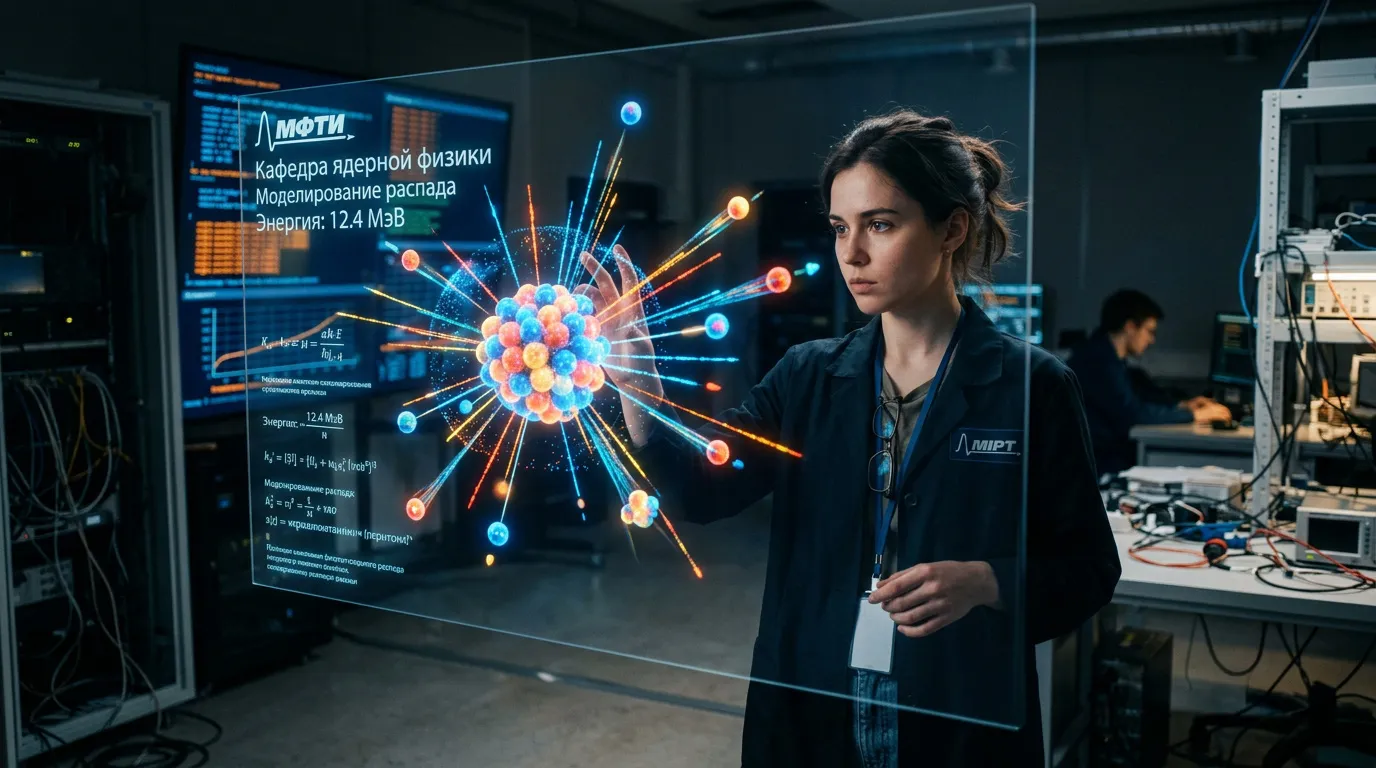
Researchers at the Moscow Institute of Physics and Technology (MIPT) have developed a new software code for modeling atomic nucleus fragmentation. The system dramatically accelerates calculations involving the formation of light nuclear fragments.
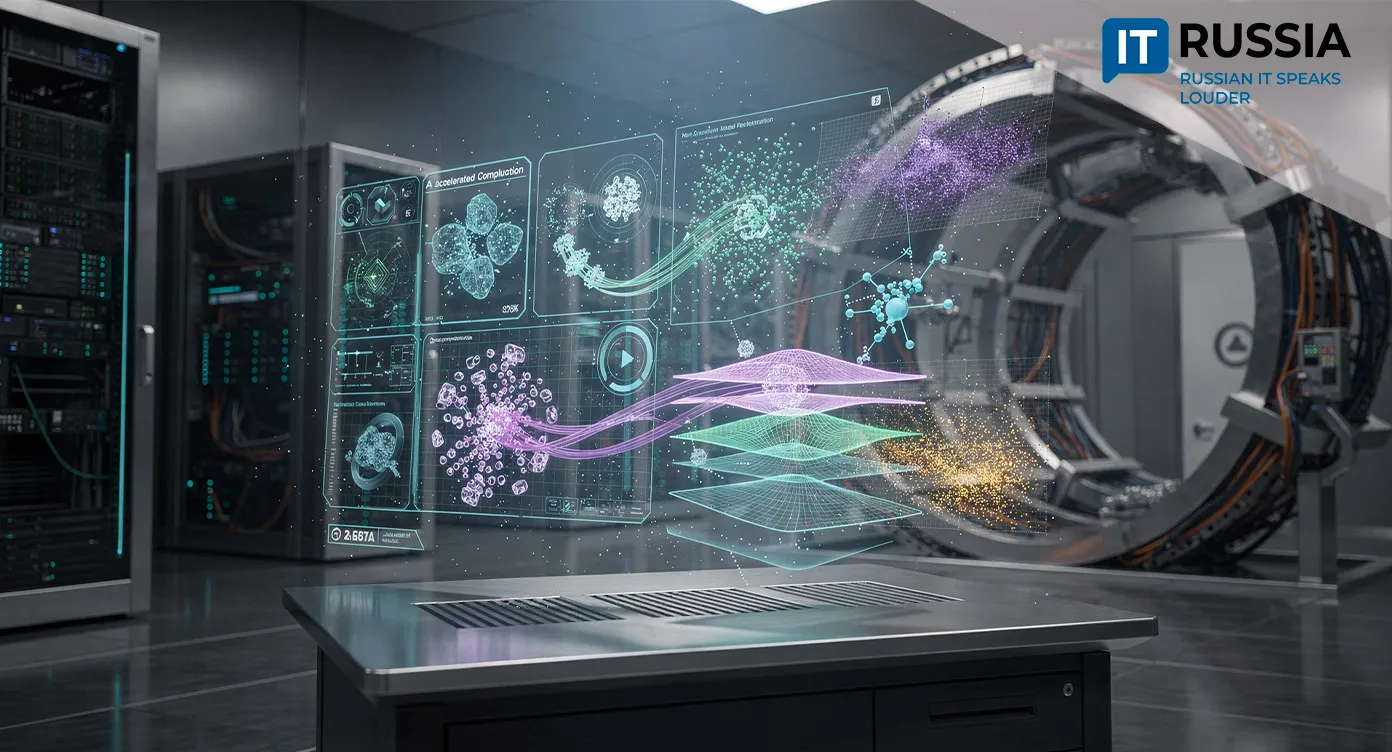
The calculation process is now, on average, 20 times faster, while certain decay channels run up to 300 times faster than in the previous version. The development has been incorporated into the official release of Geant4 version 11.4, an international software toolkit widely used in nuclear medicine and high-energy physics.
From Fortran to Modern C++
The previous version of the model, created in 2008 for Geant4 v9.2, was written in Fortran and served nuclear physicists for nearly two decades. The new implementation has been completely rewritten in modern C++, significantly improving computational efficiency. The final version occupies less than 25 megabytes of memory and runs substantially faster than its predecessor.
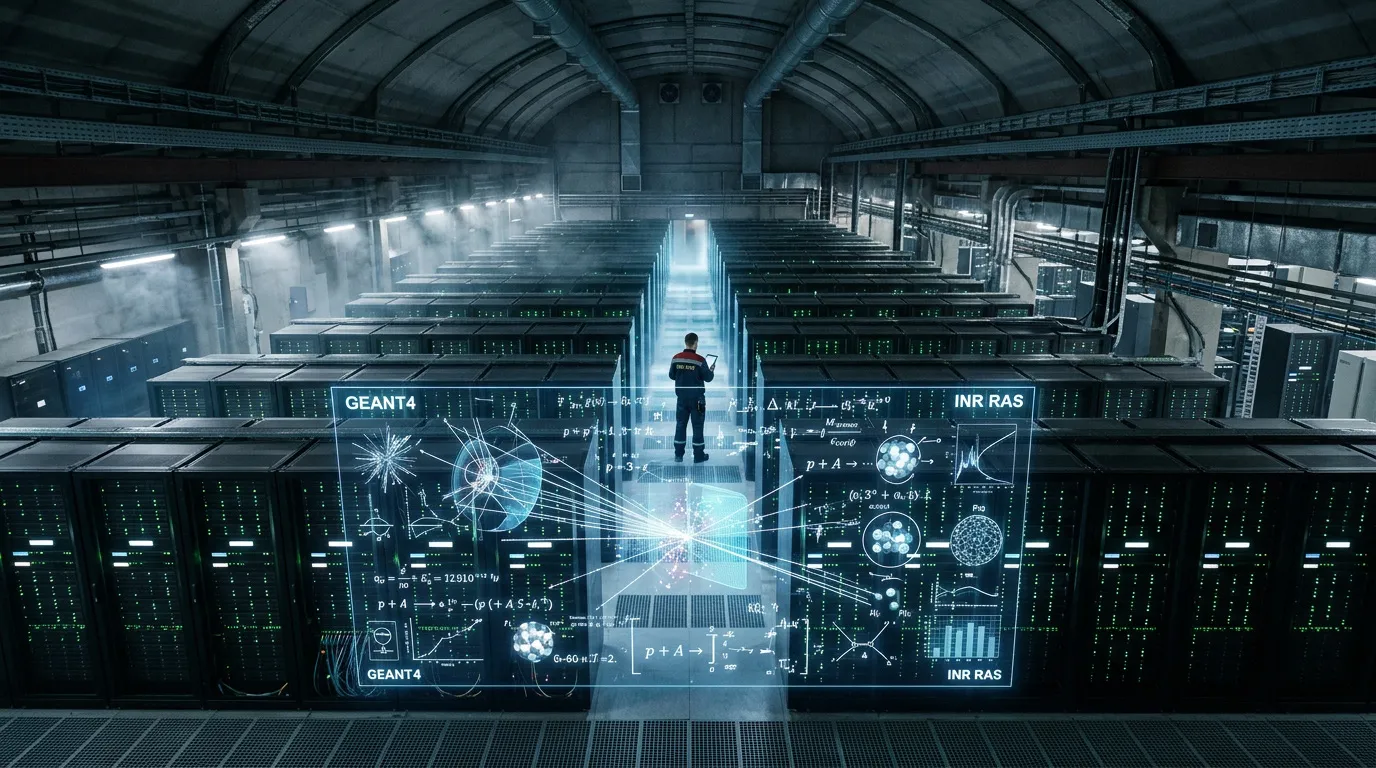
Testing was carried out on computing clusters at the Russian Academy of Sciences' Institute for Nuclear Research using tens of thousands of simulated events. The results matched both the benchmark Fortran code and experimental data on neon nucleus fragmentation.
In some cases, performance gains reached a factor of 300. Validation also included integration of the new version into the Abrasion-Ablation Monte Carlo Colliders model code, confirming the correctness of the algorithms under complex relativistic nuclear-collision scenarios.
Applications in Cancer Therapy
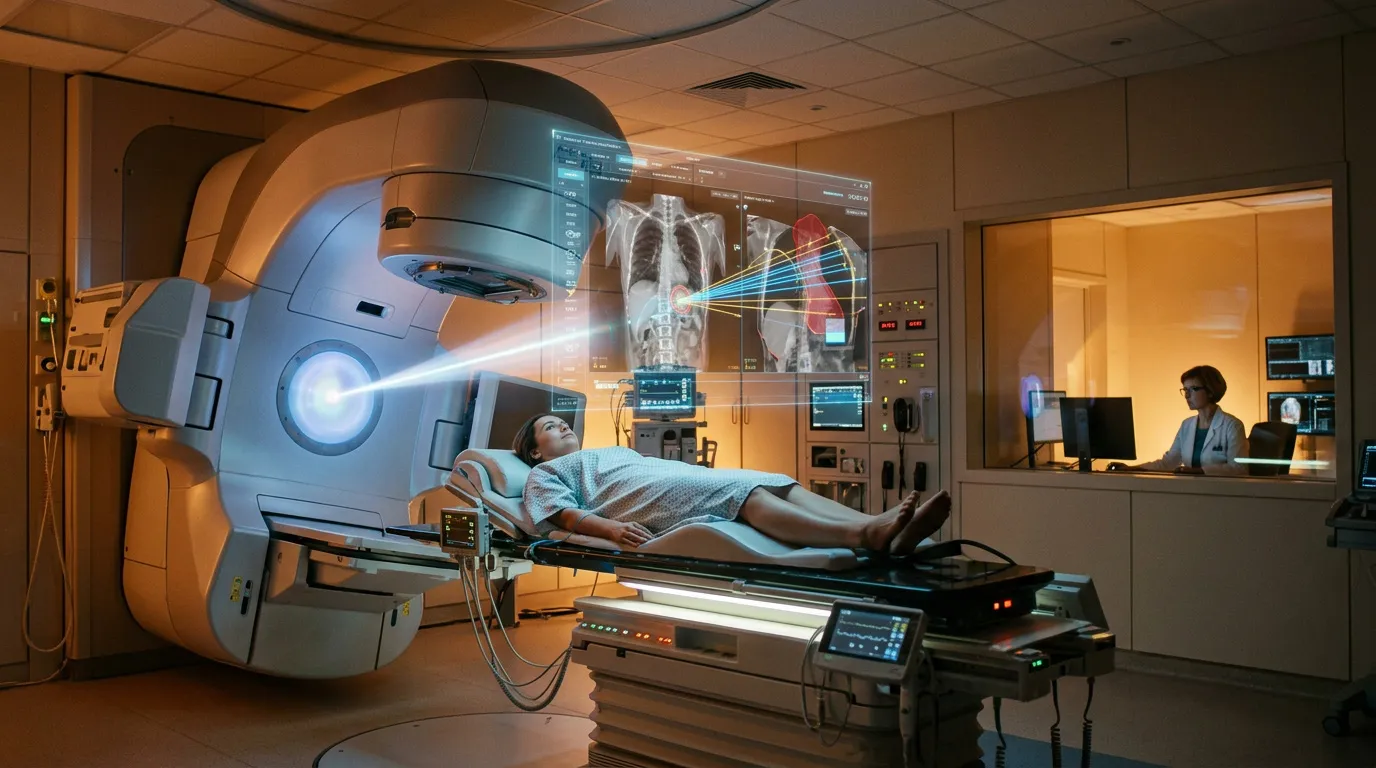
One of the most important applications for the new model is heavy-ion therapy for malignant tumors. When a tumor is irradiated with carbon or oxygen ion beams, some nuclei fragment while traveling through the patient's body. The resulting particles – including alpha particles, protons, and light nuclei – deliver additional and difficult-to-predict radiation doses to healthy tissue, making accurate calculations essential for minimizing side effects.
Geant4 is widely used to model the fragmentation of light-ion beams in human tissue. The new model can calculate the trajectories of secondary fragments several times faster and help refine treatment plans. In practice, that can shorten the time between diagnosis and the start of treatment while improving the accuracy of radiation dose delivery.
Research at the Large Hadron Collider
A second application area involves particle-collision studies at the Large Hadron Collider. In 2025, the LHC conducted its first collision runs using oxygen-16 and neon-20 nuclei, opening a new phase in research into quark-gluon plasma and the structure of light nuclei.
Spectator fragments – portions of nuclei that do not participate directly in a collision – are produced through fragmentation and can travel around the accelerator ring alongside the original nuclei. Fast, accurate calculations of these processes are critical for correctly interpreting experimental data and understanding the physics of high-energy collisions. The new model allows researchers to obtain simulation results more quickly.
Future Applications: Space Radiation and Nuclear Energy
The developers plan to apply a similar optimization approach to another computationally intensive model, statistical multifragmentation, which describes the decay of even the heaviest atomic nuclei. That effort is tied to two practical challenges.
The first is radiation safety during space missions. Inside a spacecraft, astronauts are shielded from radiation by relatively thin protective structures. When heavy cosmic-ray nuclei strike that shielding, they break apart into secondary fragments that create an additional radiation burden for the human body. A faster model could improve predictions of radiation exposure during long-duration missions.
The second application area is nuclear energy. In accelerator-driven systems, protons bombard heavy targets made of lead or bismuth, causing them to fragment. This process can be used to produce rare isotopes and to transmute, or effectively "burn," radioactive waste. Simulating such interactions requires significant computing time, and accelerating those calculations could improve the design and optimization of these technologies.
International Recognition
The development was presented at CHEP-2026, the International Conference on Computing in High Energy and Nuclear Physics in Bangkok, the world's largest forum dedicated to computational methods in high-energy physics. As a result, thousands of researchers will gain access to faster simulations.
The Geant4 library is maintained by an international consortium that includes CERN, Fermilab, KEK, and other leading scientific centers.
The success of this project demonstrates that Russian engineers and software developers continue to maintain advanced expertise in scientific computing for megascience facilities, medical physics, and applied nuclear research.