Robot Diagnostician Inspects District Heating Pipes Without Excavation
In Russia’s Sverdlovsk region, T Plus engineers conducted an in-line inspection of a section of the main district heating pipeline running from the Nizhnyaya Tura State District Power Plant using a free-swimming robotic inspection tool.
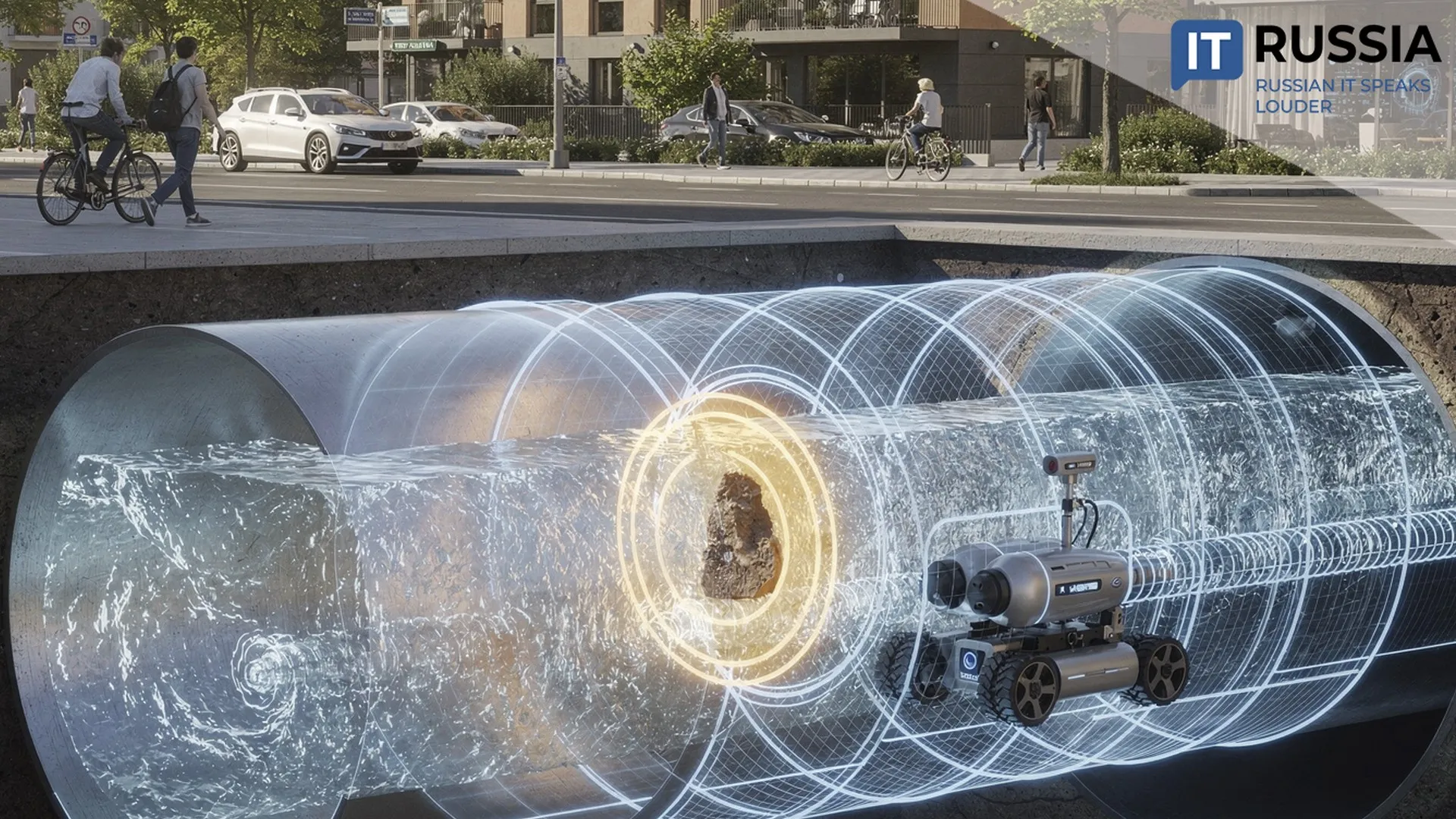
A 200-meter section of the 1,000-mm-diameter pipeline connects to networks supplying hot water and heat to customers in the city of Lesnoy. For the inspection, engineers created an access point into the water-filled district heating main for the specialized robot. They inserted the device and sealed the opening with a special watertight cover. The pipeline is depressurized during the inspection. A key advantage of the method is that the pipe does not have to be completely drained, while the robot is launched and retrieved through the same access point.
The inspection itself relies on equipment using acoustic resonance technology. The instruments emit a broadband ultrasonic pulse that excites resonance in the pipe wall at specific frequencies. Sensors detect these vibrations, transmit the signals to a workstation and analyze them. The resulting data can reveal pipe-wall thickness, corrosion and other defects. The robot also has two video cameras that allow an operator to control it. Acoustic resonance technology is an established nondestructive testing method in which resonance frequencies can be used to determine pipe-wall thickness. The robot travels inside the pipe at 288 meters per hour but can reach speeds of up to 1,000 meters per hour when necessary.
In-line inspection can identify damaged sections of district heating mains without extensive excavation, giving T Plus better information for planning repairs as it prepares for the heating season. For residents of Lesnoy and other cities served by the company, that means reducing the risk of winter outages to a minimum.

From One-Off Inspections to Systematic Monitoring
The main opportunity for technologies like this lies in scaling robotic inspection across Russia’s regions. The method does not replace conventional hydrostatic testing, but complements it with precise data on individual defects and the condition of the metal in district heating mains.
Large-scale inspections of district heating networks in major cities could also create digital maps showing the deterioration of individual pipeline sections. That would allow utilities to plan repairs based not only on the age of a pipe but also on its actual condition.
Meanwhile, demand for in-line inspection continues to grow, creating opportunities for developers of specialized diagnostic software and inspection equipment. The size of Russia’s domestic market leaves room for both large and small companies. The technology also has promising export potential. YUNIKON-ZSK, for example, which manufactures and uses its own acoustic inspection systems, has conducted similar inspections of district heating networks in Kazakhstan.
From St. Petersburg to Siberia
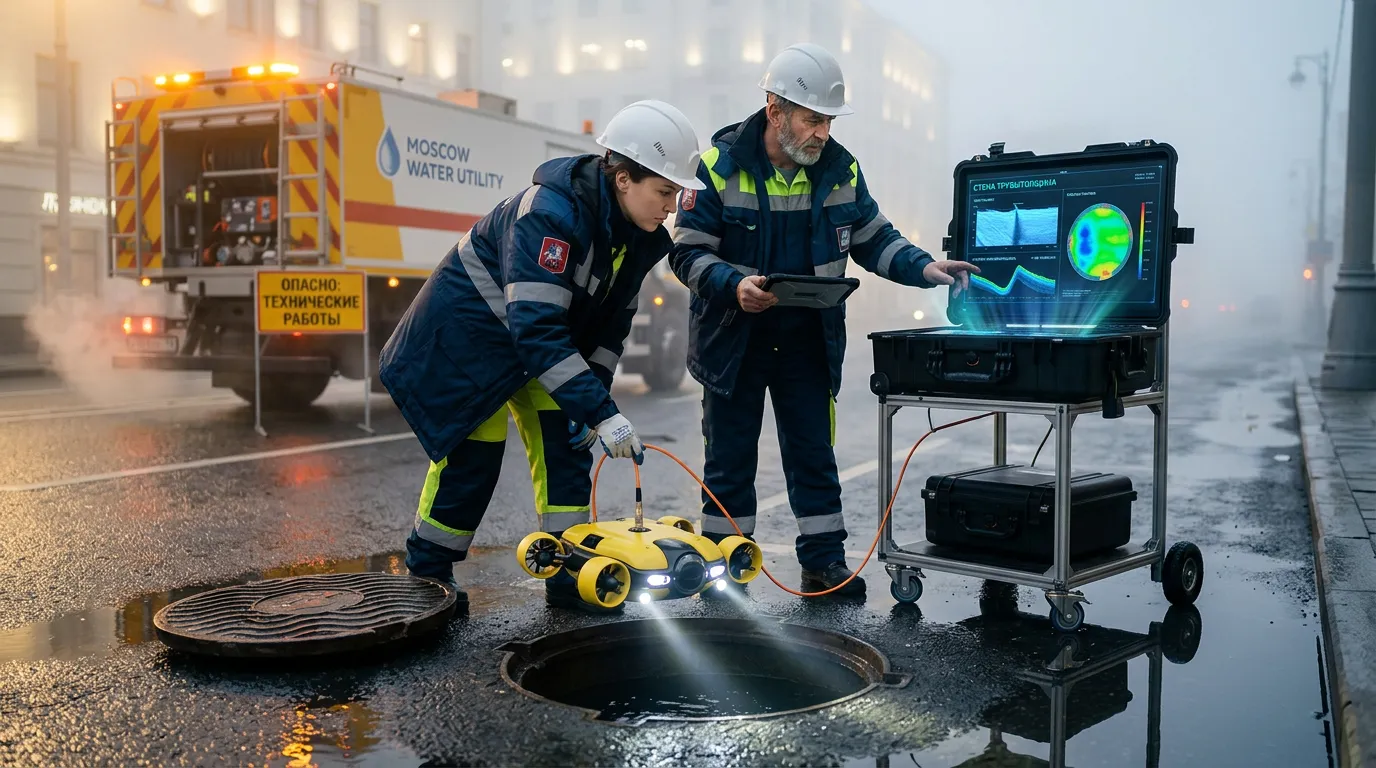
Diakont was among the pioneers in developing and deploying robotic systems for in-line inspection, first using them on St. Petersburg’s district heating network in 2009. Broader adoption of the technology began in the 2020s. T Plus deployed robots in Samara, Novokuybyshevsk and Yekaterinburg in 2021, and used a robotic inspection tool in Penza in 2024. That same year, Siberian Generating Company began large-scale in-line inspections in Novosibirsk and Kemerovo.
In recent years, robotic inspection technology in Russia has progressed from pilot projects to systematic deployment.

Digital Diagnostics Instead of Emergency Repairs
The use of a diagnostic robot in Lesnoy illustrates that shift. It reflects a sustained trend among Russian district heating utilities, which are increasingly adopting predictive diagnostic tools so they can assess the condition of district heating mains in advance and, when necessary, replace damaged sections before failures occur rather than responding after an emergency.
In parallel, newly built or replaced mains are being equipped with smart sensors that transmit real-time information about pipe condition. Together, these technologies can create an integrated digital management environment for district heating networks. This shows how Russia’s utility sector is actively putting modern industrial robotics and digital technologies to work.