

Russian Telemetry Makes Inroads in Asia
A Karelia-based company, Tekhnodar, has installed a sophisticated fuel monitoring system on a vessel in China.

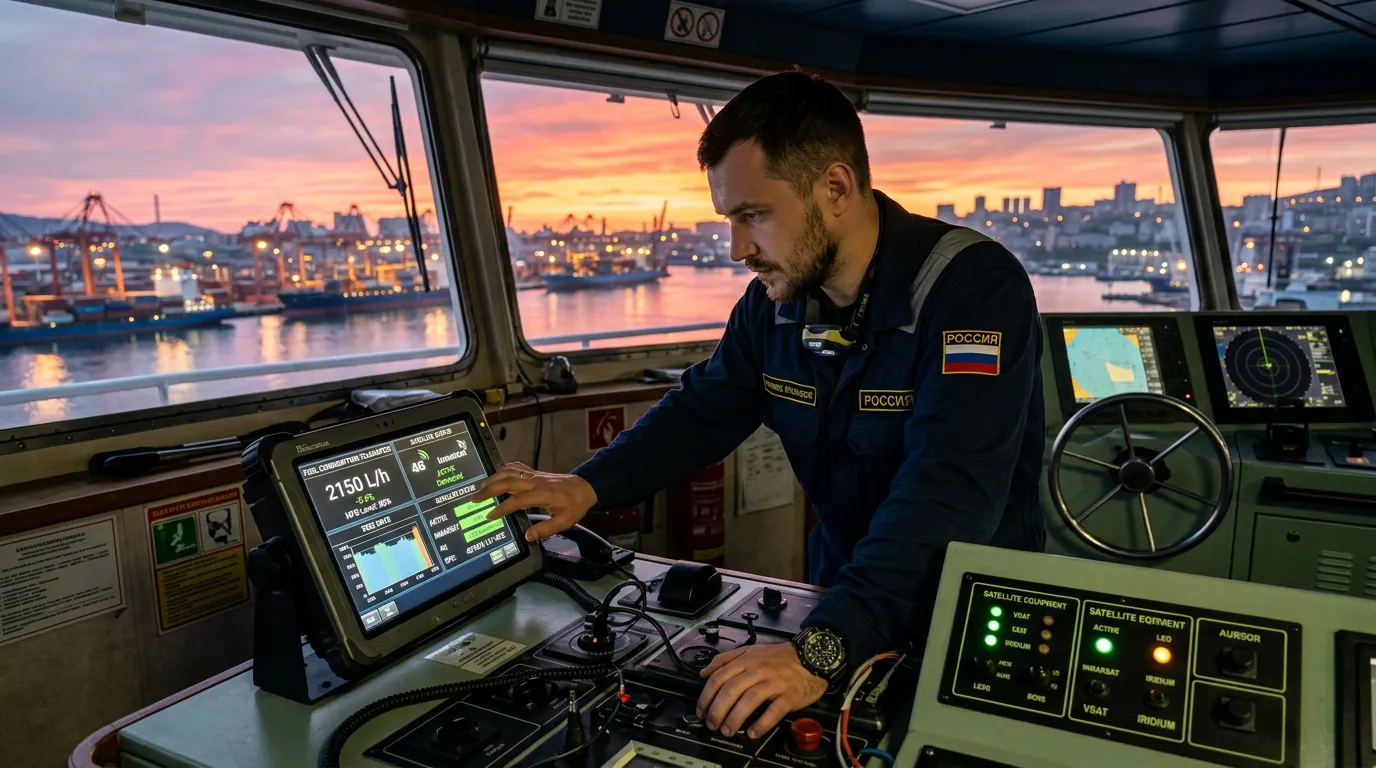
What Tekhnodar installed on a refrigerated receiving and transport vessel in China is far more than a basic gauge for measuring fuel levels in a tank. It is an integrated hardware-software ecosystem comprising the VMTS data acquisition system on the DOTS platform, an operator visualization panel, mass flowmeters, pressure sensors, visual and audible alarms, and a data transmission channel using satellite internet.
In effect, this is a full-scale industrial IoT telemetry system adapted for harsh marine conditions. Sensor data flows to the platform in real time, where it is processed and made available simultaneously to the crew on board and the shipowner’s shore office. This allows operators to remotely monitor fuel intake and dispensing, maintain a detailed bunkering history, detect the presence of air during refueling, and receive immediate alerts about abnormal conditions.
On a global scale, the project is modest – a single commercial installation rather than a technological breakthrough. Nevertheless, for Russia, its significance is greater: the country is demonstrating its ability to export not simply hardware but a sophisticated engineering system that competes with Western alternatives in one of the world’s largest shipbuilding markets. Notably, the project coincided with Tekhnodar receiving the Russian Export Center’s Sdelano v Rossii (Made in Russia) certification, which gives the company access to tools for promoting its products in international markets.

Export Prospects
The China project is not Tekhnodar’s first venture abroad. The company has been steadily developing its export business for several years, and the latest installation fits naturally into that strategy. The product’s greatest value lies in its integration. An individual flowmeter is relatively inexpensive, but combining sensors, controllers, Russian software and satellite communications allows the company to generate revenue not only from equipment sales but also from engineering, integration and subsequent maintenance. Systems like these can be installed on fishing vessels, tankers, dry bulk carriers and tugboats without extensive modifications to the vessel itself, significantly expanding the potential market.
The outlook in Asia appears promising. Installing the system on an operational vessel in a Chinese port demonstrated that Russian engineers can support customers directly abroad without the costly need to bring the vessel to Russia. The company already has similar experience equipping vessels in Korea, giving Tekhnodar a growing portfolio of international projects it can draw on when negotiating with new customers.
From the Volga to the Yellow Sea
Marine fuel monitoring has been developing in Russia for several years, and Tekhnodar’s China project did not emerge in isolation. As early as 2022, a fuel consumption monitoring system from the same manufacturer was successfully operating with the Russian shipping company Volga-Flot. Moreover, Russia has a competitive domestic market. In 2024, Morinsis-Agat-KIP introduced the Russian Kayman (Cayman) system, which also combines flowmeters, density meters and fuel level measurement equipment. This suggests that marine digitization in Russia is not being driven by a single company but is gradually developing into a distinct segment of the country’s instrumentation industry.
The global picture points in the same direction, with telematics-based fuel monitoring systems increasingly being deployed worldwide. In 2024–2025, for example, similar deployments were reported among transportation and logistics companies in Nigeria. The trend suggests that marine fuel monitoring is becoming part of broader digital fleet management platforms, with standalone instruments giving way to integrated systems.

A New Direction for Russian Exports
Tekhnodar’s project represents a systematic, if still modest by global standards, expansion of Russian engineering expertise into Asian markets. The outlook for the next several years is cautiously optimistic. The company already has a foundation for further expansion, with several international projects and Sdelano v Rossii certification working in its favor. Yet turning individual deliveries into a sustained export business will require Tekhnodar and similar companies to tackle the difficult task of building service networks abroad.