Seeing Cancer Earlier, Treating It More Precisely: Russia Expands Its Anti-Cancer Toolkit
Russian researchers have developed a technology that could reshape how cancer is diagnosed and treated. The new approach, based on laser-generated medical nanoparticles, is currently undergoing preclinical testing and could become part of next-generation oncology care.
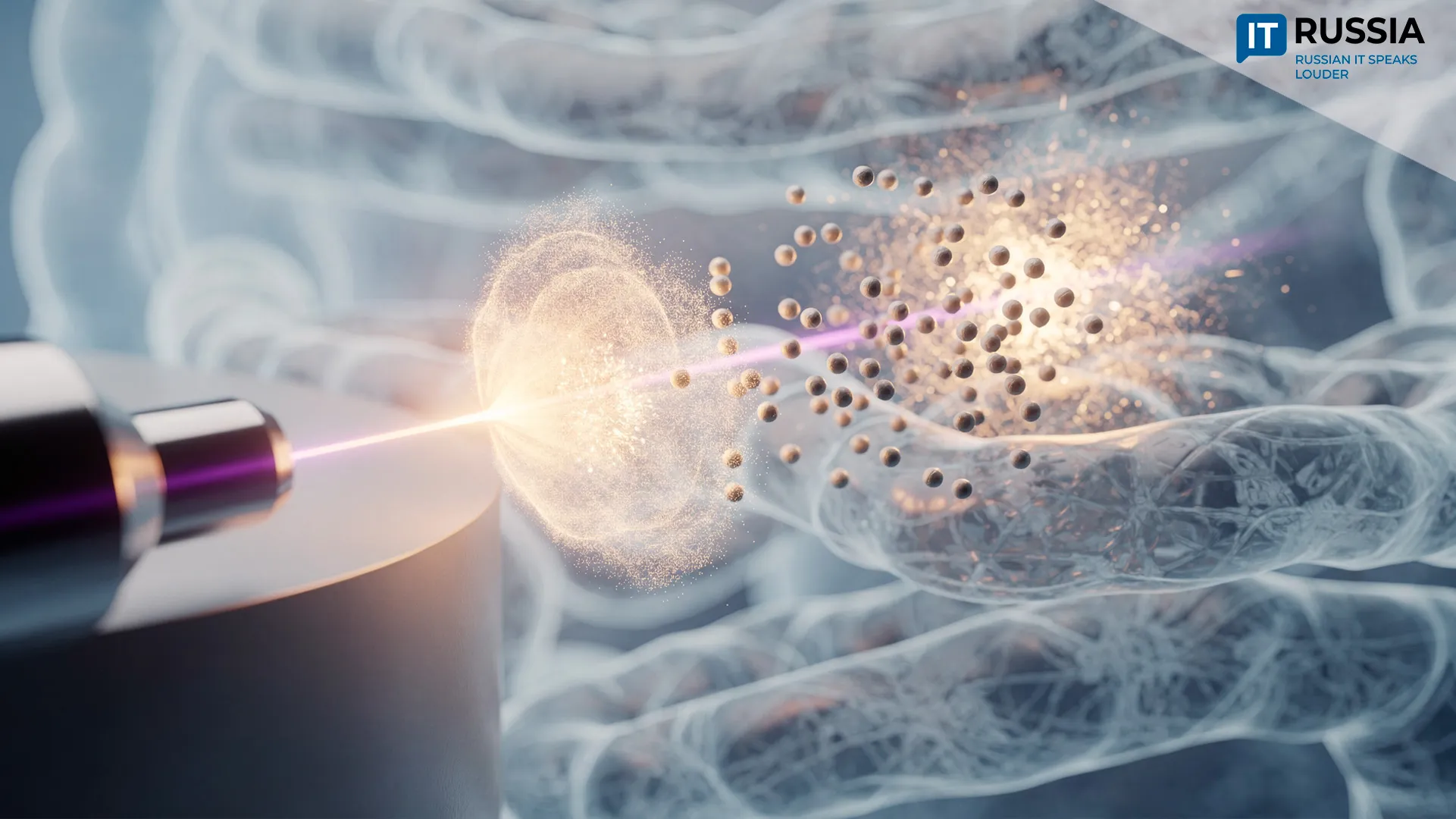
Scientists at the National Research Nuclear University MEPhI (Moskovskiy Inzhenerno-Fizicheskiy Institut) have established a method for synthesizing medical nanoparticles using ultrashort femtosecond laser pulses.
Laser-Generated Nanoparticles Target Cancer
The process works as follows. Researchers take a conventional material – such as a metal or chemical compound – and expose it to an ultrashort laser pulse. Under the impact of the beam, the substance briefly vaporizes, forming plasma and then reassembling into particles measuring only billionths of a meter. These particles are invisible to the naked eye, yet they can play a critical role in improving cancer treatment.
Oncological diseases remain among the leading causes of mortality worldwide. Cancer is widely considered one of the defining health challenges of the twenty-first century. Risk factors are increasing, while healthcare systems face growing pressure. As a result, new diagnostic and therapeutic tools are urgently needed.
At MEPhI’s Bionanophotonics Laboratory, researchers synthesize nanoparticles from gold, silver, titanium, hafnium and other materials. Their goal is to make diagnostics more accurate and therapies more targeted. Some of the developments have already completed preclinical studies involving cell cultures and laboratory animals.

Detecting Disease Earlier
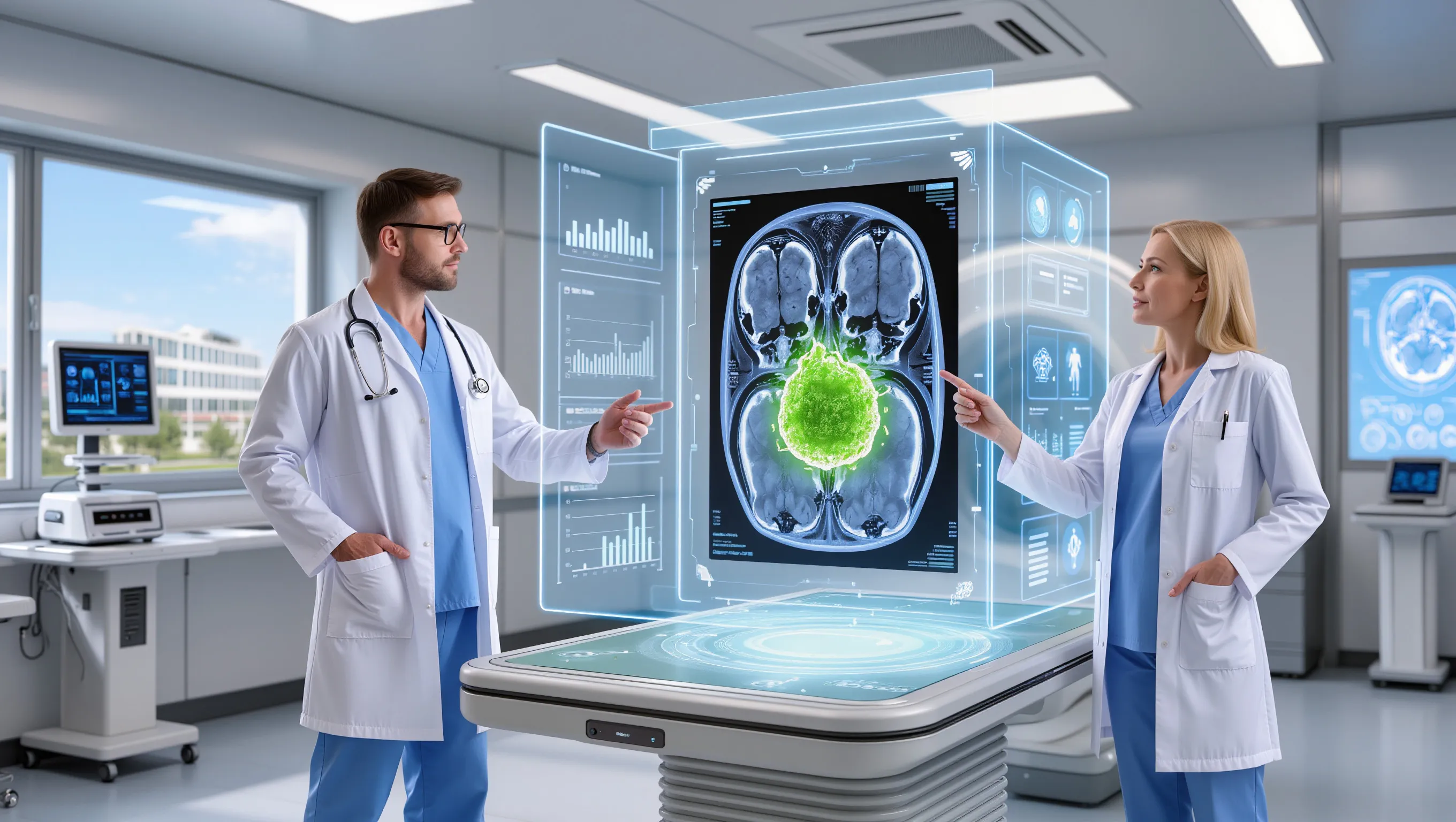
One of the main challenges in oncology is identifying disease at the earliest possible stage and treating it without damaging healthy tissue. In early stages, tumors are often barely visible in MRI or CT scans because the contrast between healthy and cancerous tissue is too weak.
Nanoparticles can significantly improve this situation. After entering the body, they accumulate in tumor tissue. As a result, tumors appear much more clearly in medical images. This enables physicians to detect cancer earlier, when the chances of successful treatment are significantly higher.


There is also a second benefit. In radiation therapy, doctors aim to destroy cancer cells while minimizing damage to surrounding tissues. Researchers are developing radiosensitizers – particles that make tumors more sensitive to radiation. This approach allows doctors to lower radiation doses, reduce side effects and preserve a patient’s quality of life.
Nanoparticles can also serve as drug delivery vehicles. This follows the principle of a “smart bullet” – the medication is delivered directly to the tumor instead of spreading throughout the entire body.
A Strategic Medical Direction
High-technology medicine has become one of Russia’s strategic priorities. The development and production of advanced materials inside university laboratories demonstrates that the country retains strong expertise in laser physics, materials science and biomedical engineering.
MEPhI collaborates with major research and clinical institutions, including the N. N. Blokhin National Medical Research Center of Oncology, the Institute of Bioorganic Chemistry of the Russian Academy of Sciences and the P. N. Lebedev Physical Institute of the Russian Academy of Sciences. As a result, new technologies are evaluated jointly by physicists, chemists, physicians and biomedical specialists at every stage of development.
Global Context
Nanomedicine is one of the most competitive fields in modern science. Research in this area is actively conducted in the United States, Europe and Asia. Russian developments are increasingly integrated into this global landscape. Joint projects with researchers from China and India are already under discussion. Such collaboration could accelerate the transition to clinical trials and broaden the range of applications for these technologies.
If the materials demonstrate safety and effectiveness in clinical trials, several international commercialization pathways are possible. These include technology licensing, joint ventures and the export of specialized medical solutions.
Benefits for Patients and Global Medicine
For patients, the key benefit is the chance for earlier diagnosis and more gentle treatment. When tumors can be detected sooner and respond to lower radiation doses, survival rates and quality of life improve. For global medicine, any new tool in the fight against cancer contributes to the broader effort to reduce the disease’s impact worldwide.
The MEPhI development represents a step toward more precise and controllable cancer therapy. Clinical trials, regulatory standardization and industrial-scale production still lie ahead. However, the research already demonstrates that Russia is building a technological base capable of developing advanced medical materials and competing at the global level.