

What Will Russia’s AI Development Support Law Deliver?
This summer, the adoption of legislation governing large foundation models has become the biggest news across Russia’s IT market. In July, Federal Law No. 243-FZ, “On Supporting the Development of Artificial Intelligence Technologies in the Russian Federation,” was signed into law. The legislation establishes a framework that will need to be fleshed out through implementing regulations. In practice, regulators will have to position AI policy on a spectrum with security at one end and active development at the other – balancing safeguards against the growth of a field poised to become the leading driver of technology and business over the next decade.

The market is already bearing out that trend: Russia’s AI software market grew 27% in 2025 to 25 billion rubles (about $310 million). According to VTsIOM, meanwhile, the share of Russians using neural networks rose to 78% over the past six months, with 58% using them weekly. Against that backdrop, establishing the legal status of AI models and the outputs they produce is no longer simply timely – it is critical.

What Moves the Law Toward Security?
1. A clear definition of sovereign and national models lays the groundwork for future decisions about which models can be used in government and critical information infrastructure, or CII. In practice, that means strategically important systems would admit only models with verified Russian origins and established control over their data. Yet estimates suggest that just one-fifth of CII facilities are ready for the new requirements – another indication that the law is moving ahead of the market’s current level of maturity.
2. Requiring data to be stored and processed in Russia directly extends Federal Law No. 152-FZ. The result is a consistent framework designed to protect data from being reused abroad. In effect, localization becomes more than a one-time requirement: It is a principle that applies across AI systems.
3. Developer control over a model extends to its training, weights, parameters and entire lifecycle. Taking an open source system and wrapping it in a Russian-language interface is not enough. The requirement lays the groundwork for determining who will ultimately bear responsibility for harmful consequences arising from AI use – an issue now being actively debated both in Russia and globally.
4. Developers have a direct obligation to implement security measures, establish rules for operating their models and maintain technical documentation. Alongside the law, a specialized GOST R standard for secure development of AI software is undergoing public discussion and sets out 27 mandatory security processes. This represents a logical extension of secure development rules already applied to other Russian IT products.

Government Support and AI Development
1. Models can be further trained on publicly available Internet data regardless of whether that material is copyrighted. This removes constraints on developing and improving models when adapting their responses to Russian realities.
2. Developers will have access to government support measures that are apparently set to be tied to sovereign and national models. Current plans call for 71.7 billion rubles (about $890 million) annually in grants, subsidies and incentives. Russia already has experience subsidizing adoption of domestic software, including grants of up to 20 million rubles (about $250,000) from the Russian Foundation for Information Technology Development and Ministry of Industry and Trade subsidies covering up to 50% of costs.
3. The opportunity for international cooperation is particularly important given the presence of major global players that have already traveled a long way in developing AI technologies. Russia has already partly put that intention into practice by joining the World AI Cooperation Organization, or WAICO. Beyond working together to improve models, membership could create opportunities to promote Russian technologies in participating markets where competition among vendors remains less intense – Southeast Asia, the Middle East, Africa and Latin America.

The search for the right position on the AI “security – development” spectrum is far from over. By the end of the year, specialized government agencies and committees are set for intensive work to put substance around the framework law. Even now, however, the direction is clear: Russia is moving toward a systematic and balanced foundation encompassing both safeguards and support for AI technologies. The remaining question is how quickly implementing regulations can turn that foundation into practical tools for businesses and developers.

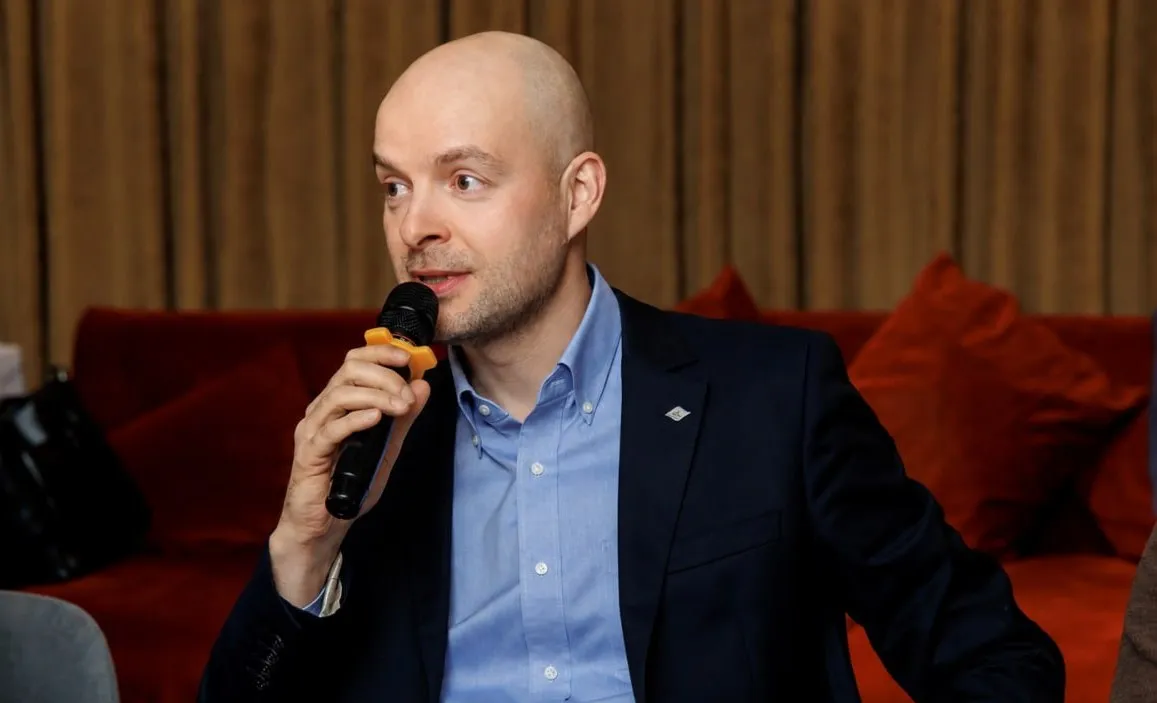
The article was written by Vladimir Nelyub, Managing Partner at Astra AI Code, Management Board Member and Director of Science and AI at Astra Group.








![Astra AI [Code] vs. Open Source: Why Deploying an Open Model in a Secure Environment Is Costly and Risky](https://storage.yandexcloud.net/itrussia/uploads/c3b5b6da-1bf7-49cb-817e-0bab1cea8cff.webp)