Doctors in the Cloud: Ministry of Health and Innopolis Launch Digital Profile for Medical Professionals
Russia's Ministry of Health has announced the creation of a digital environment for medical universities, where every future physician will receive a personal digital profile starting in their first year of study.

A unified digital framework will connect medical education, clinical training, and a specialist's subsequent career in clinics and hospitals. The Ministry of Health said the new system is designed to help medical professionals realize their full potential. The pilot project was discussed at the St. Petersburg International Economic Forum (SPIEF).
From Medical School to Residency
The government plans to support future physicians from the moment they first put on a white coat in the anatomy lab through later stages of their careers, including leadership roles such as department heads.
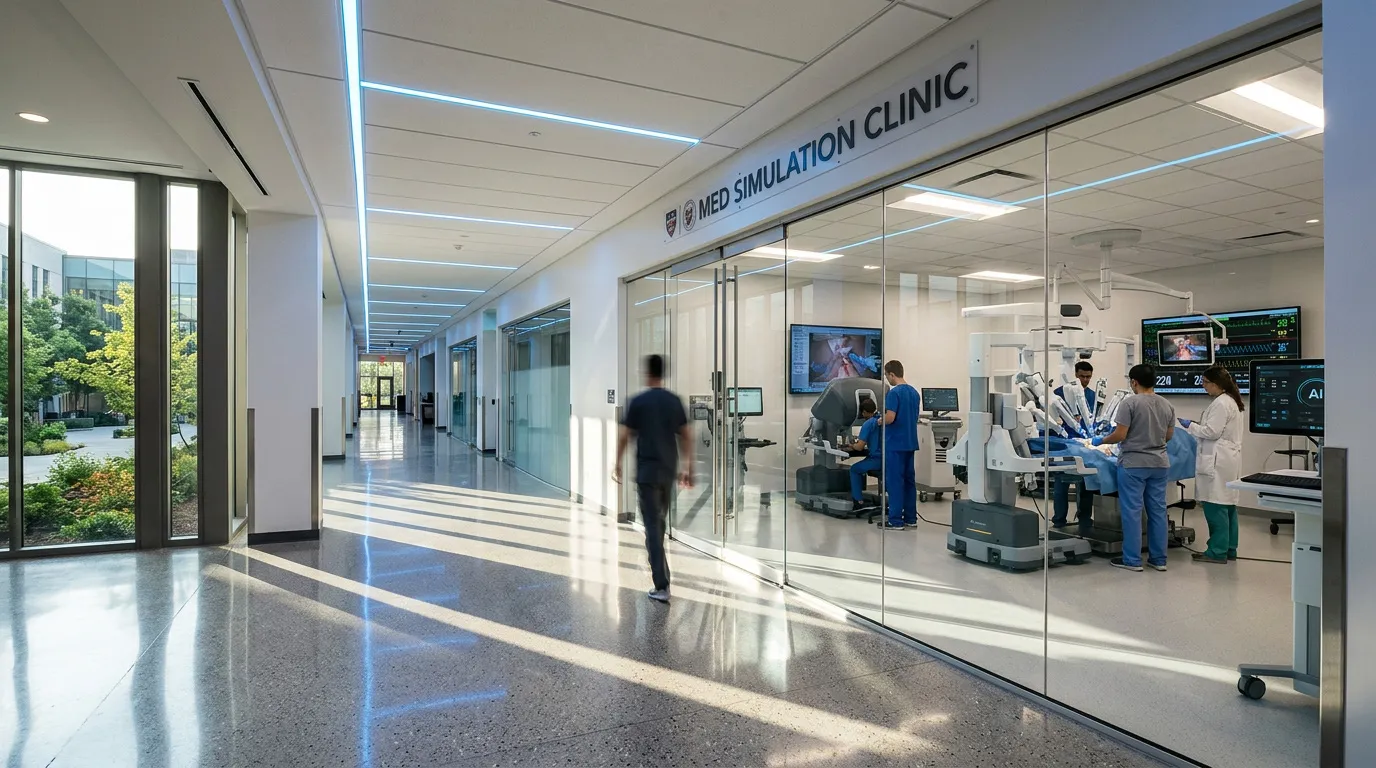
A student's digital profile is envisioned as a hybrid of an educational portfolio, employment record, and professional file. It will combine both academic and career-related information. Most notably, officials plan to integrate it over time with the existing registry of medical and pharmaceutical professionals. That means graduates entering a hospital will not have to start from scratch when documenting their qualifications. By that time, the system will already contain information about simulation-based procedures they have completed, courses they have taken, their performance ratings, and their readiness for clinical practice.

Billions for Health Tech Solutions
Russian Health Minister Mikhail Murashko has repeatedly emphasized that “digitalization touches every task facing the healthcare sector.” Russia also plans to create a unified digital health profile for every citizen.
“By 2030, the creation of a unified digital platform for health management will be completed. This platform should aggregate the full body of knowledge about the patient, the resources of healthcare organizations, and the competencies of healthcare professionals accumulated across the healthcare system,” Mikhail Murashko explained.
If earlier discussions about digital transformation focused primarily on patients through initiatives such as electronic health records and telemedicine, attention is now shifting toward the healthcare workforce itself. The logic is straightforward: first build a comprehensive digital picture of the professionals delivering care, then connect that information with the broader healthcare ecosystem. Innopolis University is emerging as a key driver of that effort.
In 2025, the university developed the Iskusstvennyy intellekt v meditsine: tekhnologii analiza dannykh i podderzhki klinicheskikh resheniy (Artificial Intelligence in Medicine: Data Analysis Technologies and Clinical Decision Support) educational module for medical students. The program consists of 144 academic hours. In practice, Innopolis is helping train the workforce that will eventually deploy and use the technologies it develops.
The market appears ready for that expansion. According to the Atlas MedTech industry review, the combined revenue of 39 organizations within Russia's digital healthcare ecosystem reached nearly 30 billion rubles (about $381 million) in 2023. Revenue generated specifically by health technology solutions approached 3.8 billion rubles (about $48 million). Digital healthcare has become a large and rapidly growing market in Russia, and educational IT solutions for medical universities may be the next segment targeted by major players such as Innopolis.
Digital Readiness Comes First
The Russian government formally began its healthcare digitalization push in 2021. Strategic directions for digital transformation were approved with a strong emphasis on sector-wide digital maturity, platform-based solutions, and technology import substitution.
In 2024, Pirogov Russian National Research Medical University launched the Institute for Digital Transformation of Medicine. Rather than functioning as a traditional academic department, it operates as a research and education ecosystem focused on preparing professionals with digital readiness, implementing artificial intelligence, and applying big-data technologies. The university has also operated Tsifrovye kafedry (Digital Departments) since 2022, allowing future physicians to study data analytics and programming alongside their medical education.
One year before the pilot was announced at SPIEF, Innopolis launched its AI training module for medical universities. It effectively served as a test case: could healthcare professionals learn to work with neural networks? The answer appears to have been yes. The next milestone came at SPIEF 2026, where Innopolis University and Kazan State Medical University signed a strategic cooperation agreement. The partnership was formalized at the highest level, with signatures from Health Minister Mikhail Murashko and Rais of Tatarstan Rustam Minnikhanov. The agreement covers three areas: education through a three-tier AI competency model, scientific research in genomics and molecular biology using machine learning, and applied solutions such as intelligent physician assistants.

A Valuable Asset
The project does not promise immediate transformation, but its long-term potential is significant. The digital profile is designed as a workforce-planning tool. By linking student records with the national registry of medical and pharmaceutical professionals, the government could gain real-time visibility into workforce shortages, identify which students are likely to enter residency programs within two years, and track how many choose careers in private healthcare. The profile is intended to accompany future physicians throughout their professional journey, from their first lecture to their first formal employment record.
For the IT sector, the initiative creates substantial demand for platform technologies, big-data analytics systems, and personal-data protection tools. The virtual profile could become a physician's personal digital asset, supporting career development throughout an entire professional lifetime.