

ITSM 2.0: AI, ESM and the Single Window
From open-source software to cybersecurity, IT professionals at Beloretsk Metallurgical Plant adapted GLPI to meet the demands of steel manufacturing.
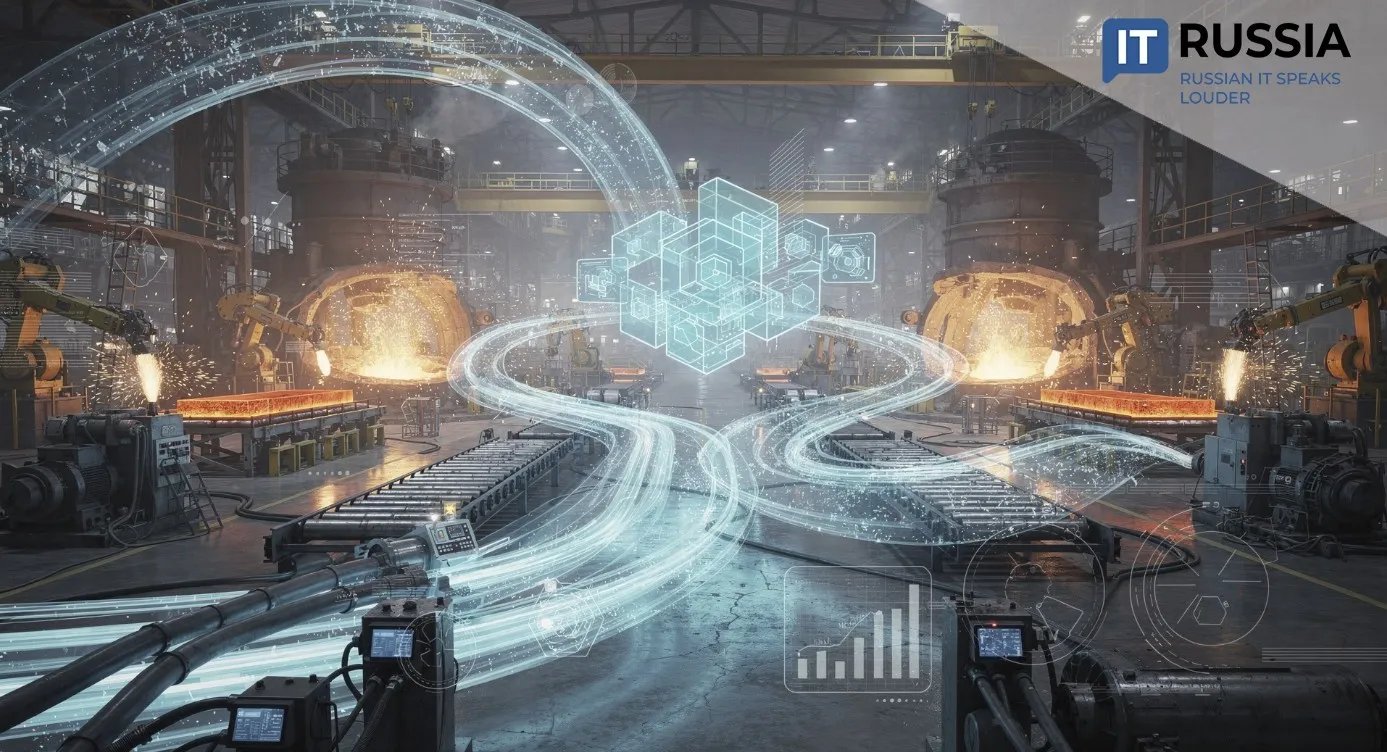
Beloretsk Metallurgical Plant (BMK, part of Mechel Group) has placed a unified IT asset management and user support system into full-scale operation. What makes the project stand out is that it was designed and implemented entirely by BMK's Information Technology Department without outside contractors. The company estimates that the system saves about 10 million rubles ($134,000) annually compared with commercial platforms offering similar functionality.
1,500 Computers Under Management
The solution is built on the open-source GLPI platform (Free IT Infrastructure Manager). Before going live, the platform underwent extensive customization. BMK's IT team adapted it to the plant's operational requirements, deployed agents to automatically collect data across the company's entire IT infrastructure, configured a single-window request management system with incident tracking, and developed analytical dashboards.
The new platform was integrated into the plant's broader cybersecurity framework. Automated detection of suspicious activity and incident response capabilities now help protect the platform while it operates in a manufacturing environment.
This approach enabled BMK to address a broad range of IT asset and IT service management tasks. Employees now submit requests through the corporate email system, reducing dispatcher workloads while improving both transparency and response times. The company also established a centralized inventory of IT assets, with more than 1,500 computers registered in the system. Automatic data updates have significantly simplified equipment inventory management. In addition, the platform is integrated with the company's organizational structure, linking requests to individual business units. That allows the IT team to analyze recurring issues and plan future IT infrastructure development more effectively. After successfully completing pilot operation at BMK, the company's IT professionals are now sharing their experience with colleagues across Mechel Group.
Building ITSM In-House
BMK's experience shows that deep customization of open-source platforms by an internal IT team can compete with expensive commercial products while reducing costs and strengthening in-house expertise.
IT professionals at Uralkhimmash JSC, one of Russia's largest chemical equipment manufacturers, have taken the concept even further. In 2023, they built not simply a customized open-source platform but an IT directory and support portal from the ground up. The company's IT team transformed technical support operations at two manufacturing sites in Yekaterinburg and Glazov by combining ITSM practices with lean manufacturing tools, including the 6S system and process mapping. When redesigning service workstations, the team also relied on lean manufacturing guidelines developed at Uralkhimmash as far back as the 1960s. As a result, more than 80% of tasks were completed on schedule, while issue resolution became three times faster.
The Maturity of Russia's ITSM Platforms
Following the departure of foreign vendors, Russia's ITSM market has rapidly shifted toward domestically developed solutions. According to TAdviser, the segment reached 18-22 billion rubles (about $241-294 million) in 2025, representing growth of 20-30% from the previous year. Today, 76% of Russian companies already use ITSM platforms to manage IT resources, and analysts expect the market to continue expanding at an annual rate of 10-12% over the next several years.
The market is developing along two parallel tracks. One focuses on open-source platforms such as GLPI and Redmine that are extensively customized by in-house IT teams, the path chosen by BMK. The other centers on large-scale migration to Russian commercial platforms, including Naumen, SimpleOne, BPMSoft, ITSM 365 and 1C:ITILIUM. One example is KUSTO, introduced as KUSTO (Unified Geographically Distributed System) when Atomstroyexport – the engineering division of Rosatom – deployed it in 2023-2024 using Naumen Service Desk, a Russian ITSM and ESM automation platform developed by Naumen. The rollout covered eight nuclear power plant construction sites in Russia and abroad, connecting 14,000 users and 42,000 pieces of equipment. It also created a centralized dispatch center that now receives requests from projects across Europe, the Middle East, North Africa and the Asia-Pacific region.
Another large-scale ITSM deployment is IT4IT, implemented for Gazprom Neft in 2024 using the BPMSoft low-code platform together with the industry-specific ITSMbox solution from Lasmera, part of IT Expert Group. The platform supports more than 20 ITIL 4 processes, ranging from IT asset and configuration management to digital transformation initiatives. The project automated seven core ITSM processes across the entire Gazprom Neft group. Together, these projects demonstrate that Russian ITSM platforms have matured to the point where they can support infrastructure deployments on the scale of the industry's largest implementations.

From Ticketing to Intelligent Ecosystems
While import substitution initially drove the market's development, the emphasis has now shifted toward richer functionality and industry-specific adaptation. Solutions with lower barriers to adoption, more advanced architectures and stronger user experience are gaining the advantage. The most significant change is the expansion beyond traditional IT service management. Modern platforms now support HR, facilities management, legal and finance departments, creating a single-window environment for end-to-end business processes.
Businesses increasingly need more than incident tracking. They are looking for predictive analytics and end-to-end automation. In response, Russian vendors are actively integrating AI into Service Desk platforms to automate request routing, generate solutions and expand knowledge bases. Over the next several years, the market is expected to move toward intelligent ESM + AI ecosystems that reduce operating costs and accelerate enterprise processes, transforming ITSM from a support function into a strategic asset for digital transformation.