

The Queen of the Gas Station: Gazprom Neft Uses Immersive Technology to Train Gas Station Staff
Gazprom Neft’s gas station network has launched a digital training program in which employees move from webinars and theory classes into VR simulations powered by AI-driven feedback.
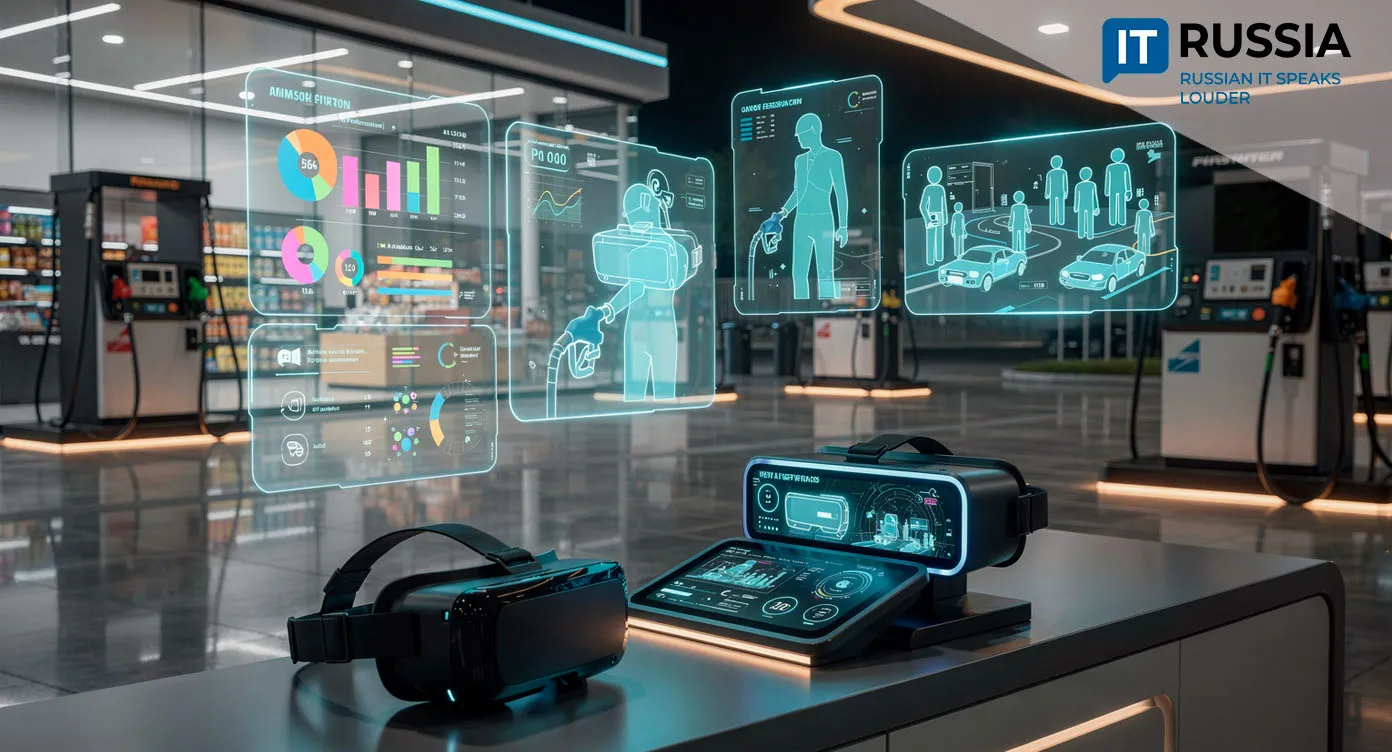
This story brings together two powerful trends – digital transformation and investment in human capital. Every year, Gazprom Neft’s gas station network creates more than 500 new jobs across Russia. These are full-time positions with career growth opportunities and social benefits. In Kuzbass alone, for example, the company operates 94 stations and employs nearly 950 people. Now all of them – from Kemerovo to Novokuznetsk – are being trained to the same customer-service standard inside a shared digital environment.
Starting With a Smile
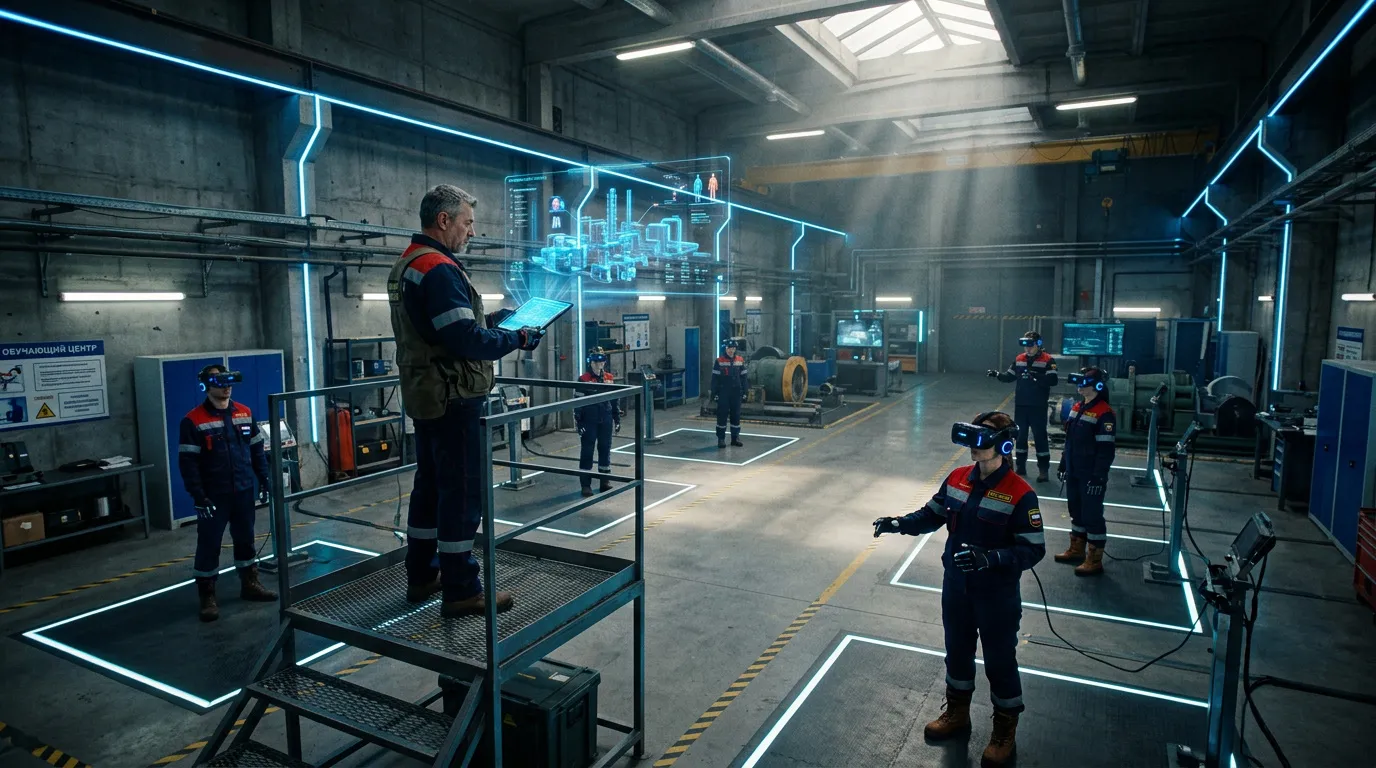
Gazprom Neft’s gas station network has rolled out a digital training program designed to blur the line between theory and real-world practice. The program already covers more than 16,000 employees across 1,585 stations in 50 regions. It works as a three-stage technology-driven certification process. Employees first attend a webinar covering the basics of hospitality – smiling, eye contact, and customer greetings. They then complete a training module focused on best practices in customer service. Only after that do they enter the VR simulation stage.
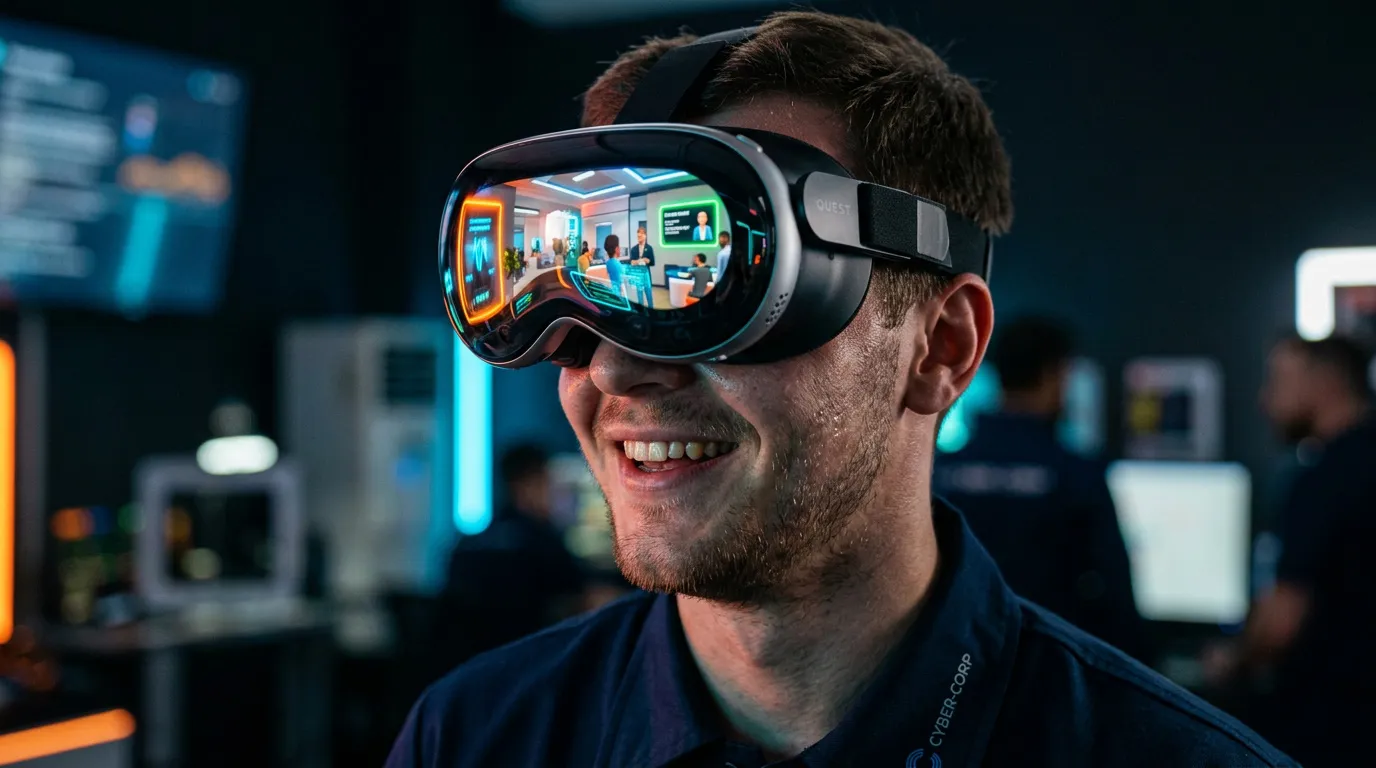
Using a virtual reality headset, employees are placed directly into high-pressure scenarios. A virtual assistant tracks every greeting and every hand movement. Mistakes are immediately recorded. The goal is to build reflexes for handling non-standard situations and sharpen communication skills for dealing with different types of customers.
The Virtual Customer Will Leave Satisfied
The strongest proof that the initiative is being taken seriously is industry recognition. Gazprom Neft’s gas station network received a CX Awards-2025 prize in the “Best Employee Training Practice” category.
The market has recognized that VR is no longer just a tool for Rosatom engineers or industrial professionals. It is becoming a practical system for education and workforce development. That, in itself, marks an industrial shift.
Why does this matter for Russia? Until recently, roughly 72% of the Russian VR/AR market was concentrated in B2B segments tied to industry and safety systems. Here, however, the technology is being deployed in retail customer service, where emotional intelligence plays a central role. That expands opportunities for domestic developers – from building 3D gas station environments to deploying neural-network-powered virtual assistants.
From Space Technology to Gas Stations
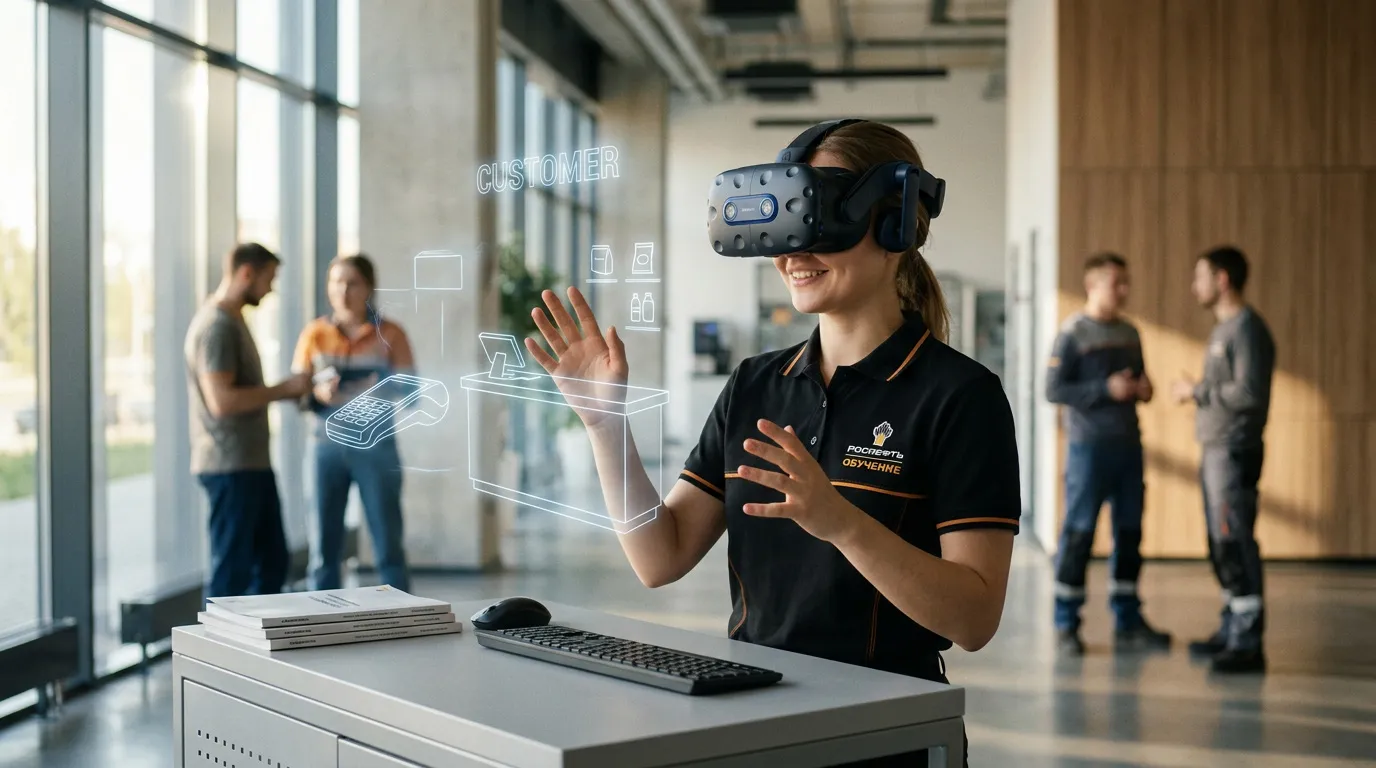
Only a few years ago, VR simulators in Russia were largely confined to niche industrial sectors – nuclear energy, offshore oil production, and rail transport. In 2021, Gazpromneft-Orenburg opened its first VR training classrooms. At the time, however, the focus was safety training rather than customer interaction.
By 2023, the scenarios had become far more sophisticated. Gazprom Neft Shelf introduced a VR simulator for the Prirazlomnaya ice-resistant offshore platform. The Arctic facility sits 60 kilometers offshore in permafrost conditions. Captains trained to conduct loading operations and transfer personnel during storms, where mistakes could cost lives. At the same time, Russian Railways deployed VR systems to reduce injuries among rail maintenance crews and minimize disruptions caused by human error.
Russia’s nuclear industry pushed the concept further at the Leningrad Nuclear Power Plant, where workers began practicing maintenance procedures for VVER-1200 reactor units in virtual environments. After two years of simulator use, employees achieved what the company described as “zero workplace injuries” during operations involving electrical equipment. By 2025, Rosenergoatom concluded that relying on the Western-built Unity engine posed strategic risks. The company began transitioning to the Russian Unigine engine and AstraLinux operating system.
Now, in 2026, a technology originally developed for survival in space missions, Arctic operations, and nuclear reactors has reached retail. A platform operator and a cashier in Novokuznetsk are now trained using the same principle – immersive simulation of real-life situations.
Immersive Training Does Not Let Employees Relax
The program’s biggest advantage is speed of adaptation. Instead of taking a month to become fully operational, a new employee can be integrated into the workforce after a week of structured VR practice. By that point, they have already rehearsed difficult scenarios with a virtual assistant.
The project is also expected to improve service quality. Longtime employees stop operating on “autopilot.” VR breaks habitual behavior patterns and forces workers to relearn politeness, customer focus, and responses to unusual situations. Immersive training combined with constant feedback does not allow employees to become complacent.
Notably, this is not a one-off initiative but part of Gazprom Neft’s broader long-term digital transformation strategy. Every year, the company opens around 500 new positions that include social guarantees and career advancement opportunities. VR-based workforce training is gradually becoming standard practice.
Over the next few years, VR simulators will likely become more specialized, focusing on scenarios such as “An Aggressive Customer at 3 A.M.,” “Terminal Failure During Peak Traffic,” or “A Line of Freight Trucks Waiting.” Neural networks will analyze mistakes and recommend additional training sessions. Russia’s experience – spanning 16,000 employees, 50 regions, and a federal industry award – is already positioned for export to CIS countries and other markets with geographically distributed infrastructure. Courtesy and safety, after all, matter regardless of the language people speak.