Rosatom Launches AI-Driven Automated Materials Synthesis Complex
In 2026, Rosatom plans to commission a specialized automated complex for synthesizing new structural materials within the structure of the state corporation.
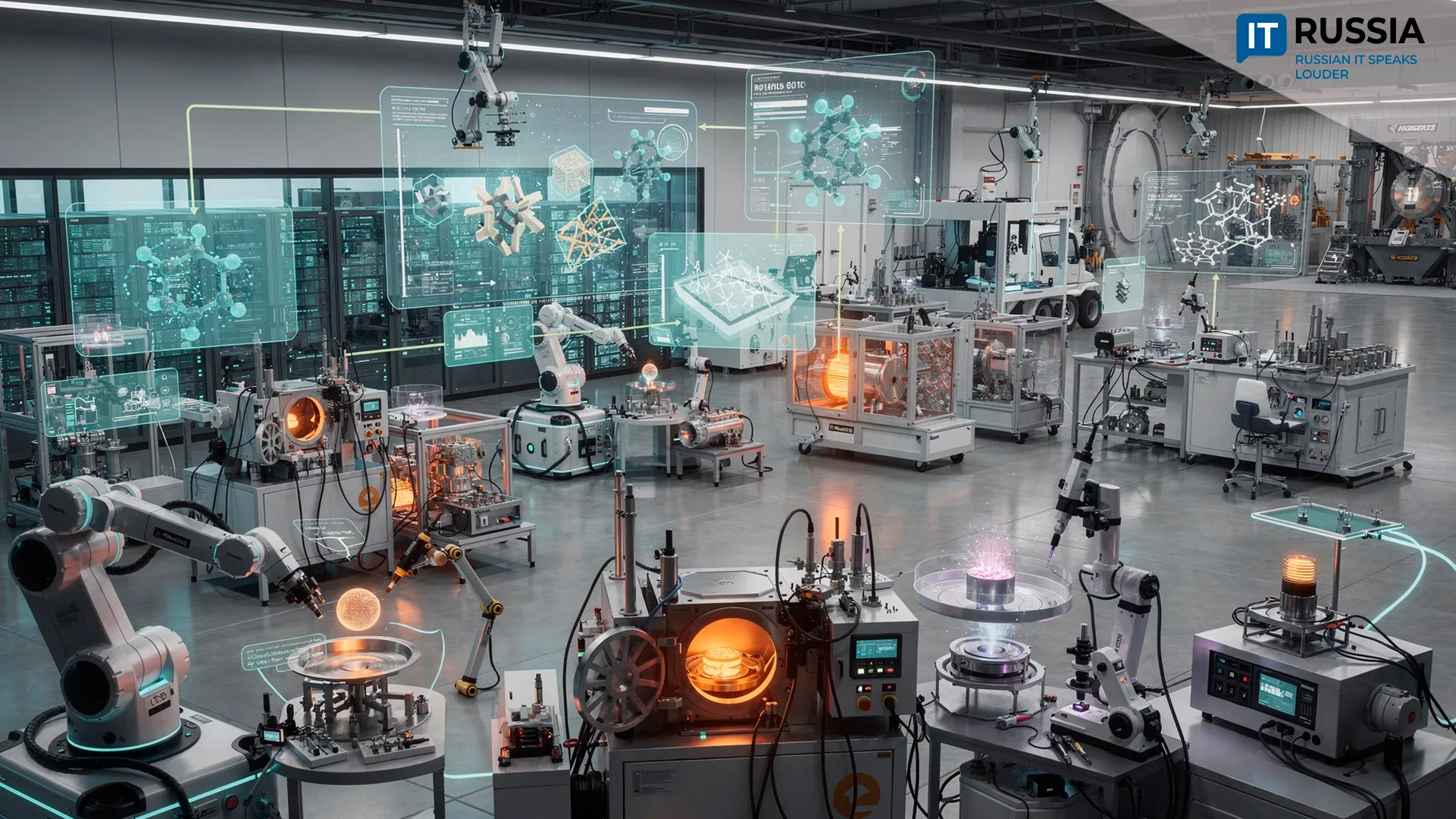
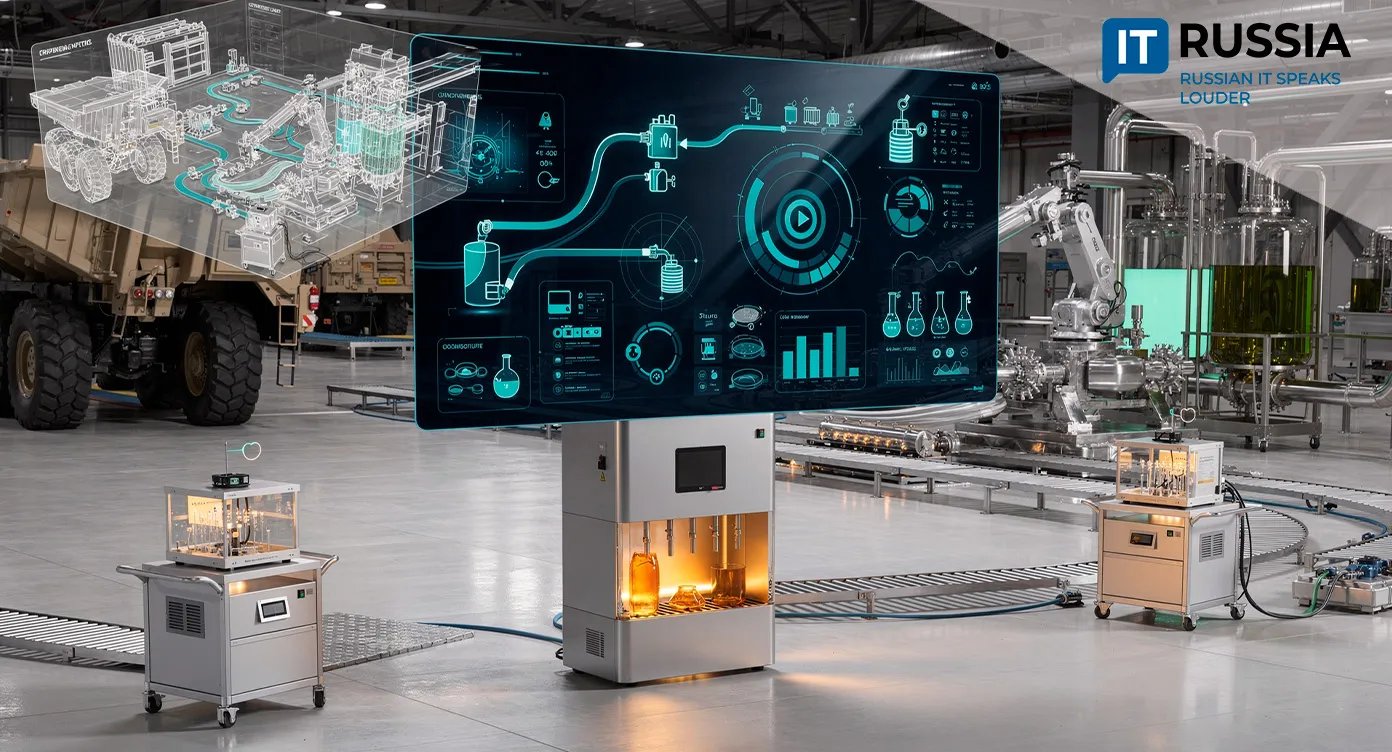
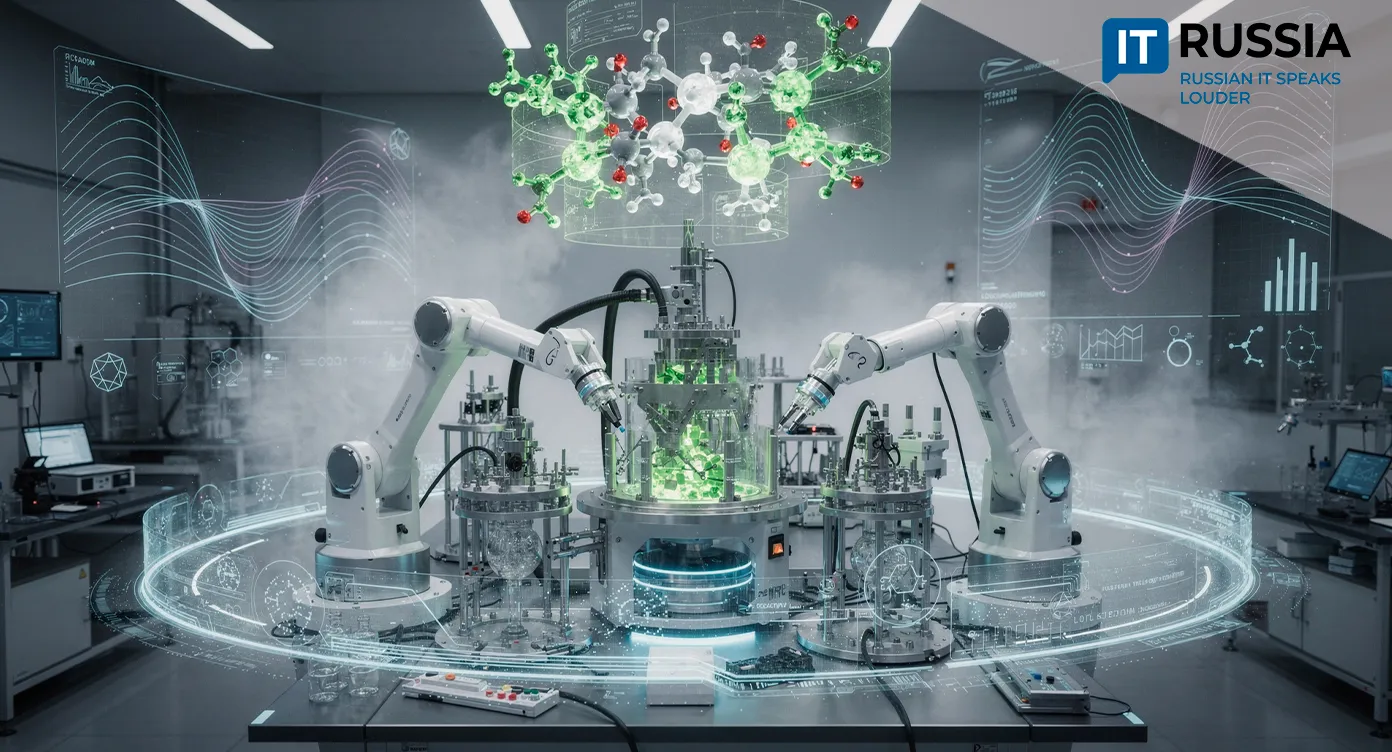
The development will integrate digital materials-property calculations, chemical composition selection, synthesis-process control, and the production of physical samples into a single technological workflow. The complex is being implemented under the New Nuclear and Energy Technologies national project for technological leadership.
From Calculation to Physical Sample in One Cycle
The core concept behind the complex is the creation of a closed-loop development chain. At the initial stage, artificial intelligence analyzes large datasets to optimize material compositions and then directly controls synthesis equipment. As a result, researchers receive physical samples of candidate materials without the lengthy preparation cycles traditionally required.
Such an approach eliminates the gap between computational modeling and material production, a stage that has historically consumed a significant share of the time required to develop new alloys.
The project is being led by Rosatom Nauka, which oversees scientific and research activities within the state corporation.
Meeting the Requirements of Next-Generation Reactors
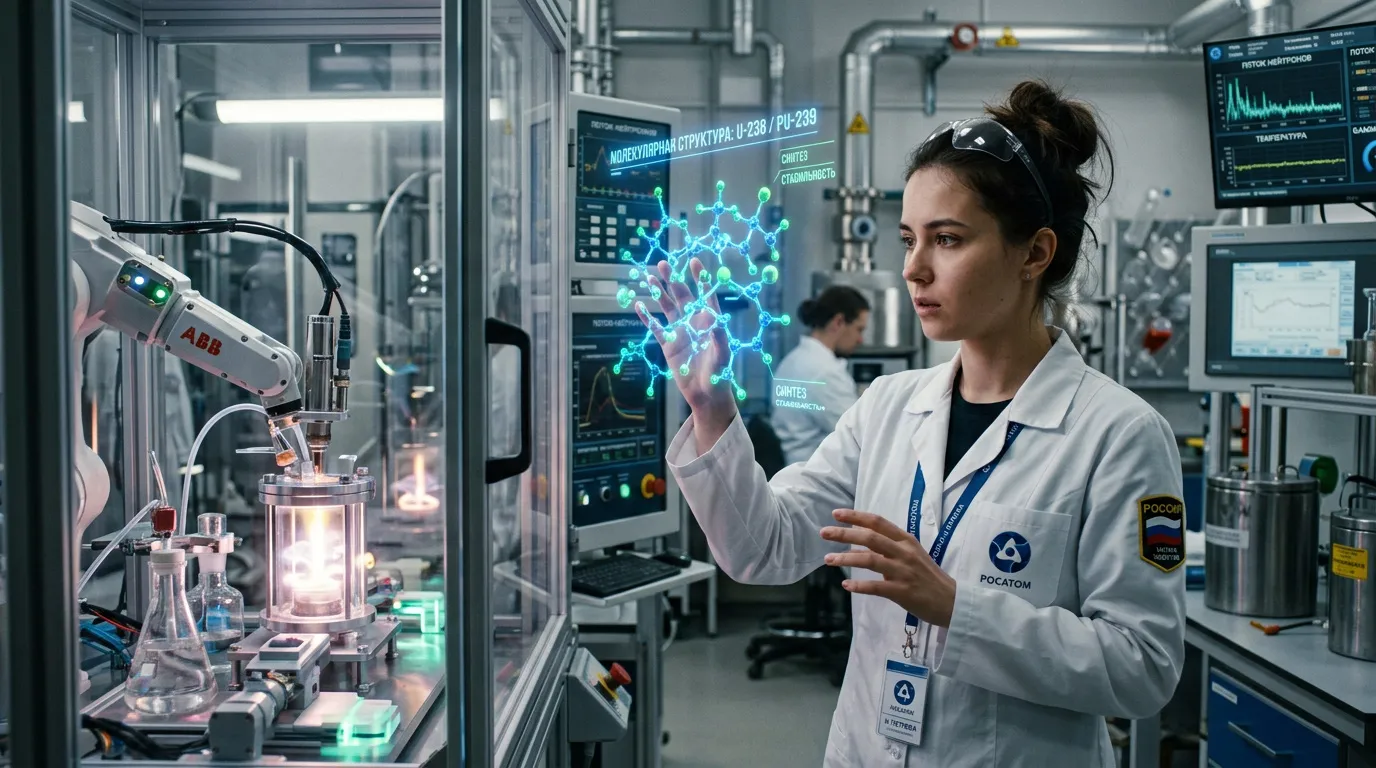
The development of new materials is a technical necessity for the design of advanced nuclear reactors. Current requirements for structural materials increasingly demand work at the nanoscale. Researchers face the challenge of achieving a uniform microstructure through precisely controlled thermomechanical processing regimes capable of delivering the desired structure throughout the entire cross-section of a component. A key target is to achieve a strengthening-phase size below 25 nanometers, a parameter the industry intends to establish as a future standard.
The reactor units currently being designed are expected to operate under more demanding conditions and achieve service lives of up to 80 years.
Materials used in reactor cores, fuel claddings, and coolant circuits must withstand a combination of extremely high temperatures, pressure, chemical exposure, and intense neutron irradiation throughout decades of continuous operation. Accelerated testing methodologies with rapid radiation-resistance assessment can shorten qualification timelines for new alloys and composites while maintaining the required level of safety.
Reducing Development Cycles
Automated synthesis could reduce the time required to develop new materials from several years to a matter of months. Traditional approaches involved theoretical calculations, laboratory composition optimization, pilot melts, and lengthy testing campaigns. The new digital workflow combines these stages into a single automated sequence. Evaluating thousands of alloying-element combinations shifts from a research bottleneck into a routine computational and manufacturing operation. That capability is expected to accelerate the commercialization of new steel grades, heat-resistant alloys, and composite materials.
Strategic Importance
The project forms part of a broader technological-sovereignty program in the field of materials science. At the Neutronika – Teplofizika 2026 forum, participants discussed long-term nuclear-energy development strategies and the need for integrated approaches to creating advanced materials.
Materials-science developments are critical not only for reactor technologies. The resulting expertise is also highly relevant to aerospace, oil and gas, chemical manufacturing, and other sectors where materials must meet stringent requirements for strength, heat resistance, and long-term durability.
The launch of the automated synthesis complex marks another step in the development of digital materials science. Earlier, in 2025, Rosatom specialists produced test samples of new materials using artificial intelligence, demonstrating the viability of the approach. The new complex will move those achievements into an industrial technology framework capable of systematically generating candidate materials for nuclear energy applications and related industries.