

Russian DSMMS Increases Grid Transfer Capacity Between Altai and Kuzbass
Russia's System Operator of the Unified Power System has completed a project that significantly increases the efficiency of existing transmission infrastructure. The company has deployed a Russian-developed Dynamic Stability Margin Monitoring System (DSMMS) on the transmission corridor linking the power systems of Novosibirsk Region, Altai, and Kuzbass.
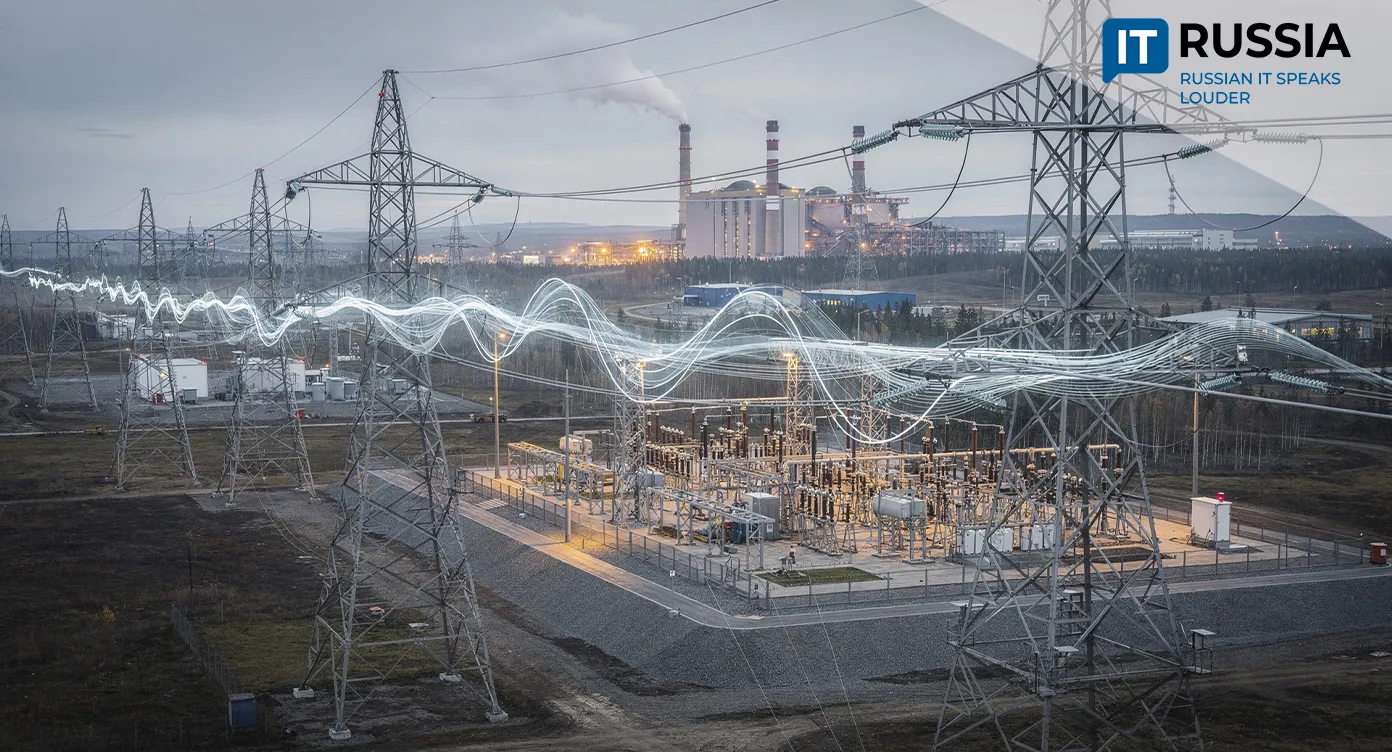
The DSMMS has been commissioned on the 220kV Bachatskaya–Smaznevo transmission line and will increase transfer capability for power flows toward Kuzbass by up to 22%, providing an additional 55MW of capacity.
The deployment will also increase the operational capacity of the Kuzbass–Vostok 500kV transmission network during periods of peak demand while maintaining the reliability of power supply to the railway network and industrial facilities located between Belovskaya GRES power station and the Chesnokovskaya substation. Belovskaya GRES generates approximately one-third of all electricity produced in Kemerovo Region and plays a pivotal role in interregional power transfers. Its high-voltage transmission lines deliver electricity to Kemerovo, Novokuznetsk, Belovo, and neighboring regions.
The DSMMS hardware and software platform was developed by NTTs YeES (Scientific and Technical Center of the Unified Energy System), a subsidiary of the System Operator. The system continuously calculates permissible power transfers in real time based on the actual operating condition of the grid at any given moment. Dispatchers receive precise information on how much electricity can be transferred safely, allowing available transmission capacity to be utilized as efficiently as possible.

From Pilot Projects to an Industry Standard
The DSMMS has already demonstrated its effectiveness across Russia's power system. Looking ahead, the technology is scheduled to be deployed across all monitored transmission sections of the national grid.
More broadly, digital technologies are becoming the industry standard throughout Russia's electric power sector. For example, Rosseti plans to modernize the 220kV Krasnopolyanskaya substation by installing digital protection and automation systems. These systems will ensure reliable operation of two autotransformers and 14 transmission lines, including transit lines from Belovskaya GRES that supply electricity to the northern districts of Kemerovo Region.
For industrial consumers in Kuzbass and Altai, the digitalization of the power system will provide additional reliability while enabling new industrial capacity to connect to the grid without requiring construction of additional transmission infrastructure.
The Russian-developed DSMMS also has export potential across the Commonwealth of Independent States. In particular, the technology was deployed in 2025 on cross-border transmission corridors linking Russia and Belarus.

Geography of Deployment
The System Operator launched the DSMMS program in 2013 to address the issue of constrained generation capacity at the Kola Nuclear Power Plant. The technology entered commercial operation for the first time in 2015 within the operating areas of the Northwest Unified Dispatch Office and the Kola Regional Dispatch Office.
Deployment of DSMMS across the Siberian power system began in 2018, while implementation within the operating area of the Kemerovo Regional Dispatch Office started in 2021.
The rollout expanded in 2023 to include Chelyabinsk Region and the Magnitogorsk power district. In 2024, it was introduced into the Norilsk–Taimyr power system. By the end of 2025, DSMMS was operating across 281 monitored transmission sections of Russia's Unified Power System, representing approximately 18% of the national total.
Intelligent Grid Management Instead of Costly Construction
The DSMMS deployment completed by the Novosibirsk Regional Dispatch Office clearly demonstrates the potential of digital transformation in the electric power industry. In many cases, additional transmission capacity can be unlocked through advanced software rather than by constructing new transmission lines.
Over the next several years, DSMMS deployment will continue, with priority given to power-deficit regions and transmission corridors supplying major industrial centers across Russia.
The technology also has tangible export prospects. The experience gained through cooperation with Belenergo provides a practical example of its international applicability. Potential markets extend beyond the CIS to countries across Asia and Africa, where electricity infrastructure continues to expand rapidly.