Micron-Level Precision: STANKIN Launches High-Precision Semiconductor Assembly System
Russia has launched serial production of an automated die-bonding system that places semiconductor chips with micron-level accuracy.
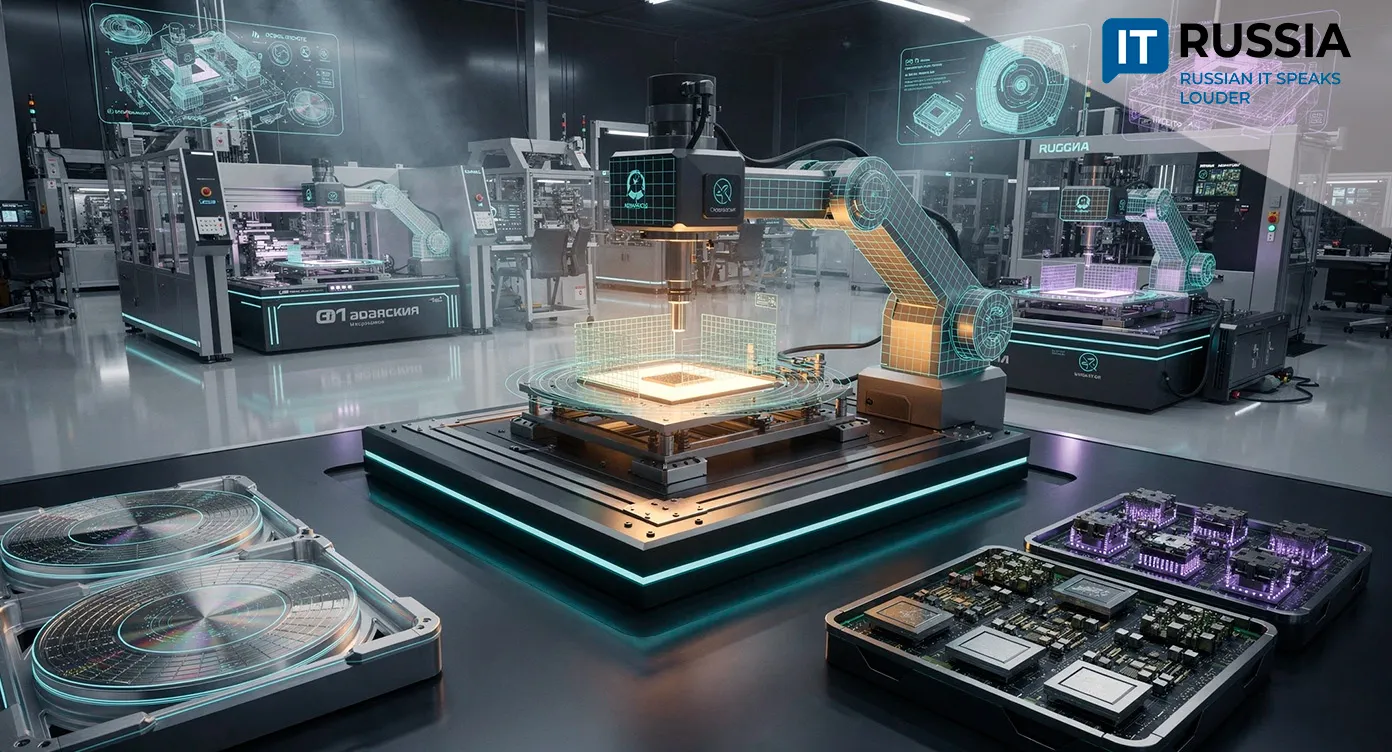
Researchers at the youth laboratory of Moscow State University of Technology STANKIN, working with industrial partner Sovtest ATE LLC, have developed and launched serial production of an automated system for semiconductor die attachment. The development addresses one of the most challenging gaps in Russia's electronic manufacturing equipment sector – automated high-precision die bonding, a market that until recently was dominated by foreign suppliers including ASMPT, Besi, Kulicke & Soffa, and Datacon.
Universal Workhorse for Microelectronics
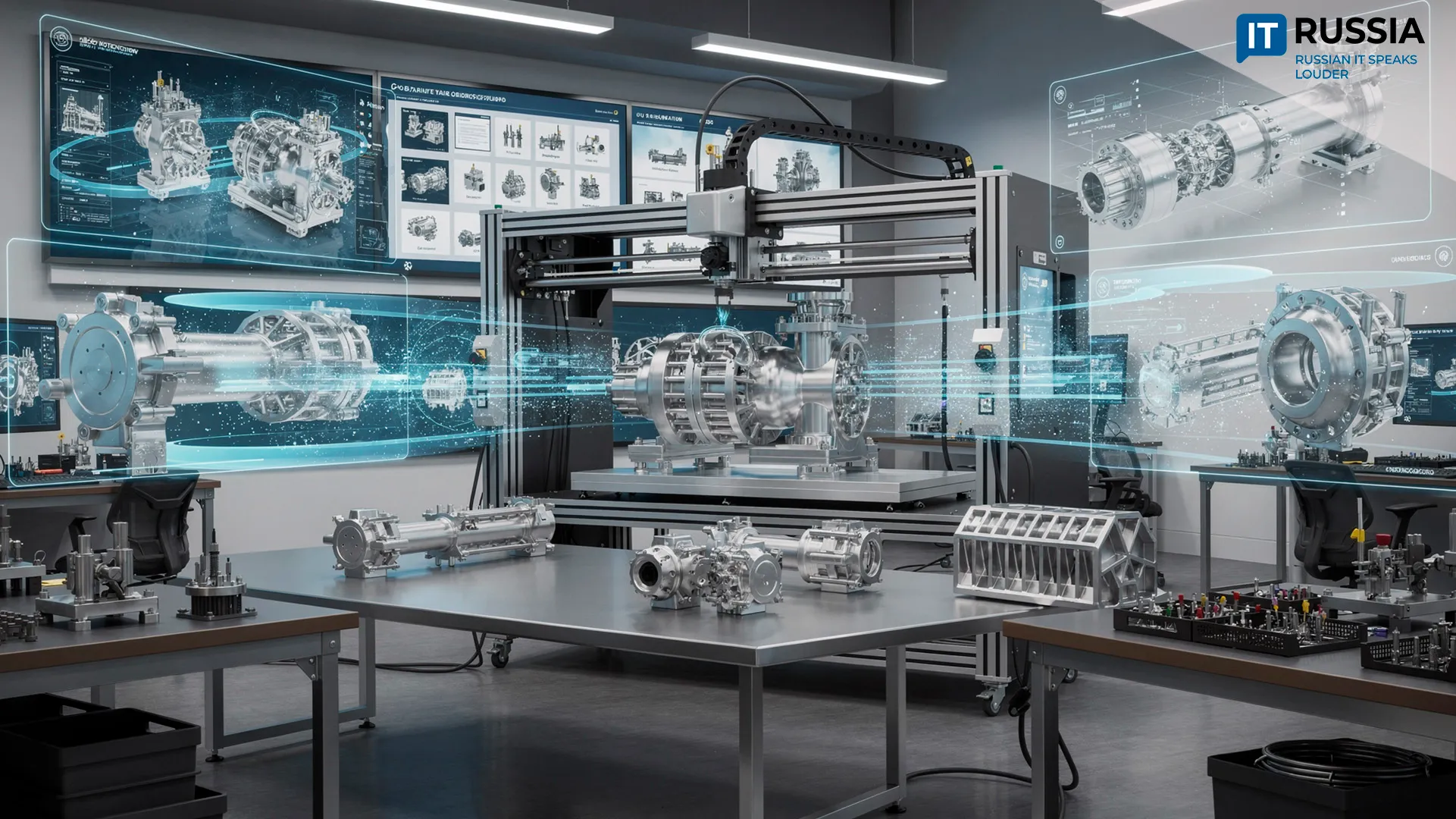
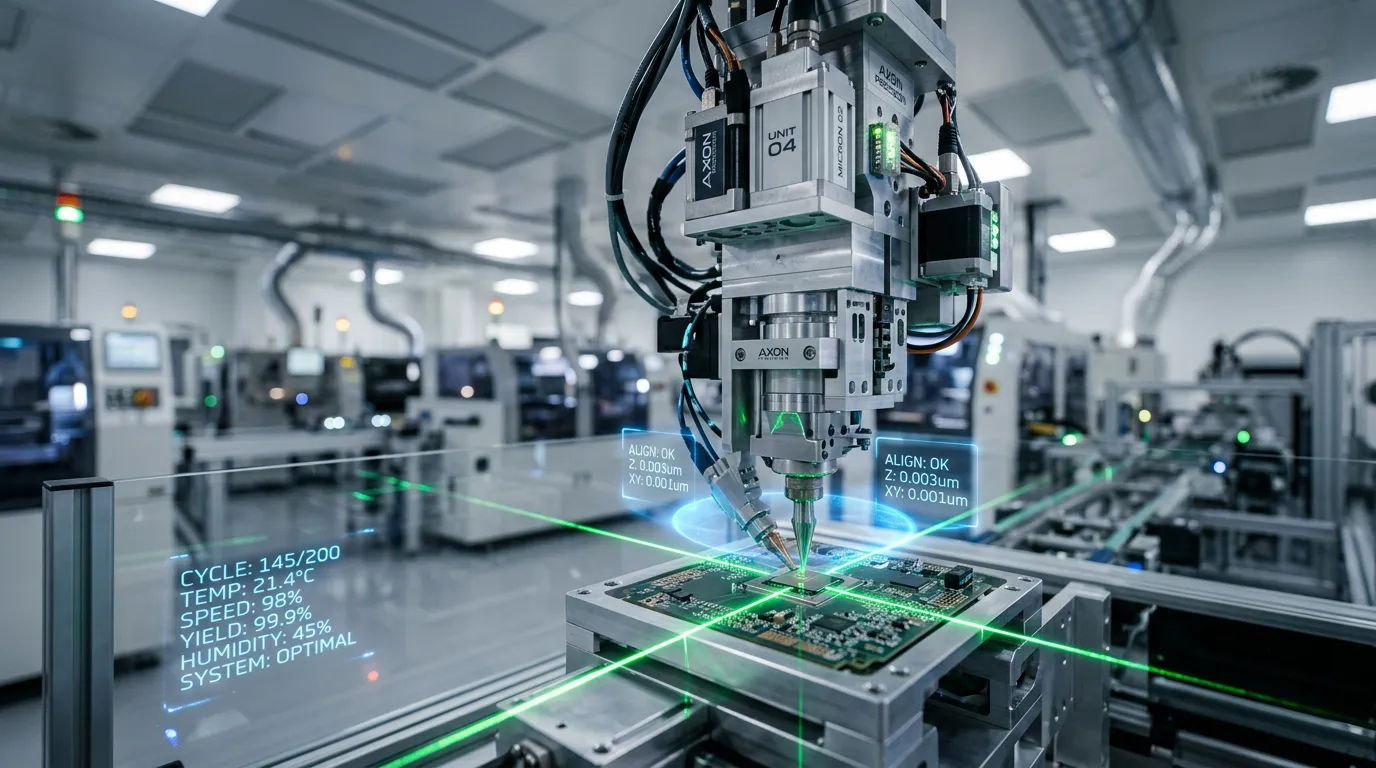
The new system is designed to mount semiconductor dies onto substrates with accuracy measured in just a few microns. Engineers achieved that level of precision by combining machine vision with precision mechanical engineering. The vision system automatically determines the exact spatial position of both the die and the substrate, while precision mechanical assemblies work in tandem to deliver micron-scale positioning accuracy. Every stage of the process is controlled by software, ensuring repeatable results across different product types. The platform is also highly versatile, supporting applications ranging from conventional die attach to advanced 3D System-in-Package (SiP) assembly and microelectromechanical systems (MEMS). Components produced on the equipment are used to manufacture microprocessors and surface-mount device (SMD) components.
The system developed by STANKIN engineers responds directly to industry demand. Russia's microelectronics production is projected to grow by 25% annually through 2030, reaching 352 billion rubles (about $4.5 billion) by the end of the decade. Manufacturing capacity is also expected to quadruple to 380,000 wafers per year. While the equipment is initially aimed at the expanding domestic market, serial production combined with verified micron-level accuracy also creates export opportunities.
Investing in Domestic Manufacturing Equipment
The joint project by STANKIN and Sovtest ATE supports the objectives of the state program Razvitiye elektronnoy i radioelektronnoy promyshlennosti (Development of the Electronic and Radioelectronics Industry). The program includes the federal project Elektronnoye mashinostroyeniye (Electronic Manufacturing Equipment), which is focused on building a sovereign manufacturing base for the machine tools, production systems, and process equipment required to manufacture integrated circuits and semiconductor devices. In 2025, MPT allocated about 7 billion rubles (approximately $91 million) to develop five types of Russian-made chip manufacturing equipment intended to replace American, European, and Japanese systems.
Government funding for the program through 2030 exceeds 240 billion rubles (more than $3.1 billion). Although the initiative was originally scheduled to run through 2030, MPT extended it to 2036 to support a broader range of objectives. The program aims to replace roughly 70% of the equipment and materials used in domestic microelectronics manufacturing with locally produced alternatives. More than 110 projects are planned under the initiative, including deployment of 122 Russian-made chip manufacturing systems between 2030 and 2032.
From Silicon to Finished Chips
Russia is now building an end-to-end microelectronics production chain. In 2026, the NTI Sovereign Technologies Fund invested 50 million rubles (about $650,000) in establishing production of single-crystal silicon and silicon wafers up to 300 mm in diameter. JSC Korporatsiya Popov Radio is participating as a co-investor. Production will rely on an in-house crystal growth system using the Czochralski process, in which a crystal is pulled from molten silicon. Output is expected to reach one million wafers annually by 2028. Between 2030 and 2032, up to half of production is planned for export to Asia-Pacific countries, home to more than 70% of the world's semiconductor fabrication facilities.
JSC Otraslevye resheniya, part of the Element Group, plans to launch a manufacturing facility in 2028 that will produce silicon and silicon carbide power diodes and transistors. The products are intended for the energy sector, transportation infrastructure, and industrial applications. By 2030, the facility expects annual output of up to 100,000 silicon wafers and 40,000 silicon carbide wafers. That volume is expected to satisfy about 60% of domestic demand for power semiconductors, with part of the production exported.
Together, these projects are expected to establish a complete technological chain spanning raw materials through finished semiconductor devices. In practice, they are laying the foundation for a sovereign microelectronics ecosystem in Russia.