AI Tool in Russia Finds Key Words in Ancient Manuscripts
An algorithm developed at Moscow State University searches handwritten documents without converting them into machine-readable text.
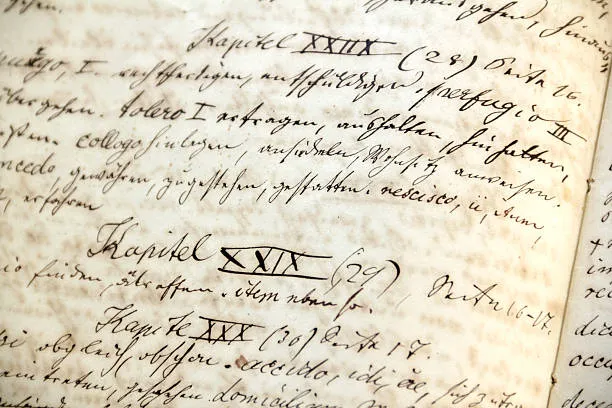
Researchers at the Faculty of Computational Mathematics and Cybernetics at Moscow State University have proposed a method for searching handwritten documents using image analysis. The algorithm processes scans and photographs and identifies specified words and phrases directly in the original image, without converting them into text.
The method is based on breaking handwriting into individual strokes. The system extracts these strokes, standardizes them, and classifies them by shape. It then compares stroke sequences in the query with those in the document to find matches.
Important for Archives
Automatic handwriting recognition still produces errors, especially when working with historical documents. At the same time, the value of manuscripts is often tied not only to the text itself but also to how it is written and arranged on the page.
The new approach treats the image itself as data, preserving its visual features. This is particularly important for archives, libraries, and museum collections, where maintaining the original appearance of documents is essential.
Experimental Results
The researchers tested the algorithm on real handwritten materials. The system successfully identified key words and ranked results based on how closely they matched the query. This allows users to navigate large collections of manuscripts more efficiently and locate relevant fragments without manually reviewing each document.
Digital Archivist
The technology could serve as the foundation for search systems in archives and libraries. It may also be applied in projects focused on studying cultural and scientific heritage. Further work will involve expanding datasets and adapting the algorithm to different handwriting styles.