Quantum Breakthrough “On Click”: Russia Moves Toward Digital Sovereignty
Russia has launched a cloud platform that gives researchers immediate access to domestic quantum coprocessors. The initiative, developed by Bauman Moscow State Technical University and the Dukhov Automatics Research Institute under Rosatom, is positioned as a foundational step toward national quantum independence.
Precision at the Edge of Perfection
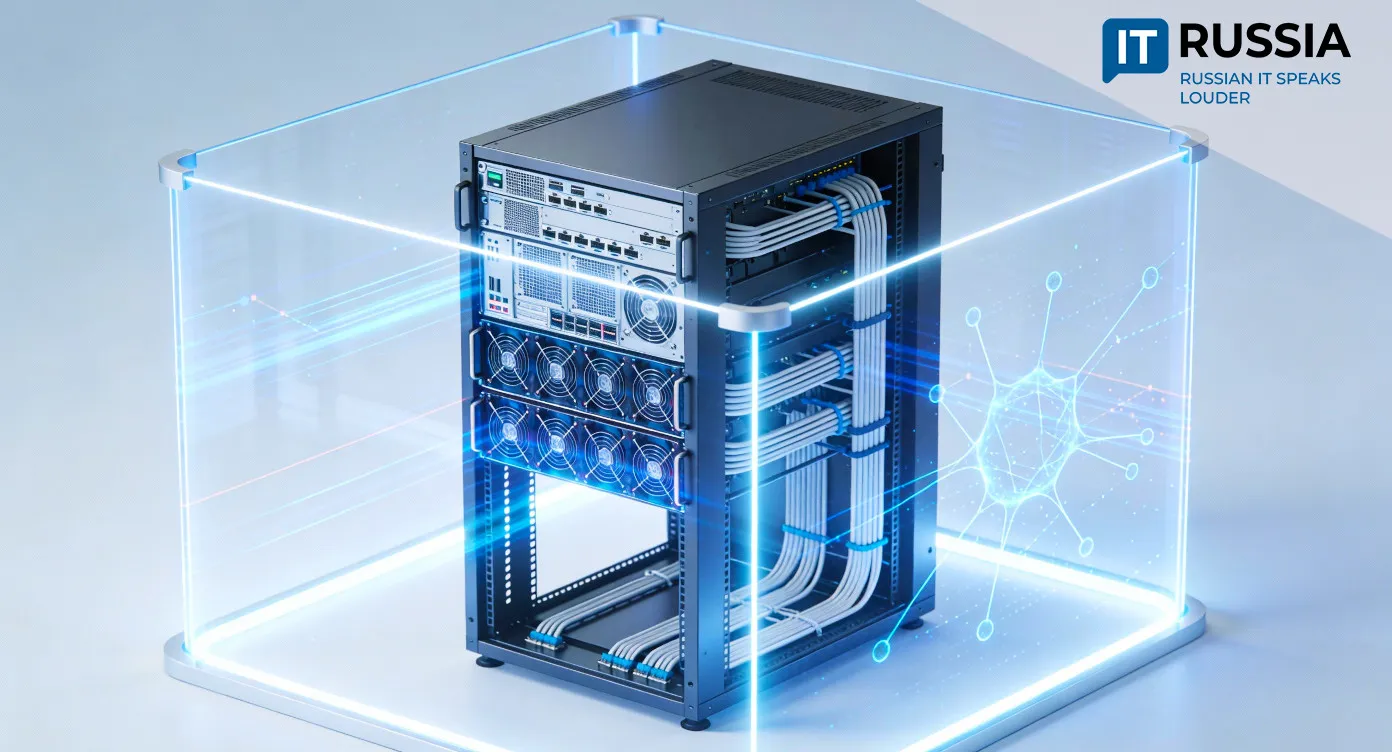
In December 2025, Russian science stepped decisively into the future: researchers from Bauman Moscow State Technical University, together with the Dukhov Automatics Research Institute (part of Rosatom), introduced the cloud platform BaumanOctillion. For the first time, any researcher – from a student to an industrial engineer – can access Russian-built quantum coprocessors literally “on click.” The 4-qubit SnowDrop 4Q processor is already open for use, and its 8-qubit successor, SnowDrop 8Q, is expected to enter testing by the end of December. This is more than a technical release – it is a strategic push to democratize quantum computing within Russia.
What makes SnowDrop 4Q stand out? Primarily, its unprecedented accuracy for a Russian device: single-qubit operations achieve about 99.89% fidelity, while two-qubit operations reach around 99.1%. These figures bring Russia’s qubits close to global benchmarks. Moving to 8 qubits does not merely double computational capacity – it expands the available quantum state space sixteenfold, opening the door to much more advanced algorithms used in materials science, optimization and machine learning.
Practice Over Theory
Since July, when the platform entered beta testing, more than 6,800 algorithms and over 5,000 full projects have already been executed through it. These include both foundational quantum circuits – such as Grover’s algorithm and the Bernstein–Vazirani algorithm – and applied experiments like modeling novel materials and conducting seismic exploration tasks for the oil industry. The results demonstrate a clear trend: quantum technologies in Russia are moving from academic abstraction into industrial application.


From Emulators to Live Hardware
BaumanOctillion is not the first quantum infrastructure project in the country, but it is unquestionably the most important. In 2023, RTU MIREA launched a 30-qubit quantum emulator accessible online. Since 2020, the Ministry of Digital Development and the National Technology Initiative have supported several cloud-based quantum research projects.
Yet BaumanOctillion is the first platform offering not simulations but real quantum processors operating in real time. It marks a shift from showcasing potential to deploying actionable technologies.

The Future Lies in the Ecosystem
The platform is already being used as an educational tool: it enables students and young researchers to run experiments without the billion-dollar infrastructure normally associated with quantum labs.
Looking ahead, priorities include scaling to higher qubit counts, improving gate parameters and integrating quantum workflows with industrial applications. In the long term, BaumanOctillion could evolve into an exportable quantum-as-a-service (QaaS) platform for countries seeking alternatives to Western cloud infrastructures and aiming for technological independence.
Quantum Independence as Strategy
Against the backdrop of sanctions and technological isolation, BaumanOctillion carries strategic weight. It is not merely a scientific undertaking – it is a component of national digital sovereignty. Instead of catching up, Russia is offering its own operational ecosystem where quantum algorithms can be developed, tested and deployed independently of foreign hardware or cloud providers. This matters profoundly for critical domains such as energy, defense and advanced materials.

Reality and Challenges
Still, perspective is essential: 4–8 qubits remain in the demonstrational tier of quantum computing. Real-world quantum advantage requires hundreds or thousands of stable, error-corrected qubits. But BaumanOctillion is not intended as a final destination – it is a structural foundation. It establishes the environment where technologies, teams and startups can emerge and evolve.
The Starting Point of a New Era
The launch of BaumanOctillion is both symbolic and technically consequential. Russia is moving from declarations to implementation, from isolation to constructing its own quantum infrastructure. If the platform continues to grow systematically, it could become the catalyst for an entire quantum industry spanning education, applied science and industrial technologies. In a time of global technological confrontation, such initiatives are not simply progress – they are prerequisites for future resilience.