

The Kremlin Signals a New Phase in AI Deployment
According to the Kremlin’s spokesperson, Russia’s GigaChat model is now capable of handling all incoming citizen requests during the President’s annual Q&A marathon. For Russian authorities, this marks a turning point in how AI is perceived – not as an experiment, but as an operational tool. And that perception opens the door to wide-scale technological expansion.

AI as a Feedback Engine
Presidential Press Secretary Dmitry Peskov told reporters that editorial teams, together with the Russian-language GigaChat model, are processing all incoming citizen requests: “as many as come in, that many we process.” According to Peskov, this “human + AI” workflow has ensured full coverage for the second year in a row, while the system itself has become “even more refined” in 2025.
From his remarks, it is clear that federal authorities increasingly view AI as a scalable mechanism for handling citizen communications – effectively, an administrative interface for public feedback. This interpretation broadens the horizon for Russia’s AI development and offers an early glimpse into its strategic direction.
For IT professionals, federal-level integration of neural models into government communications is significant. It can stimulate interest in designing, training, and deploying AI tools for public administration. For ordinary citizens, the main benefits are faster response times, transparent moderation processes, and more structured digital feedback channels.

Public Services and AI
The use of AI – particularly systems like GigaChat – for processing citizen requests could become a national trend if the technology demonstrates durability, reduces operational costs, and simplifies communication. This would expand the domestic market for Russian AI solutions, including for ministries, regional governments, and municipal platforms.
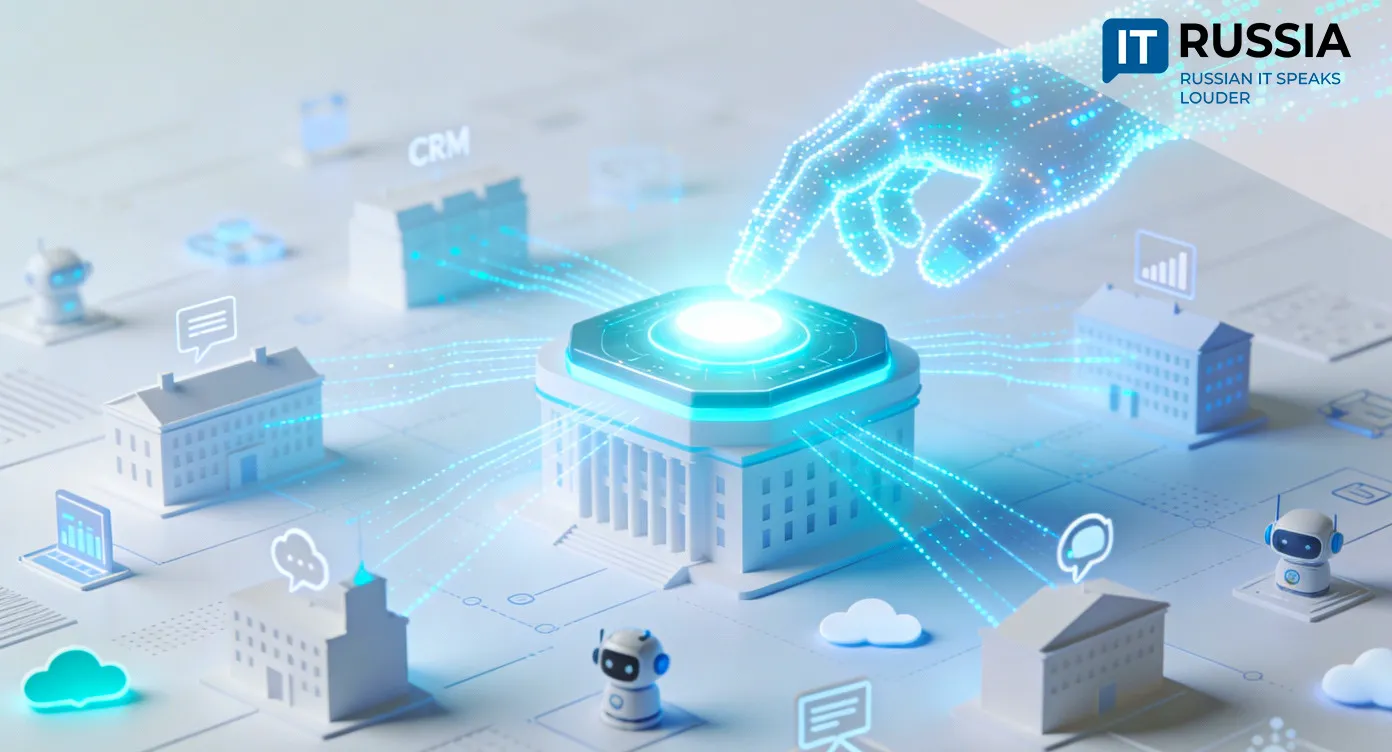
Inside Russia, this could trigger widespread deployment of AI modules across public-service portals, online reception offices, and feedback systems. Such a shift could reshape citizen–government interaction by accelerating communication and reducing administrative bottlenecks.


There is also an export angle. Countries with similar administrative architectures may be interested in deploying cost-efficient “digital government” tools. With proper adaptation for language, law, and regulation, GigaChat-based modules could become viable products abroad.

A Promising Direction
AI integration across civilian sectors is one of Russia’s major technological trends. Modern tools simplify routine processes, make operations more transparent, and improve efficiency. That is why embedding AI into public-service workflows is both timely and strategically important.
One of the earliest large-scale deployments of virtual assistants happened in 2021, when AI-driven chatbots were introduced for social-service communications. By 2023–2024, Russia accelerated the rollout of AI chatbots and voice assistants for government and utility services to “lighten the load on operators” and speed up service delivery.
Experts, however, caution that AI performance depends heavily on configuration. In other words, the risks embedded in such systems vary depending on who moderates them and how oversight is organized.

Growing Demand
Peskov’s statement can be seen as an attempt to publicly legitimize government use of AI – specifically GigaChat – in citizen communications, signaling a modernization of state feedback mechanisms. Over the next one to two years, Russia may expand such programs: the “AI + human” model could become standard for processing queries, complaints, petitions, and applications.
For the Russian IT sector, this opens a sizable market: developing and adapting AI tools for public administration, feedback systems, and digital services. As demand grows, so do the risks: questions of transparency, content filtering, and censorship may arise. Equally important is how human oversight is organized and how citizens’ rights are protected.