

Rosatom Maps Out Where Quantum Power Can Deliver Results
The state nuclear corporation has identified the most promising quantum computing projects for nuclear energy and other high-tech industries.
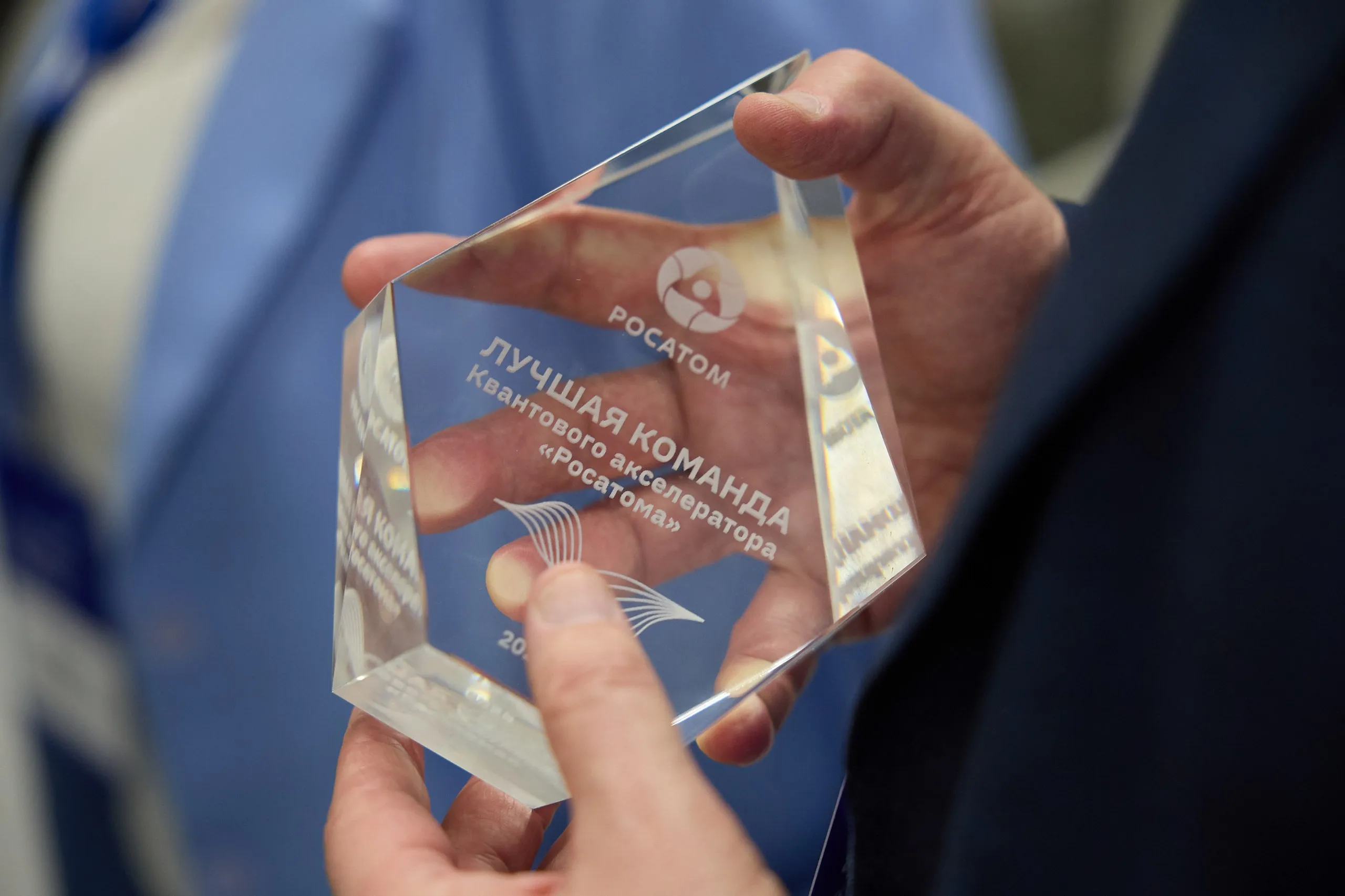
In Moscow, Rosatom has wrapped up the third cycle of its Quantum Accelerator, where investors and experts selected the most promising projects in materials optimization and simulation. These developments are intended for deployment in nuclear energy and other high-tech sectors and are positioned as a next step in the digital transformation of industry.
From Banking to Quantum Communications
The finalists presented solutions that are already close to real-world application. Winners were recognized across three key categories.
The award for best applied solution went to researchers from the Karelian Research Centre of the Russian Academy of Sciences. Their project focuses on designing hybrid computing systems that incorporate quantum components. The approach could enable more reliable and energy-efficient computing architectures for banking, industrial applications, and quantum communication systems.
The most promising solution was developed by specialists from the Kurchatov Institute. Their team is building domestically developed software for modeling complex materials using quantum algorithms. The technology, which the developers say has no foreign equivalents, is expected to find applications in metallurgy, the nuclear industry, and photonics.
The accelerator’s best team title was awarded to researchers from Omsk State University. Their hybrid software product optimizes catalysts for the chemical and fuel industries, significantly reducing the time and cost required to develop new materials.
Finding a Path to Market
One of the most important goals of the next phase of Rosatom’s quantum project is to move quantum computing into practical use, said Ekaterina Solntseva, Rosatom’s Director for Quantum Technologies. She added that she was inspired by the teams’ engagement and proposals in quantum optimization, chemistry, and materials modeling.
The selected projects will form the foundation of a network of regional quantum centers. Three teams have already signed cooperation agreements with Rosatom Quantum Technologies, while others are in talks with development institutions and investment funds.
Victoria Romanova, Deputy CEO of Rosatom’s industry innovation development center, said the core objective was to help breakthrough projects reach the market, refine them for real economic use, and secure first customers.
The next step will be a transition from research to industrial deployment, which Rosatom believes could unlock advances in materials modeling, drug discovery, logistics, and cybersecurity.