Russia Develops Tethered Drone for Rapid Communications Deployment
Russia has developed a tethered drone equipped with an onboard signal repeater.
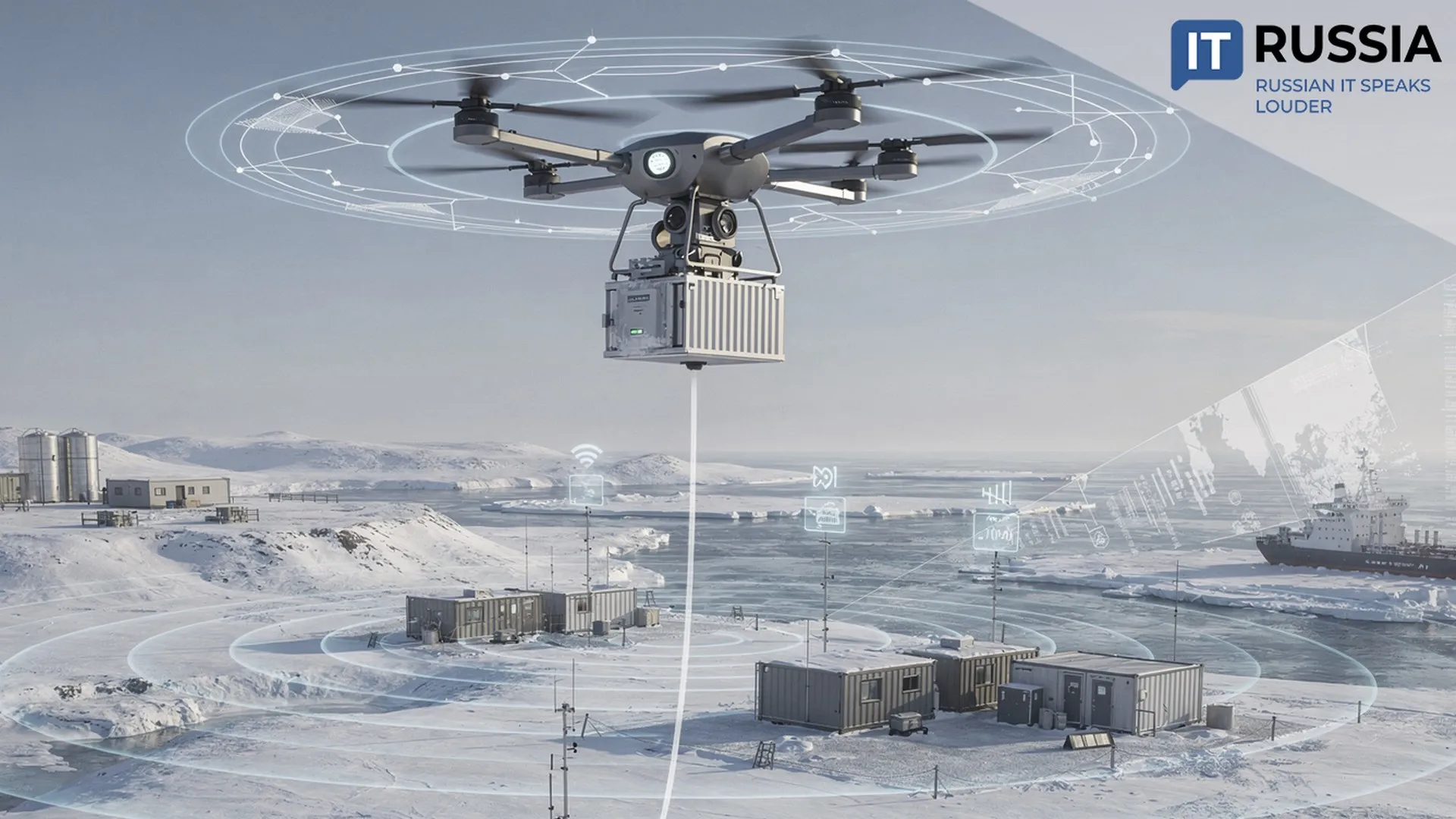
The Russian Arctic spans vast territories that need reliable communications to support shipping, ground transportation, and emergency services. Yet building communications infrastructure there is complicated by extreme weather conditions. More than almost any other Russian macroregion, the Arctic therefore calls for genuinely unconventional approaches.
More Than 24 Hours Aloft
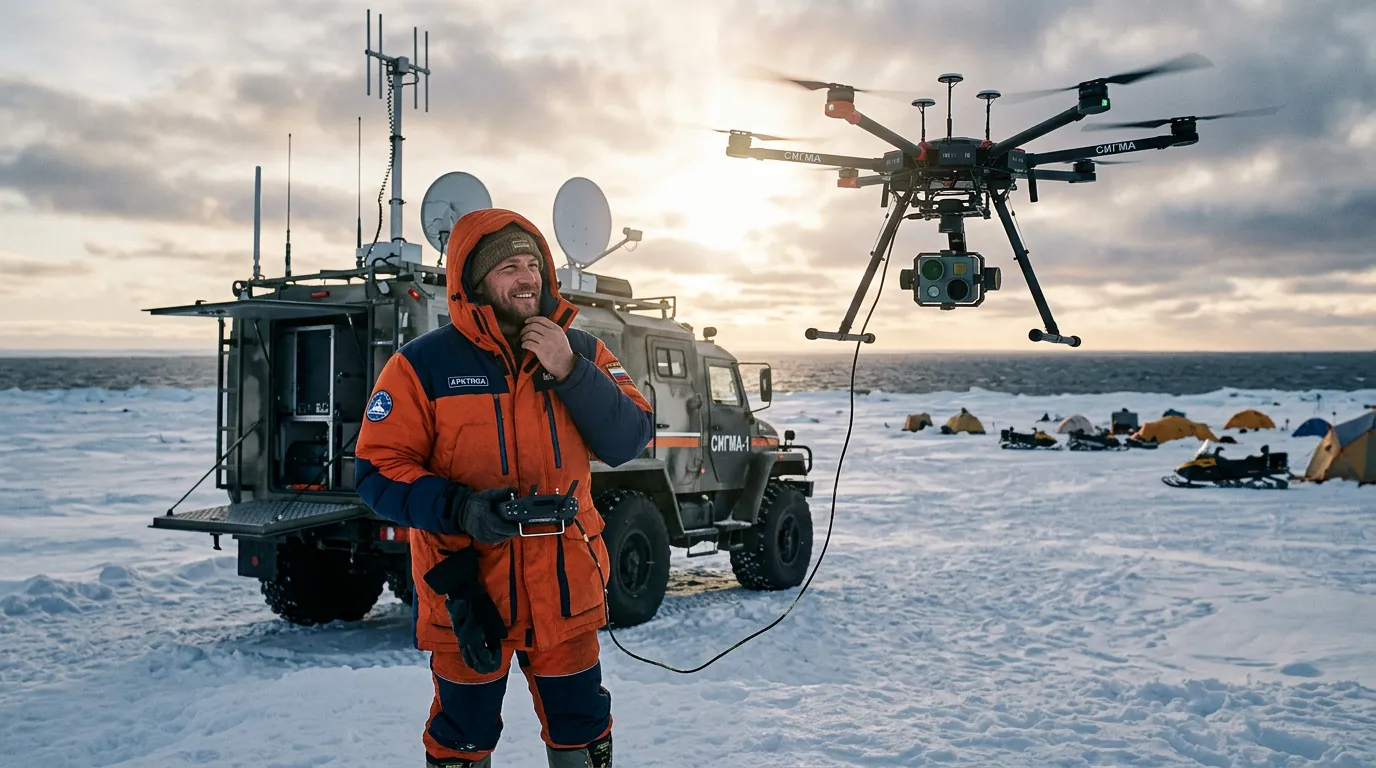
At the Arktika – Regiony (Arctic – Regions) forum in Arkhangelsk, Russian company Bermos unveiled a drone called Sigma. This is not a conventional free-flying aircraft. It is connected to a ground station that supplies power and provides communications over fiber-optic cable. This configuration allows the drone to remain airborne continuously for more than 24 hours.
Another distinctive feature is its built-in signal repeater. Sigma can provide network coverage within a radius of up to 50 kilometers (31 miles). In effect, the UAV can serve as a mobile telecommunications hub in areas where communications need to be deployed quickly.
Just as important, the new drone has its own positioning system. It does not need a satellite signal to navigate, allowing the aircraft to carry out its assigned tasks even in extremely isolated areas.
A Multipurpose Platform
According to its developers, Sigma is designed as a largely multipurpose platform. Beyond providing communications, the drone can transport cargo and perform rapid monitoring of its surroundings. Other applications are also possible depending on the payload installed on the aircraft.
When tethered to its ground station, the drone can operate at altitudes of up to 150 meters (492 feet) and carry a maximum payload of 12 kilograms (26 pounds).
Researchers say drones such as Sigma have considerable potential. Materials from the Russian Science Foundation note that, in terms of communications deployment, tethered high-altitude platforms occupy a middle ground between satellite systems and terrestrial networks whose equipment is installed on tall structures. Compared with costly satellite systems, tethered high-altitude drones are highly economical, while offering broader telecommunications and video coverage than ground-based systems.

Connecting Remote Territories
For development of Russia’s Arctic zone, tethered drones could provide another tool for digitalization, monitoring long stretches of infrastructure, establishing temporary communications at remote industrial sites, supporting extended expeditions, and responding to emergencies. The approach is particularly useful in places where building permanent ground infrastructure would either be prohibitively expensive or take too long.
Russia has been working for several years on using drones as communications relays. In 2023, for example, the St. Petersburg Federal Research Center of the Russian Academy of Sciences developed an aircraft called Voron (Raven). It can provide network coverage while remaining airborne for up to 30 minutes.
In 2024, with support from the Russian Science Foundation, researchers developed a prototype tethered telecommunications platform. Its developers identified several potential applications, including deploying LTE communications when ground infrastructure has been destroyed, establishing radio-relay and Wi-Fi links, environmental monitoring, and wildfire surveillance.
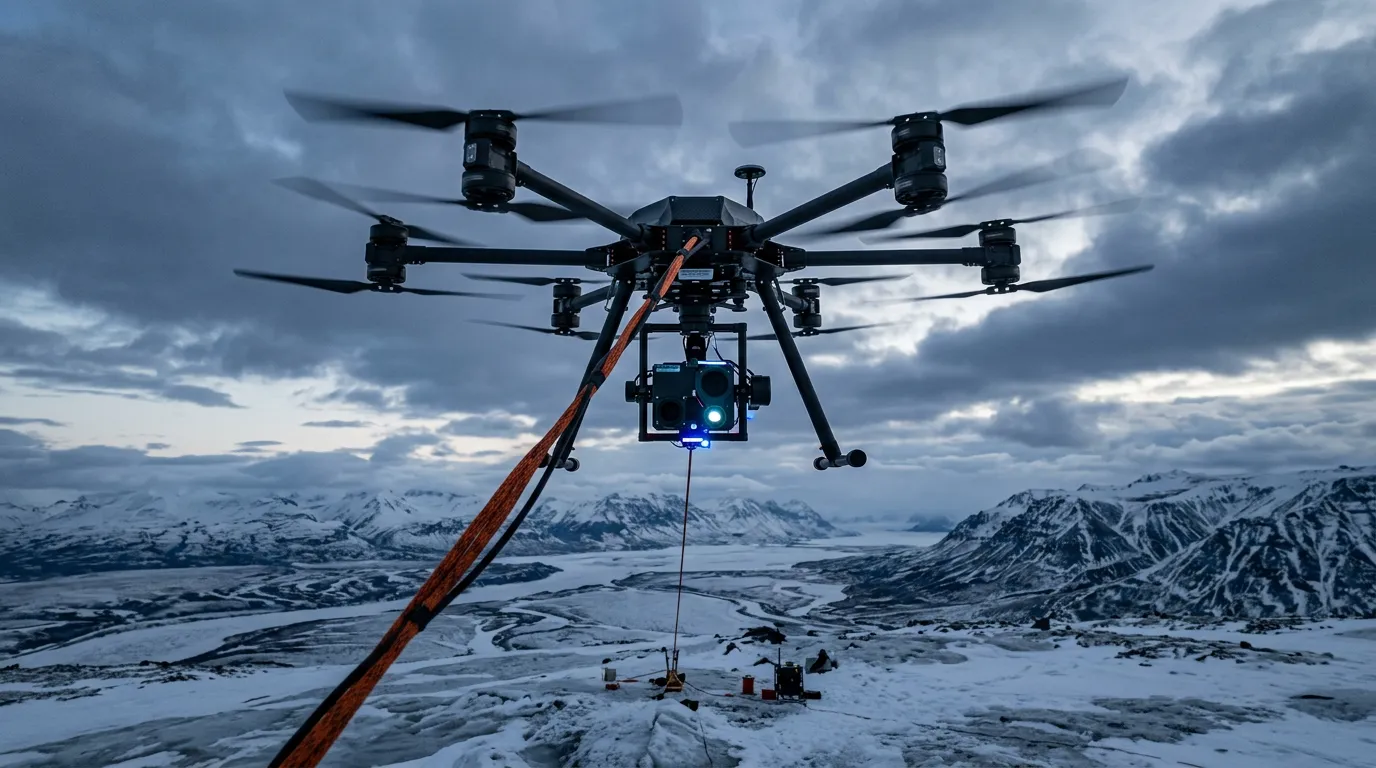
Internationally, drones are also playing a growing role as communications relays. In China, for example, airborne telecommunications nodes had developed into a distinct commercial segment by 2026. The development of Sigma and its use as a communications hub align with the latest trends in unmanned systems. Aircraft of this class could give Russia a practical tool for developing and digitally connecting its remote territories.