

Drones Are Becoming the New Guardians of Forests in Russia's Penza Region
Forests cover only about one-fifth of Russia's Penza Region, yet they play an outsized ecological role by moderating the local climate, protecting soils from erosion, and helping preserve water resources. To safeguard those ecosystems, the region has turned to advanced technologies including drones, intelligent surveillance cameras, and machine vision.
The results have been striking. By the end of 2025, the number of forest fires had fallen from 64 to 22, while the total area burned dropped from 2,000 hectares to just 17 hectares. Since the beginning of 2026, no forest fires have been recorded.
Every Spark Is Visible From the Sky
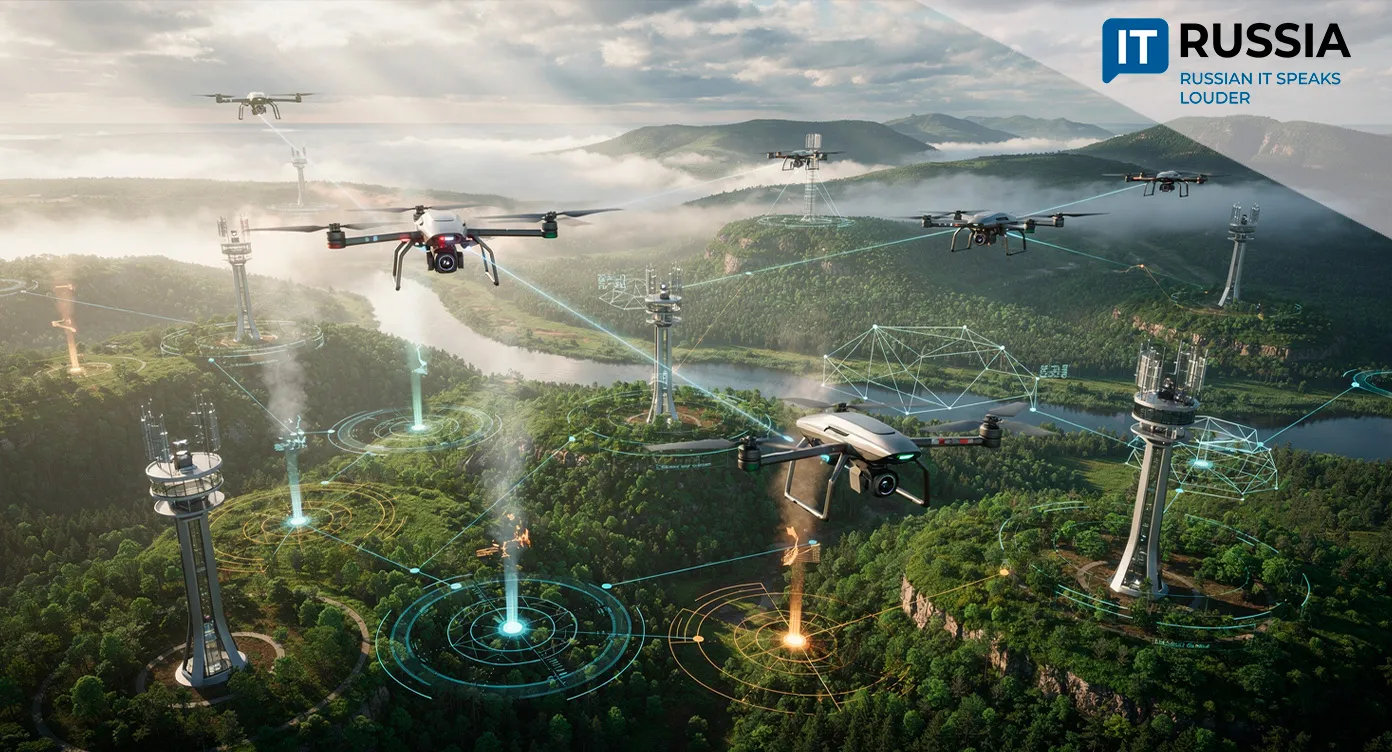
The region's monitoring network focuses primarily on remote areas and forests with the highest wildfire risk. Five new high-tech surveillance systems have begun operating in the Kuznetsk, Lunino, and Nikolsk districts. Working around the clock, these fixed monitoring stations scan the horizon and detect the earliest signs of smoke across distances of tens of kilometers. Forestry personnel also receive digital support from unmanned aerial systems. In 2024, the region received 24 million rubles (approximately $300,000) to purchase 16 drones for its Forest Fire Center. Rather than simply capturing aerial images, the drones transmit the precise coordinates of potential fire outbreaks directly to response teams. Another digital tool in the region's firefighting strategy is a fleet of mobile wildfire suppression units, with two additional units delivered recently.
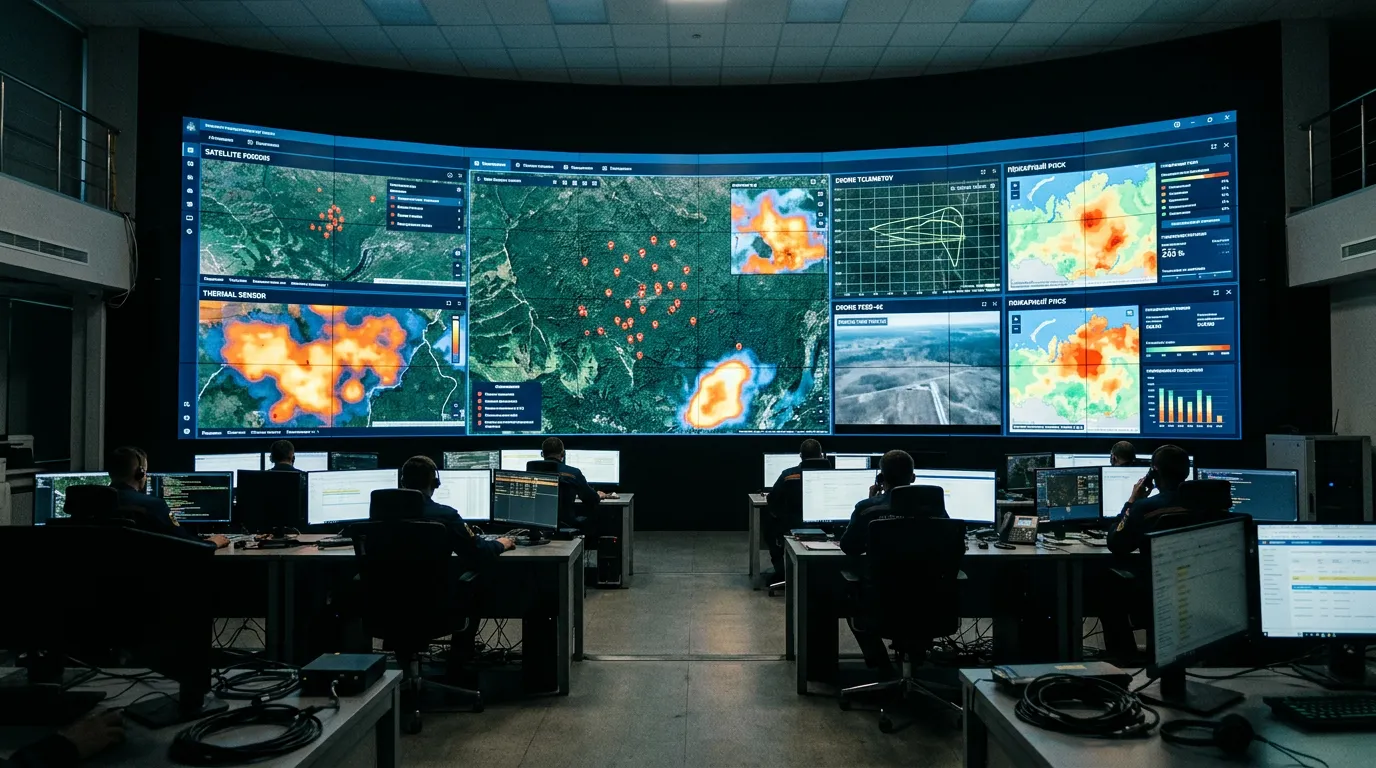
Digital monitoring reduces emergency response times to a minimum. Fire crews receive alerts before a small ignition can develop into a large-scale wildfire threatening communities, farmland, and infrastructure. Looking ahead, authorities plan to connect every monitoring asset into a unified digital ecosystem that combines data from satellites, fixed cameras, drones, and regional dispatch centers.
Deeper Into the Forest, Fewer Fires
In 2019, wildfires burned more than 10 million hectares of forest across Russia. By 2025, that figure had fallen to 4.3 million hectares.
"The key objective established by presidential decree is to cut the area affected by forest fires in half by 2030. I am confident we will achieve that goal because we have already come a long way," said Ivan Sovetnikov, head of Russia's Federal Forestry Agency.
Funding for forest fire protection has increased from 6 billion rubles in 2021 (approximately $75 million) to 25 billion rubles in 2026 (approximately $312 million). Under the federal Sokhranenie Lesov (Forest Conservation) project, regions have received more than 7,000 vehicles and 44,000 pieces of equipment. Digital transformation plays a central role in that effort. Every timber truck is now equipped with GLONASS satellite tracking, while the Federalnaya Gosudarstvennaya Informatsionnaya Sistema Lesnogo Kompleksa (Federal State Forest Information System – FGIS LK) has digitized every key stage of the timber supply chain.
"Another major milestone has been automated integration with the Federal Customs Service. Plans for 2026–2027 include introducing artificial intelligence, using drones for logging site inventory surveys, and expanding aerial patrol operations," Sovetnikov said.
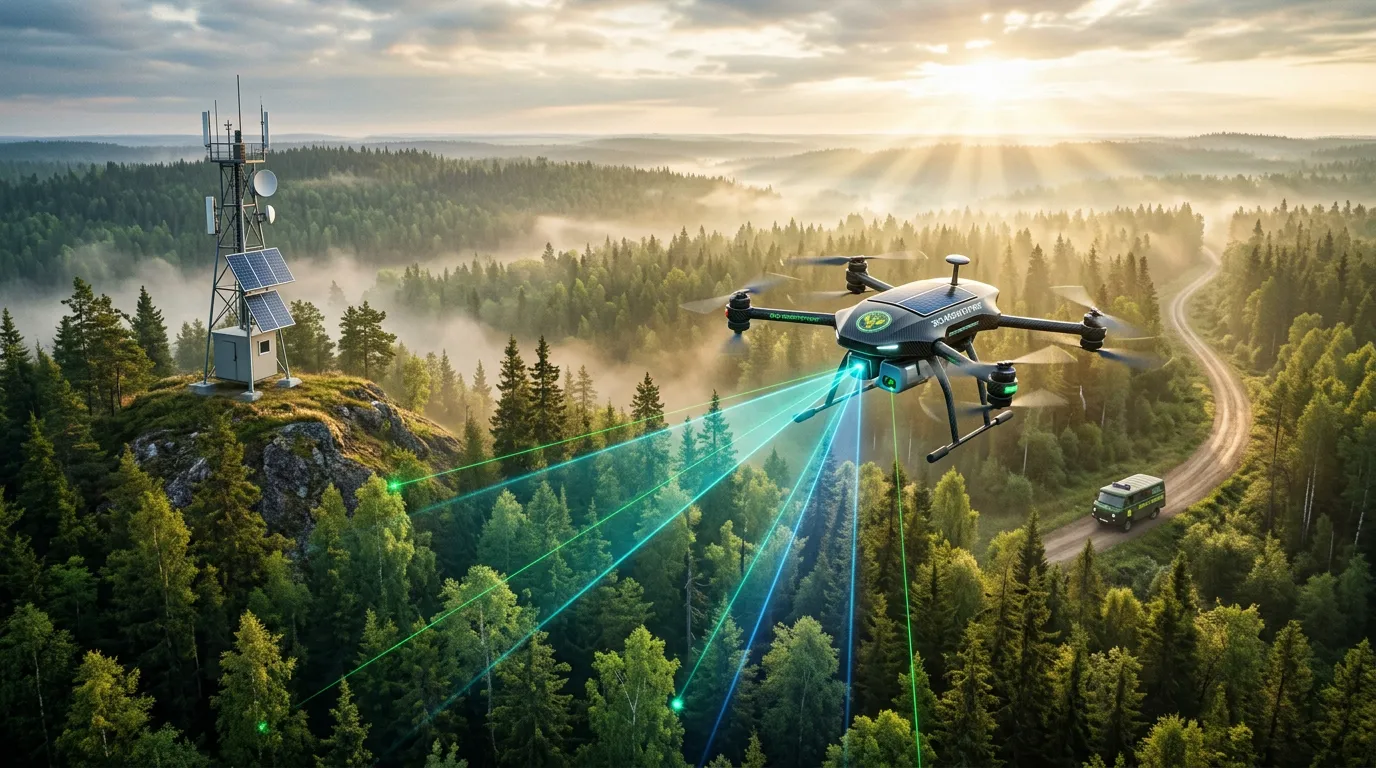
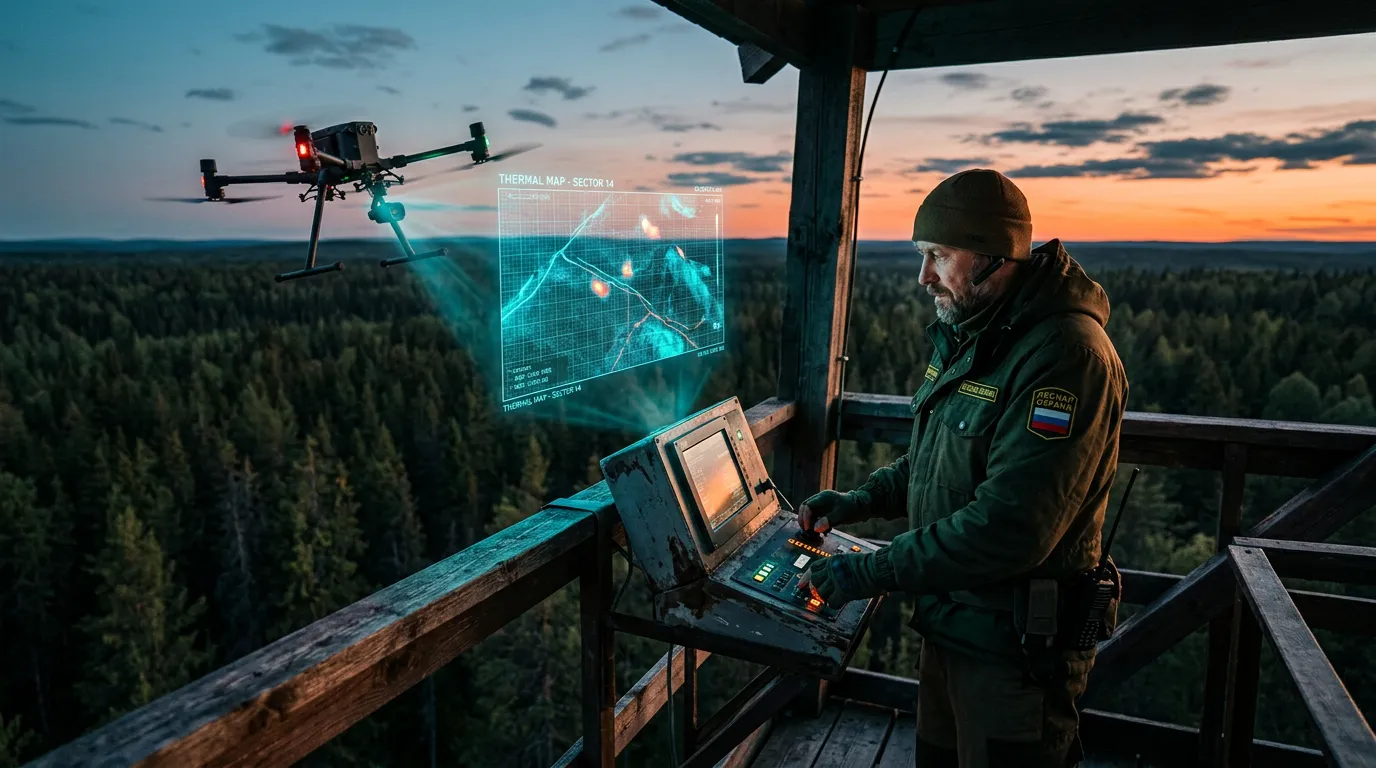
Authorities also plan to shift aerial wildfire monitoring almost entirely to drones. In 2024, Russia launched a nationwide procurement program worth nearly 2 billion rubles (approximately $25 million) to purchase more than 1,200 drones under the Bespilotnye Aviatsionnye Sistemy (Unmanned Aerial Systems) national project. More than 5,100 unmanned systems are expected to be acquired by the end of 2030. Meanwhile, Russian engineers continue developing AI-powered systems capable of operating without a human pilot.
For example, Innopolis University, together with Formoza-Soft and Delidron, has developed a neural network-powered platform that detects smoke directly onboard a drone. A single flight at an altitude of 500 meters can patrol up to 200,000 hectares, while the system automatically geolocates fire outbreaks in real time without human intervention. In the Nizhny Novgorod Region, engineers have also created a mobile infrastructure for managing drone operations. Elsewhere, AI-equipped drones monitor wildfire conditions even in the harsh environment of Yakutia. At the national level, Russia's Federal Forestry Agency remotely monitors forest use across 42 regions covering approximately 300 million hectares.
Protected by Algorithms
Penza Region is expected to move toward a fully automated forest management system in the coming years. Rather than simply detecting smoke, algorithms will estimate how quickly a fire is spreading, account for wind direction, and generate optimal routes for firefighting crews.
If burned areas have already declined twentyfold by 2025, expanding digital monitoring further could provide comprehensive coverage across most of the region's forests while reducing the time between ignition and suppression to the shortest possible interval. If that happens, devastating forest fires could become far less common.