A New Level of Autonomous Logistics: No Satellite Connectivity or Internet Required
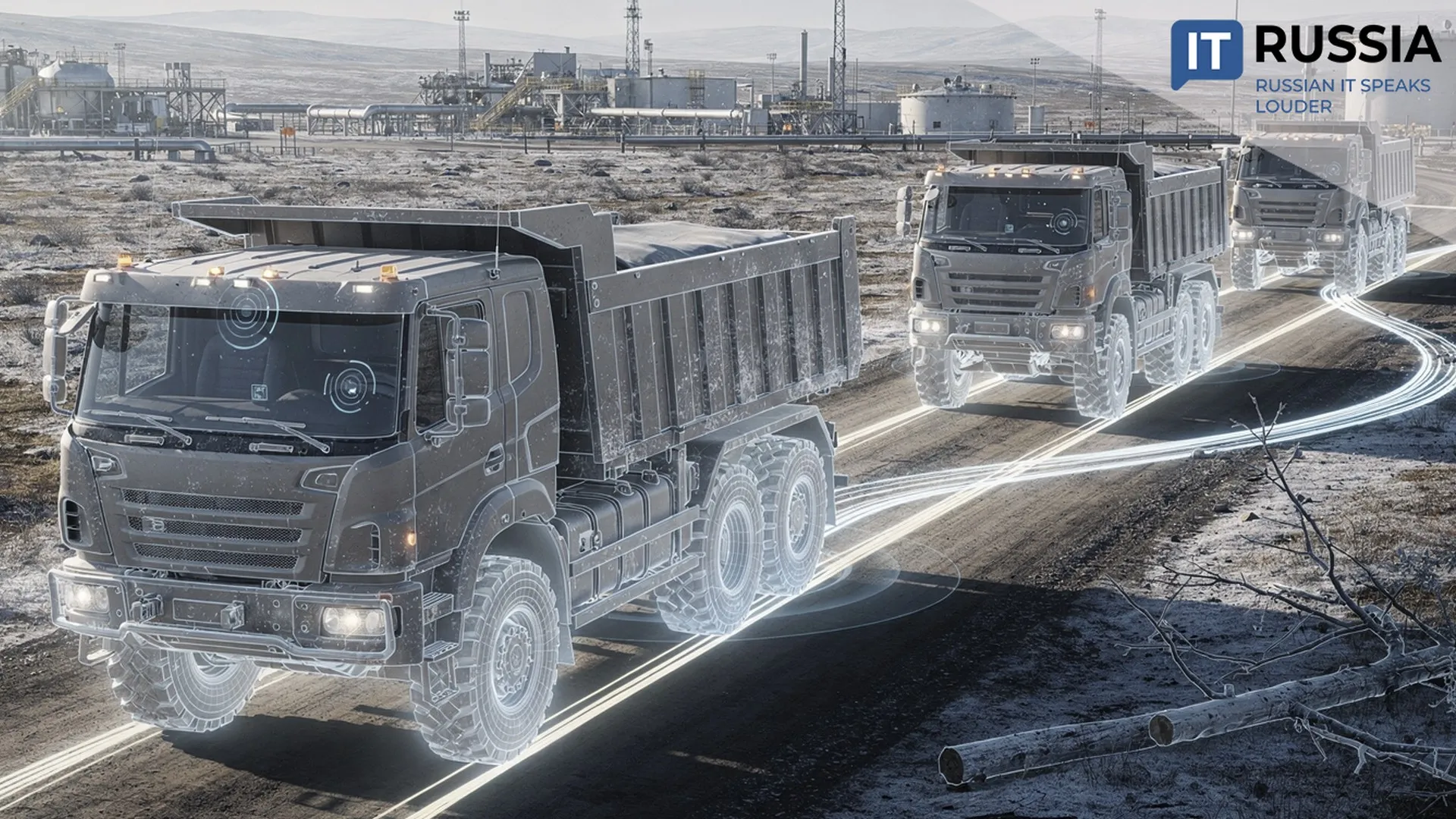
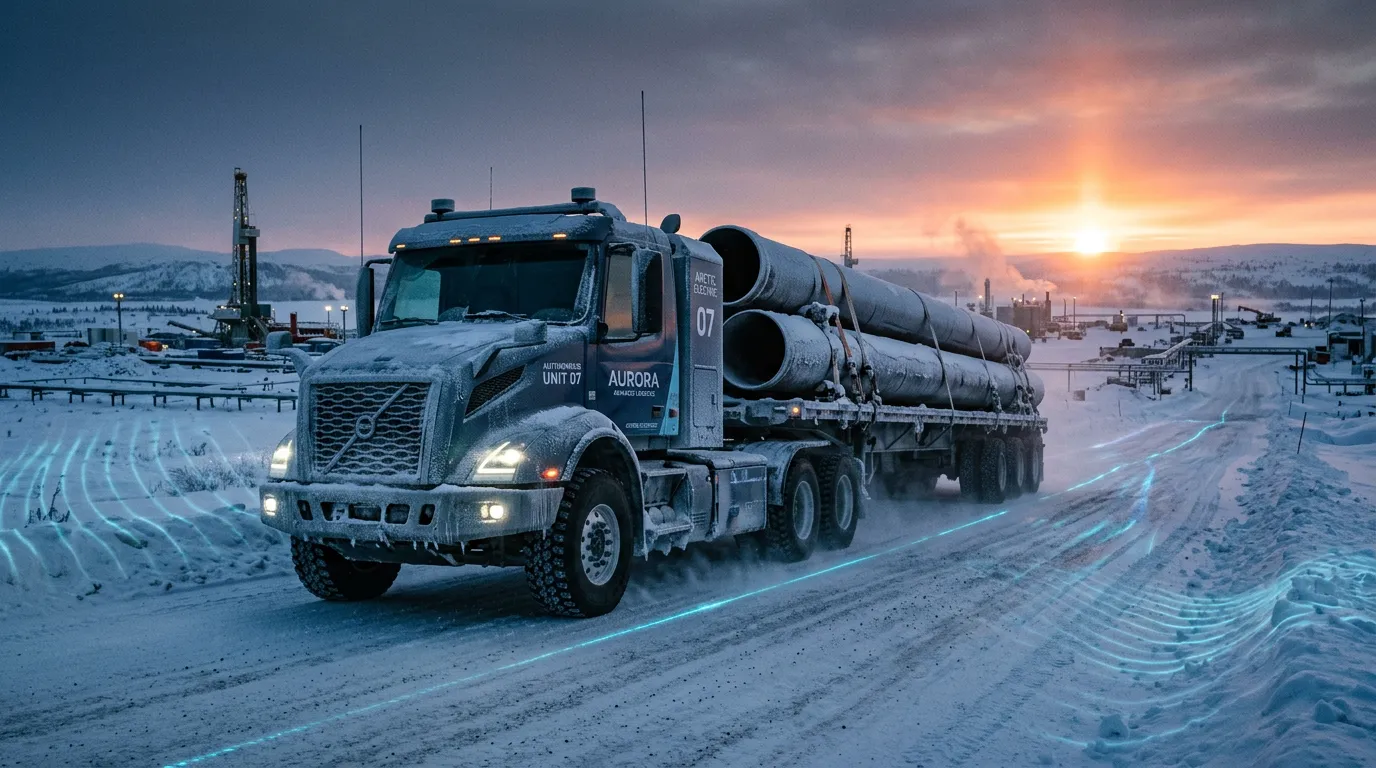
Gazpromneft-Khantos has launched regular freight operations using autonomous trucks at the Yuzhno-Priobskoye field. The vehicles carry up to 24 metric tons of pipes, chemicals, and other production supplies.
The project’s key advantage is that the technology is designed to operate where satellite connectivity and internet access are limited. That is critical for remote oil and gas assets in Siberia and Russia’s North, where communications infrastructure simply does not cover the entire territory and supply disruptions can throw production schedules off track.
The vehicles operate on an “electronic trail” principle. A lead vehicle in the convoy sets the trajectory, speed, and maneuvers. The other trucks automatically follow its movements, maintain a safe distance, and respond independently to changing conditions. The “brain” is an onboard system incorporating artificial intelligence. It processes lidar data in real time, builds a picture of the surroundings, identifies obstacles – potholes, fallen trees, other vehicles – and adjusts the route.
The project uses Russian all-wheel-drive 6×6 tractor trucks adapted to the region’s difficult climate and road conditions. The vehicles are Russian-made, including trucks produced by automaker KAMAZ. The company is known to have previously tested autonomous trucks together with KAMAZ under challenging conditions, including at the Vostochno-Messoyakhskoye field on the Yamal Peninsula.
According to company estimates, deploying the technology cuts logistics costs by roughly one-third. Gazpromneft-Khantos says this is only the beginning. The company plans to scale the technology to other routes and expand the range of tasks handled by autonomous vehicles.

No Drivers at All
Gazpromneft-Khantos initiated and leads the project. Its experts say autonomous transport reduces dependence on the human factor, helps organize deliveries more efficiently, and lays the groundwork for further development of autonomous technologies at oil fields.
Such systems are particularly valuable in harsh environments and in areas facing shortages of qualified drivers. Over time, the company sees autonomous logistics extending across the entire route – from supply storage bases to the production sites themselves.
Gazprom Neft operates its own autonomous technology development center. Over five years, its engineers have tested eight types of autonomous vehicles and four control technologies. Gazpromneft-Snabzhenie has served as the testing coordinator and the project’s direct logistics implementer within the working group.
A Highway for AI
Gazprom Neft was an industry pioneer in autonomous freight transportation. In 2021, the company put into operation the Russian oil and gas industry’s first autonomous freight system, then based on the GAZelle NEXT electric vehicle. The autonomous EV made daily trips along the Yuzhno-Priobskoye field’s internal roads alongside other traffic. In spring 2026, Gazprom Neft reported that its first 20 autonomous trucks were already operating at fields in Yamal, Yugra, and Yakutia. In five years, the technology has therefore progressed from a single autonomous vehicle to regular freight operations using heavy tractor trucks with a 24-metric-ton payload capacity.
At the national level, autonomous technology underwent a major test in 2023 on Russia’s federal M-11 Neva highway. The Ministry of Transport launched commercial freight operations there using autonomous KAMAZ trucks, with Gazpromneft-Snabzhenie among the first shippers. The project was intended to test not only the vehicles themselves but the entire commercial autonomous freight chain, including interaction between the trucks and digital infrastructure. The oil and gas sector thus became one of the early customers for Russian autonomous trucking technology in long-haul logistics.
The project was further developed in 2024, when operations on the M-11 transitioned to fully driverless travel. By then, the fleet had expanded from three to 22 vehicles, which had covered more than 3 million kilometers. Autonomous trucks cut the duration of a Moscow–St. Petersburg round trip from three days to one and a half.

Overall, regular autonomous-truck freight operations at the Yuzhno-Priobskoye field point to a shift in Russia’s oil and gas sector from individual autonomous vehicles toward systematic, robotic in-field logistics.