Robot Without Fixed Routes
Russian factories and warehouses could soon gain a new assistant – an autonomous freight platform that operates without magnetic guide paths or preprogrammed routes.
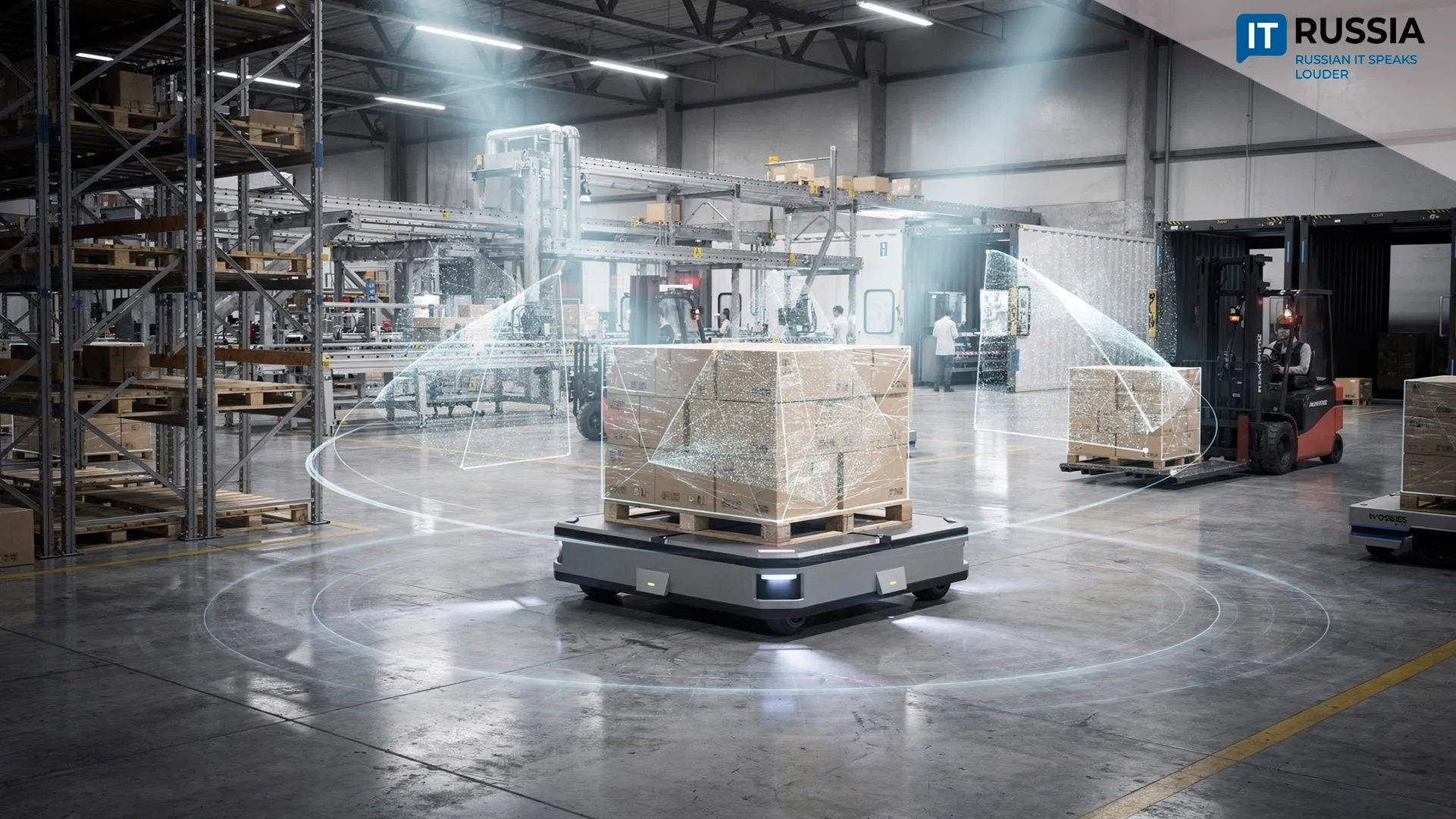
The Moscow Aviation Institute, working with Status Consult, has completed development of an autonomous freight platform designed to transport materials, components, and finished products within large facilities, including factories, warehouses, and airports. Testing has been completed successfully, and the developers have received two patents.
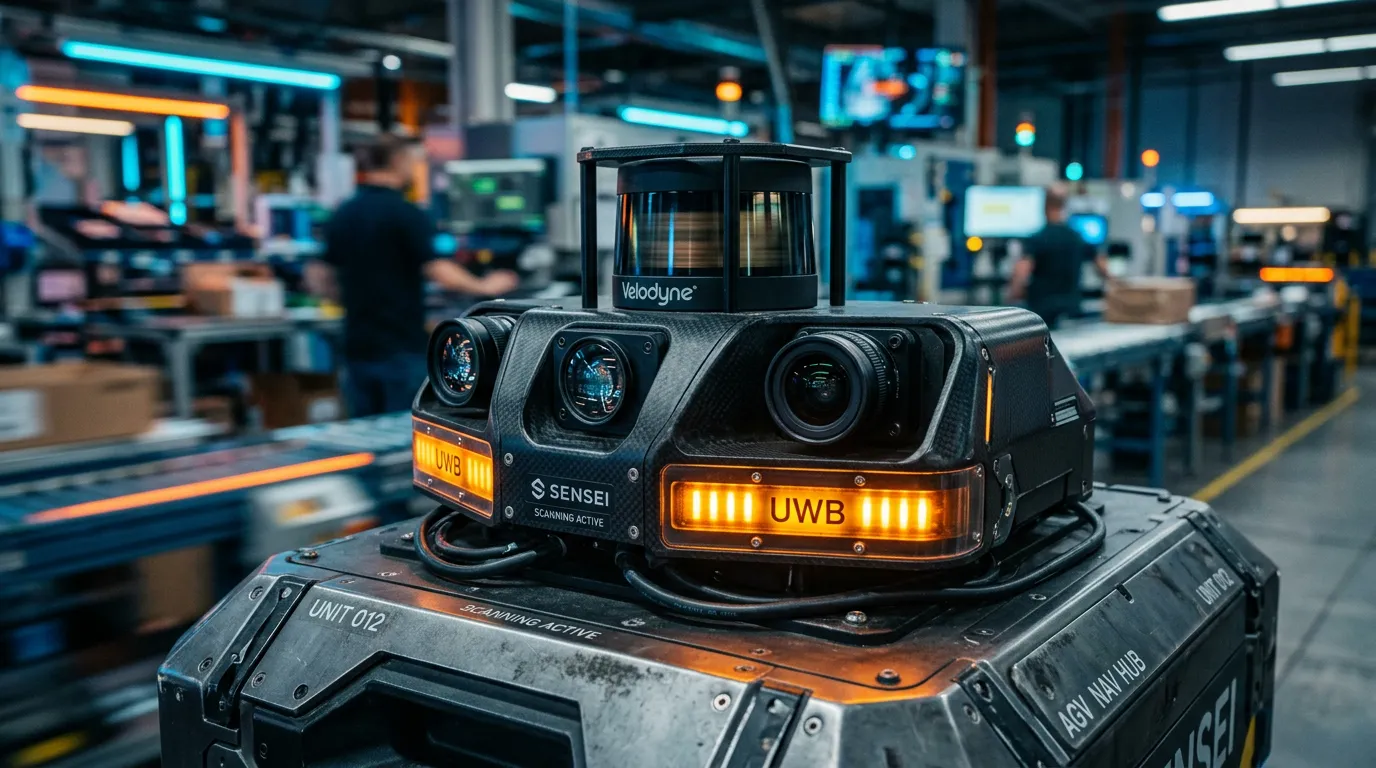
The platform's key advantage is complete autonomy without requiring facilities to install special markers or magnetic tape. It determines its position by combining multiple navigation sources, including satellite data, inertial sensors, cameras, lidars, and ultra-wideband communications. If one source becomes unavailable, the system continues operating confidently by cross-checking information from the remaining sensors while continuously verifying its position. The robot independently detects people, forklifts, and other obstacles, then either navigates around them or comes to a stop, all without a driver or remote operator.
Where the Next Wave of Robotics Is Headed
The platform is expected to deliver the greatest value in large warehouses, machine-building and aerospace plants, distribution centers, airports, and cargo terminals, particularly where traffic patterns change frequently. In such environments, conventional robots tied to fixed routes often become either economically or technically impractical, whereas an autonomous platform can adapt dynamically to changing operating conditions.
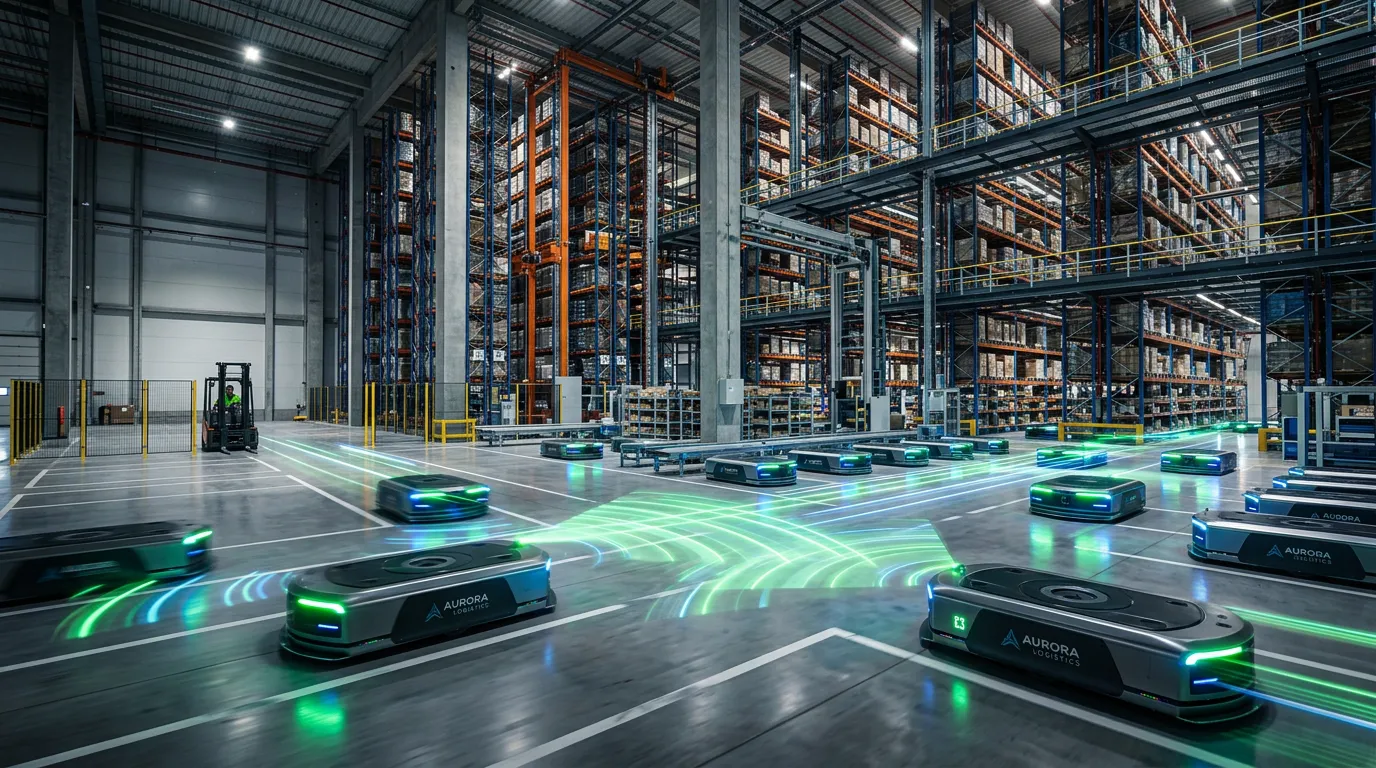
The next phase of the project focuses on deep integration with enterprise IT platforms, including WMS, MES, and ERP systems. That would make it possible to assign tasks automatically, track cargo movements, and synchronize the robot's activities with production lines and human personnel. The developers are also exploring the creation of coordinated fleets in which multiple platforms could independently organize logistics corridors and coordinate their movements with one another.
The solution's export potential is aimed primarily at CIS countries, Asia, and the Middle East, where industrial and warehouse infrastructure is undergoing rapid modernization. Competitive advantages could include a comparatively affordable cost, independence from foreign software, and the ability to adapt the platform to the operational requirements of individual facilities.
Momentum Toward Automation
Interest in autonomous logistics platforms has grown steadily in Russia. In 2024, engineers at the Moscow Institute of Physics and Technology introduced an autonomous cargo robot for moving goods inside warehouses. In 2025, additional systems emerged for automated order picking, inventory management, sorting, and pallet transportation.
The year 2026 brought not only new deployments but also stronger government support for industrial robotics. The government has set a goal of expanding Russia's industrial robot fleet to 100,000 units and placing the country among the world's top 25 nations in robot density by 2030. Experts say the Russian industrial robotics market could grow from RUB 78 billion to RUB 630 billion ($8 billion).
From Pilot Systems to Robotic Fleets
The MAI development marks a transition from traditional warehouse robotics based on fixed routes to autonomous mobile systems that perceive their surroundings and adapt to them in real time. Rather than functioning as simply another motorized cart, the platform is designed as an intelligent component of a digitally connected manufacturing ecosystem.
The immediate priority is to validate the prototype under real operating conditions at industrial facilities. Those deployments will determine how closely the platform's stated capabilities match day-to-day production requirements. If successful, it could become part of a broader digital enterprise ecosystem in which robots interact with one another and with enterprise information systems. The most likely path is gradual adoption: individual robots will first automate the most labor-intensive transport routes, after which companies may begin deploying centrally managed robotic fleets.
Rising labor costs and persistent workforce shortages are making technologies of this kind increasingly economical to adopt. That gives the project a realistic opportunity to establish a meaningful role within Russia's industrial sector.