Russian Researchers Train AI to Detect Patterns in Fragmented Scientific Data
Researchers from AIRI, Skoltech and MIPT have developed a new artificial intelligence training method that can analyze fragmented scientific observations, a breakthrough that could improve the study of meteorological and biological data.

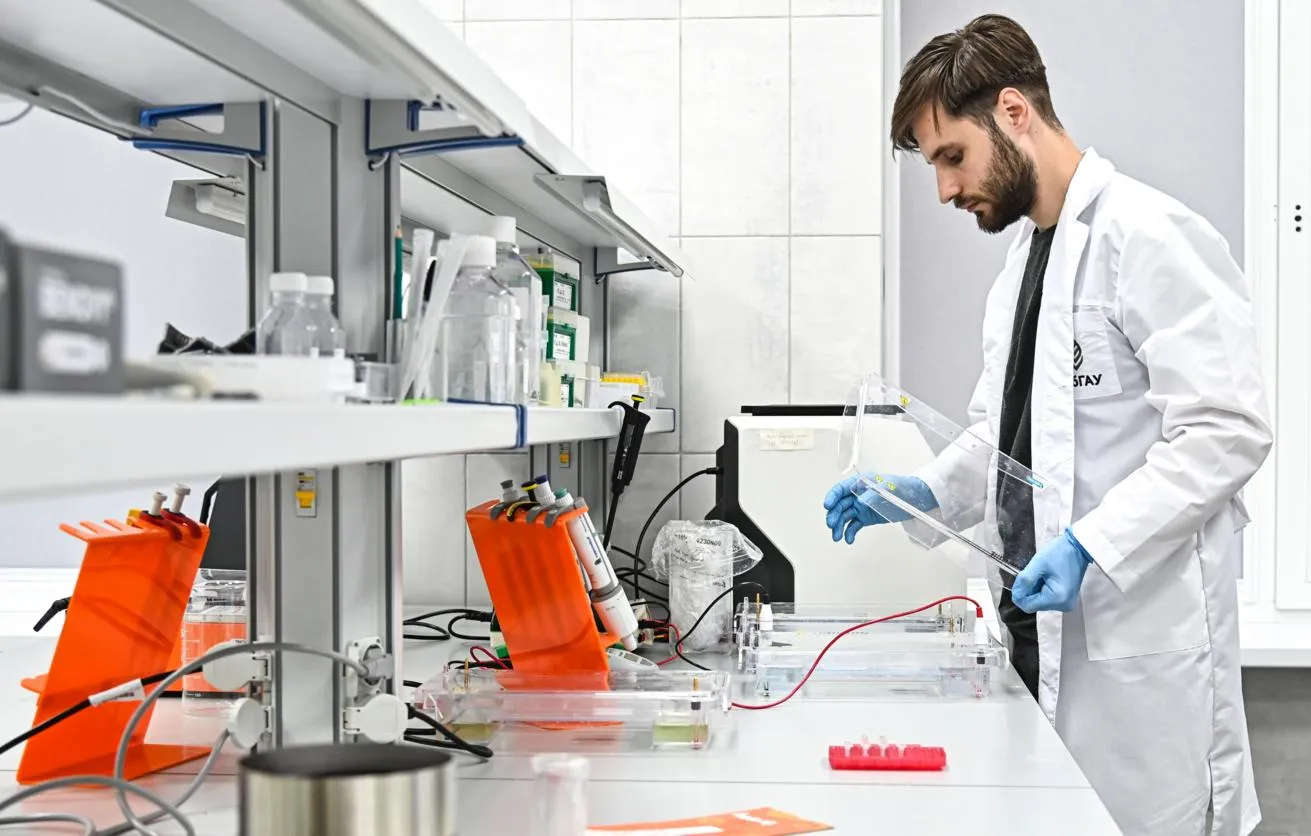
The problem the researchers set out to solve is common across multiple scientific fields: in many cases, it is impossible to continuously observe the same object over time. Measuring the state of a biological cell, for example, destroys the cell itself, making it impossible to directly track its evolution. As a result, scientists often work with isolated “snapshots” of a system captured at different moments.
To connect such fragmented datasets, researchers have long relied on the JKO mathematical framework, but the method typically requires massive computing power. The Russian team combined the approach with inverse optimization techniques, allowing the model to be trained end-to-end without relying on complex neural network architectures.
The method was tested on both synthetic tasks and real-world data tracking embryonic stem cell development over a 30-day period. In both cases, the system matched existing approaches and outperformed them in several tests.