

Scanners Replace the Tape Measure
Russia’s forest products industry is making a broad shift to domestic digital timber measurement systems to improve production efficiency and product quality.

Sveza Group’s plywood mill in St. Petersburg has digitized its birch timber measurement process: the dimensions of each log are recorded automatically and used as a basis for production planning.
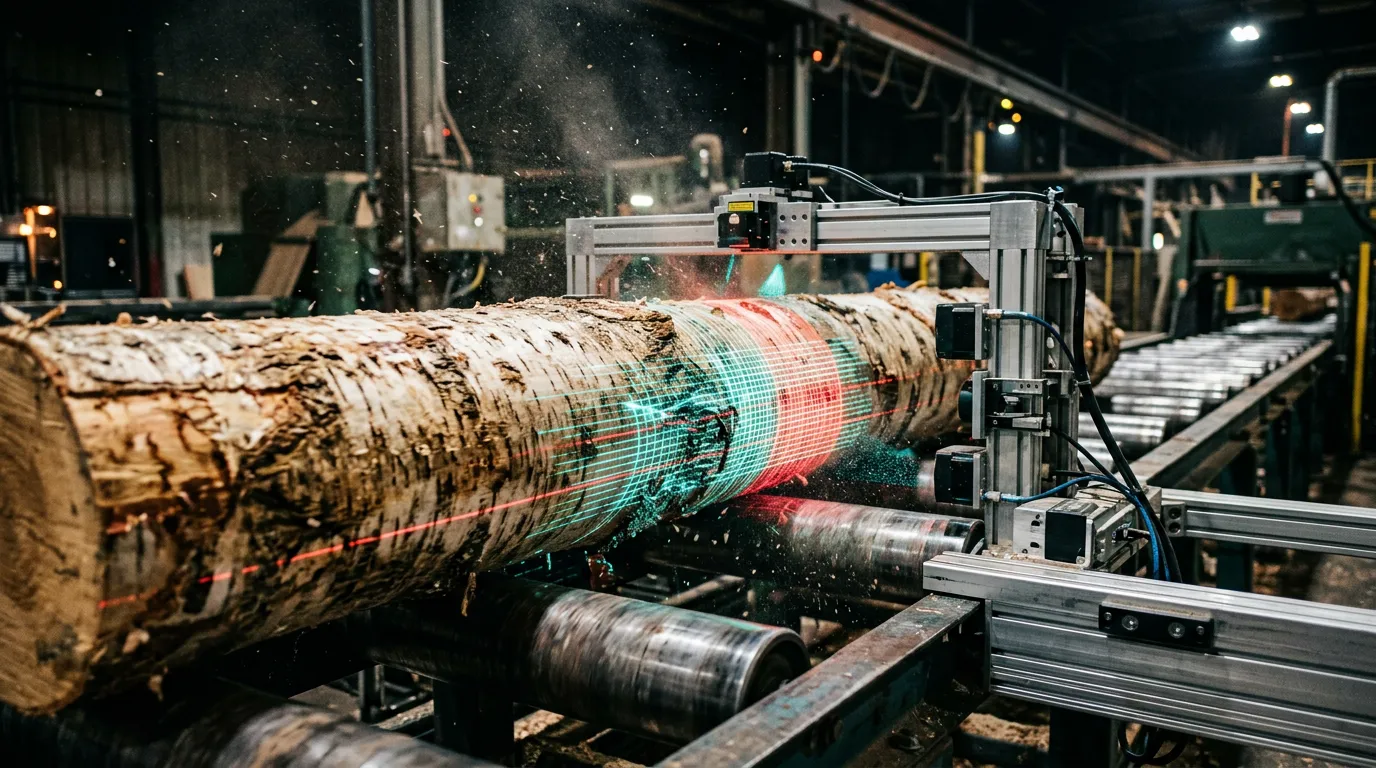
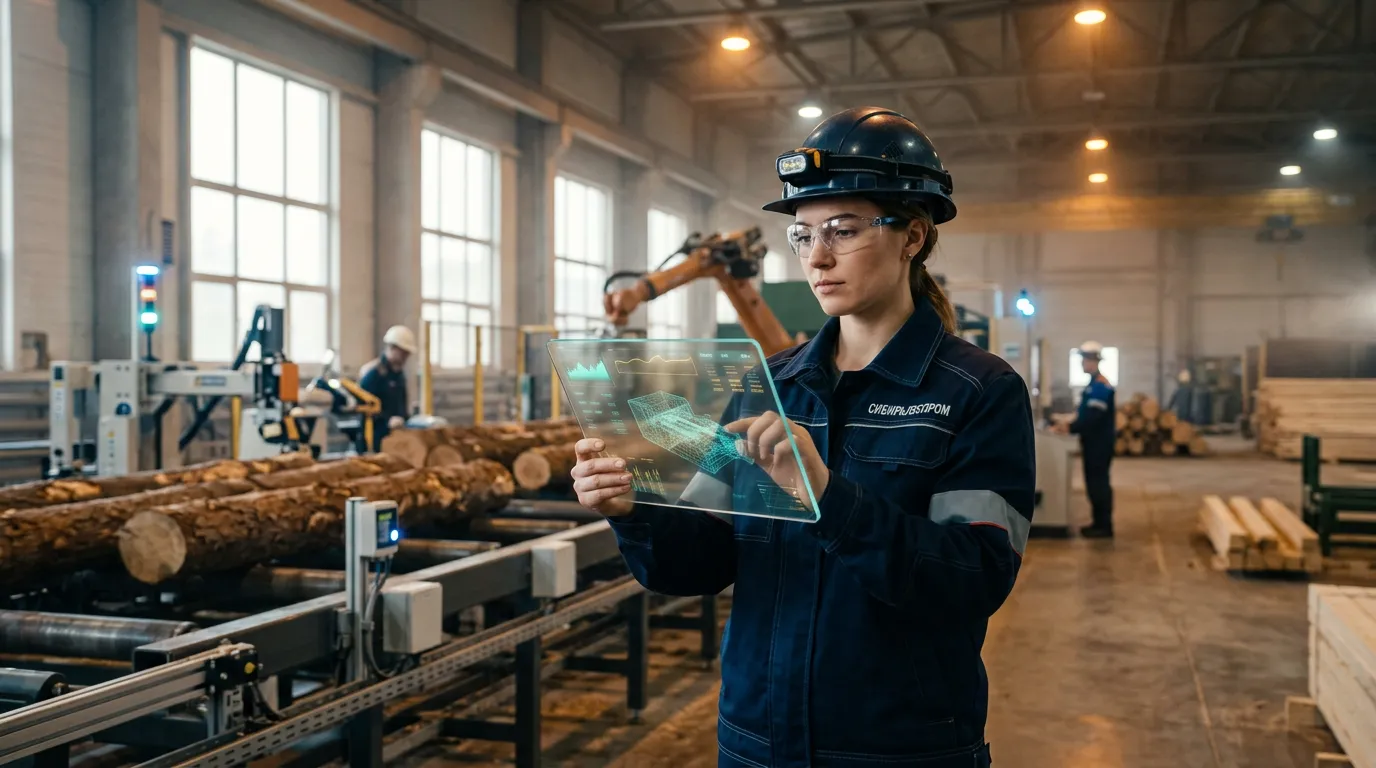
The main change is a system of optical scanners installed in the raw-material preparation area. Each log passes through the scanners after debarking, with the equipment measuring its length and diameter in real time and using those measurements to calculate precise volume. The software creates a virtual representation of every log and automatically sends the data to a unified IT platform.
As a result, the system reduces labor requirements: the shift foreman receives accurate raw-material volume data online without spending time taking measurements manually. The timber then moves to the cross-cutting area, where individual logs are cut into bolts of specified lengths – 1.3 and 1.6 meters. Precise geometry captured for each incoming log makes it possible to plan equipment utilization more efficiently and improve overall operational efficiency.
End-to-End Automated Monitoring
Sveza Group is a diversified holding company and one of Russia’s leading forest products companies, with extensive use of AI-based technologies. In 2026, the company began rolling out its own production management platform for veneer and plywood manufacturing, which will bring measurement and inventory records, master and reference data, and planning together across all of the group’s sites. Different approaches had previously made analysis more difficult, so the company’s teams also refined ERP processes and standardized reference data. Accurate raw-material data from the scanners has become the foundation for production planning.
The first result of two years of work to build in-house technology capabilities was the transition of all company sites to operational use of modules for tracking veneer inventories and planning shift assignments. Sveza ultimately plans to establish end-to-end monitoring from incoming raw materials through finished products, allowing it to balance capacity utilization and conserve resources.
Automated timber receiving is already operating at the company’s mill in Uralsky, where a scanning frame equipped with cameras and lasers determines timber volume in minutes instead of the roughly 30 minutes previously required. The project deployed at the St. Petersburg site is a logical extension of that strategy. In the future, the software will add monitoring of the movement and inventory balance of semi-finished products.
Digitizing Timber From Forest to Mill
Automating timber measurement has become an established trend across Russia’s forest products industry. Back in 2021, Segezha Group launched a pilot of Smart Timber, developed by Computer Vision Systems, part of LANIT Group. The machine learning-based system analyzes images of logs to determine their geometry and volume. By 2023, its algorithms had been refined specifically for roundwood measurement and integrated into the holding company’s digital ecosystem, minimizing manual work.
For the Murom plant, Russia’s Laboratoriya Izmeritelnykh Sistem, or LIS, developed machine vision systems for veneer grading and splicing, successfully integrating them into existing production lines. Sorting accuracy reached 95%, comparable with leading systems worldwide.
Particular attention is being paid to digitizing timber receiving. Scan tracks are being installed at checkpoints, where cameras scan a passing log truck in two seconds. Algorithms identify the wood species and calculate load volume with 99% accuracy, then send the data to accounting systems. Automated timber measurement systems operate at the Syktyvkar Timber Processing Complex, part of Mondi Group; the Balakhna and Kotlas pulp and paper mills; the Bratsk Timber Processing Complex; and facilities operated by Ilim Group and Luzales, scanning thousands of log trucks each year.
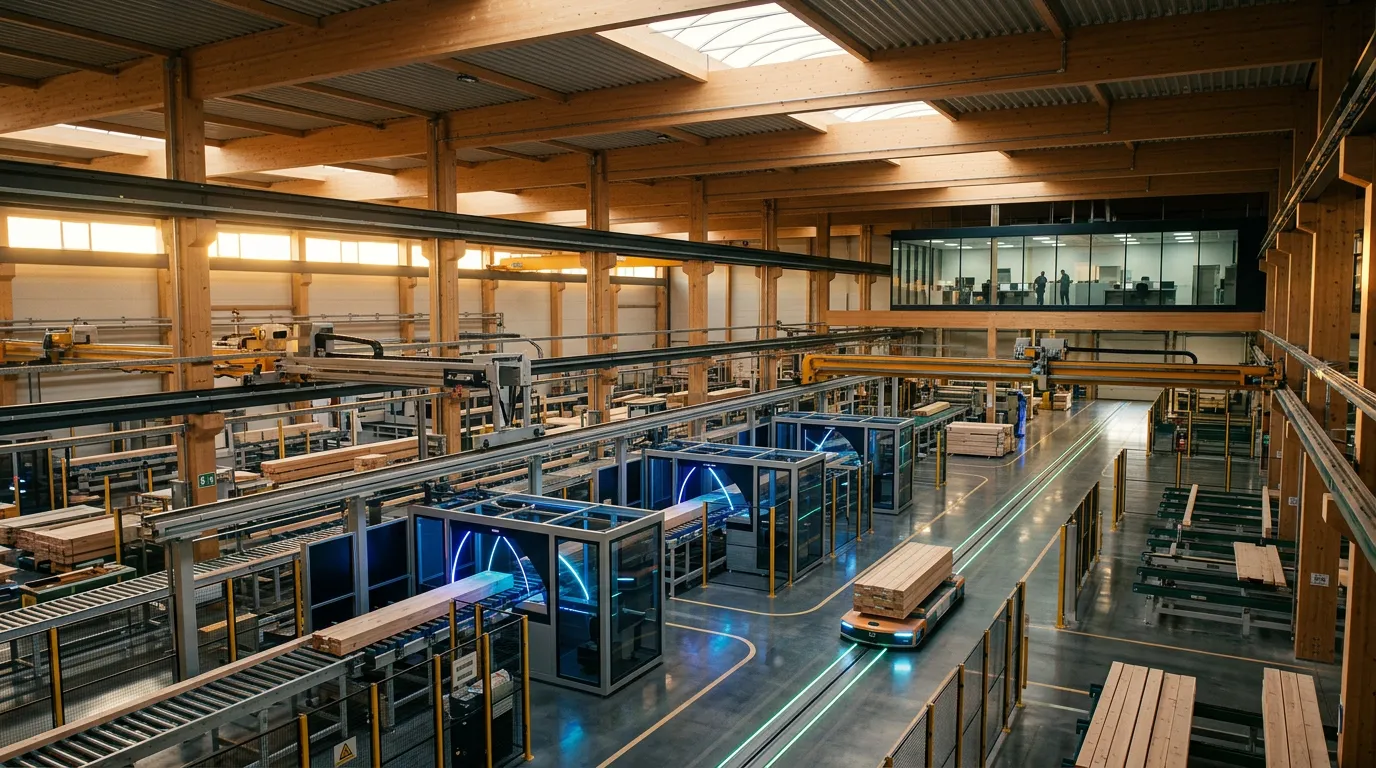
Machine vision is becoming an industry standard, with 67% of Russian forest products companies using the technology. These systems scan lumber on production lines at speeds of up to 120 meters per minute, recognize as many as 14 types of lumber defects and automatically grade the material into three to 10 classes.
Factory Automation Strengthens Government Oversight
Corporate digital systems align with the government’s broader strategy. On Jan. 1, 2025, Russia launched FGIS LK (Federal State Information System for the Forest Complex), a unified platform designed to trace timber across the entire supply chain, from harvesting through export. Automated measurement systems at mills transmit primary data directly to the registry, eliminating manual entry and increasing transparency across the industry. Russia ultimately plans to incorporate artificial intelligence technologies into FGIS LK.
A New Standard for Wood Processing
The global forest products industry is already moving beyond basic measurements of timber geometry. Russian developers are moving in the same direction: the next step will be integrating algorithms that determine the internal structure and quality of wood before it is cut. Over time, the emphasis is expected to shift toward unified digital ecosystems connecting ERP and manufacturing execution systems, or MES, with mobile applications, alongside the development of intelligent offline AI tools for predictive analytics.