Lost in Translation? Sechenov University Develops an AI Medical Navigator for International Patients
Russian clinics may soon deploy a voice-based AI assistant designed to solve one of healthcare’s most persistent operational challenges: communication with foreign patients. Young researchers at Sechenov University have developed an AI medical navigator that allows medical tourists and foreign citizens working in Russia to describe symptoms in their native language, upload medical records through a “smart camera,” and generate a structured medical history for physicians in Russian.
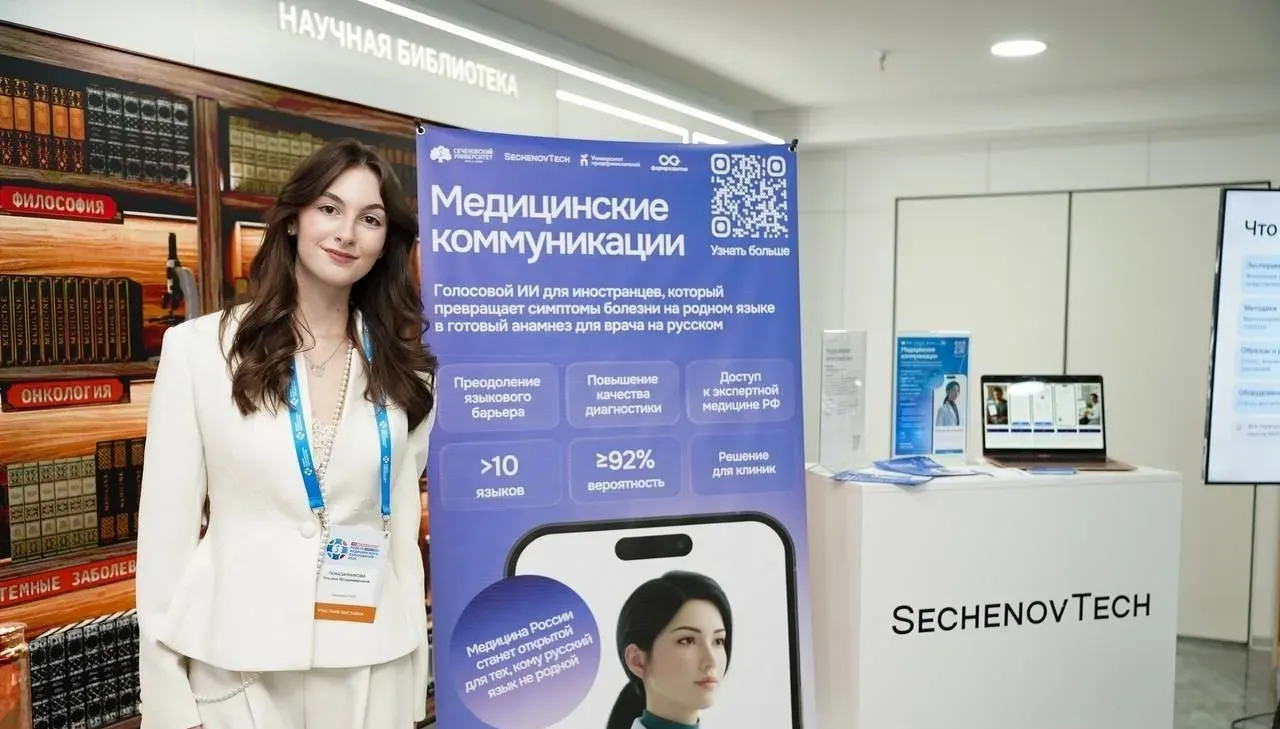
The project has already been ranked among the top 30 student entrepreneurship initiatives in Russia at GSEA 2026, while the software itself has been officially registered as a recognized intellectual-property result.
Support for 10 Languages and a Smart Camera
The innovative AI-powered service supports 10 languages, including low-resource languages such as Hindi, Chinese, Arabic, Tajik, and Uzbek. The platform allows patients to complete the entire pre-appointment process – from symptom description to physician booking – without involving a human interpreter.
“This project was born at my alma mater, Sechenov University,” said startup founder and CEO of Medical Communications, as well as third-year student at the Sklifosovsky Institute for Clinical Medicine, Ulyana Pokazannikova. “We are building more than a translation tool. We are creating a full medical navigator that could help expand medical tourism in Russia while simplifying access to high-tech medical care for patients from partner countries.”
The workflow is designed to resemble a standard clinical intake process. A patient selects the international-patient section on a clinic’s website and verbally describes symptoms in their native language. The system transcribes speech, extracts key symptoms, asks follow-up questions similar to those used during a physician consultation, and then generates a summary in the patient’s own language for confirmation. After that, the AI recommends an appropriate specialist and creates a structured medical history in Russian for the physician, including symptoms, disease history, and broader clinical background.
Another core feature of the platform is its “smart camera” module. Patients can photograph medical documents such as lab results, physician conclusions, and discharge summaries written in their native language. The AI then analyzes, translates, and structures the information chronologically. The feature could also benefit Russian-speaking patients, particularly older adults and people with chronic illnesses. The system allows users to upload and organize their complete medical history and documentation, helping automate routine physician workflows and reduce diagnostic search time.
Pilot Launch and New Features
According to the developers, the AI navigator currently has no direct competitors. General-purpose translation tools such as Google Translate and Yandex Translate are not optimized for medical terminology used across Asian languages and do not structure patient histories according to clinical standards. Existing AI assistants for physicians, meanwhile, are designed primarily for Russian-speaking patients.
The development team includes clinicians, AI engineers, and software developers. The group has already registered the software as an intellectual-property result. The project also became a finalist in the SechenovTech accelerator program and the GSEA 2026 youth entrepreneurship competition. The team now works on the project within the “Digital Solutions for Personalized Medicine” entrepreneurship workshop established at Sechenov University together with Pharmrazvitiye LLC as part of a strategic partnership with the University of Entrepreneurs autonomous nonprofit organization.
A prototype of the medical AI navigator has already been completed, and a pilot launch is scheduled for May of this year. In the longer term, the developers plan to add native-language telemedicine support for patients preparing for treatment in Russia or returning home after care. The platform is also expected to gain an in-person appointment support mode capable of translating speech in real time during clinical consultations.